
Aphids
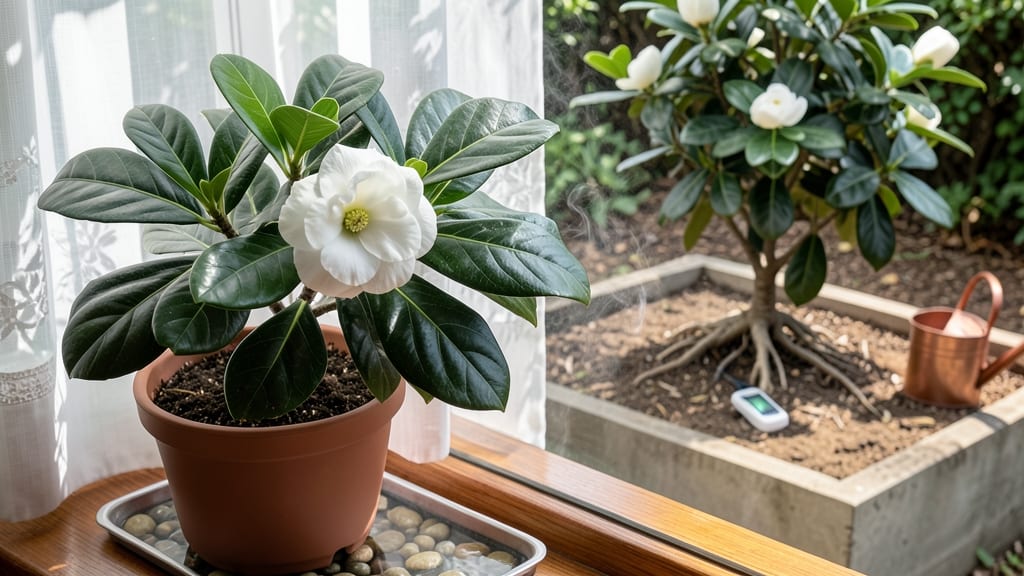
Gardenia plants grow best indoors or outdoors depending on their environment: outdoor gardenias flourish in full sun, high humidity, and frost-free zones, while indoor gardenias tolerate lower light and controlled humidity with regular misting. Both types demand well-draining soil and consistent watering, though outdoor plants tend to produce larger blooms and fuller growth when conditions are ideal.
Outdoor gardenias love direct sunlight for at least 6 hours daily, which triggers their iconic white blooms, while indoor varieties adapt to bright indirect light near east or south-facing windows. 🌸 The key difference lies in humidity—outdoor plants thrive in naturally moist air, while indoor gardenias often need a humidifier or pebble tray to prevent leaf browning.
I’ve found that outdoor gardenias reward their ideal conditions with prolific blooming, sometimes producing 50+ flowers per season, compared to their indoor counterparts which may bloom less but more consistently year-round.
Both environments share critical needs: well-draining soil prevents root rot, and consistent moisture keeps leaves lush. The trade-off? Outdoor gardenias grow 3-4 feet tall with wider canopies, while indoor varieties stay compact (1-2 feet) but require more frequent pruning to maintain shape.
Transitioning between spaces? Acclimate plants gradually over 1-2 weeks to avoid shock from sudden temperature or light changes.
💡 In This Article
- Key Environmental Factors for Indoor vs Outdoor Gardenia Growth
- Practical Tips for Transitioning Gardenias Between Indoor and Outdoor Spaces
Key environmental factors for indoor vs outdoor gardenia growth
Outdoor gardenias demand full sun exposure—at least 6-8 hours daily—to trigger photosynthesis and bloom production. Their leaves contain chlorophyll that converts sunlight into energy, but they also produce anthocyanins (pigments that give some varieties pink or red hues) when exposed to intense light.
Without adequate sunlight, outdoor gardenias produce fewer blooms and develop pale, leggy stems as they stretch toward light sources. In contrast, indoor gardenias thrive in bright indirect light, such as near east or south-facing windows, where they receive filtered sunlight without the risk of leaf scorch.
The humidity gap between indoor and outdoor environments is where gardenias face their biggest challenges. Outdoor plants naturally benefit from 60-80% humidity in tropical or subtropical climates, while indoor air—especially in winter—often drops to 20-30%, causing leaf edges to brown and crisp.
Gardenias are evergreen but sensitive to dry air because their thick, leathery leaves rely on stomata (tiny pores) to regulate moisture.
In low humidity, these pores close to prevent water loss, which disrupts nutrient uptake and weakens the plant. 💧 To mimic outdoor conditions indoors, use a humidifier or place the pot on a pebble tray filled with water and pebbles.
Temperature swings are another critical factor. Outdoor gardenias can handle warm days (75-85°F) but struggle below 50°F, as cold temperatures slow metabolic processes and damage delicate flowers. Indoors, maintain 65-75°F consistently, avoiding drafts from heating vents or air conditioning.
The science behind this sensitivity lies in gardenias' tropical origins—they evolved in regions where temperatures rarely drop below 55°F, making them vulnerable to chill damage that appears as blackened leaf spots or drooping buds. A thermometer near the plant helps monitor fluctuations, ensuring stable conditions.
Airflow plays a surprising role in gardenia health. Outdoor plants benefit from natural breezes, which reduce pest pressure (like aphids) and prevent fungal diseases like powdery mildew. Indoors, stagnant air traps moisture near leaves, creating a perfect breeding ground for pests.
To improve circulation, place a small fan on low speed nearby or gently brush leaves with your fingers to dislodge dust. This mimics the wind pollination that occurs outdoors, where moving air helps distribute pollen and strengthens stems.
Soil composition also differs between environments. Outdoor gardenias prefer sandy, acidic soil (pH 5.0-6.5), which mimics their native tropical forests. Indoors, use a well-draining potting mix with perlite or orchid bark to prevent root rot. The acidity is crucial—gardenia roots absorb nutrients most efficiently in slightly acidic conditions.
Test soil pH with a digital meter and amend with peat moss or sulfur if needed. Over time, indoor plants may deplete soil nutrients faster due to limited root space, so fertilize every 4-6 weeks during growing season with an acid-loving plant formula.
Finally, blooming triggers vary by environment. Outdoor gardenias respond to seasonal light changes, often blooming in late spring to summer when days are longest. Indoors, they may bloom year-round if given consistent light and humidity, but the flowers tend to be smaller and less abundant.
The reason? Outdoor plants receive natural light cycles that signal blooming time, while indoor lighting is often artificial and constant. To encourage blooms indoors, reduce nighttime light exposure (like turning off grow lights) to simulate a 12-hour dark period, mimicking natural day-night cycles. 🌿