
Watering
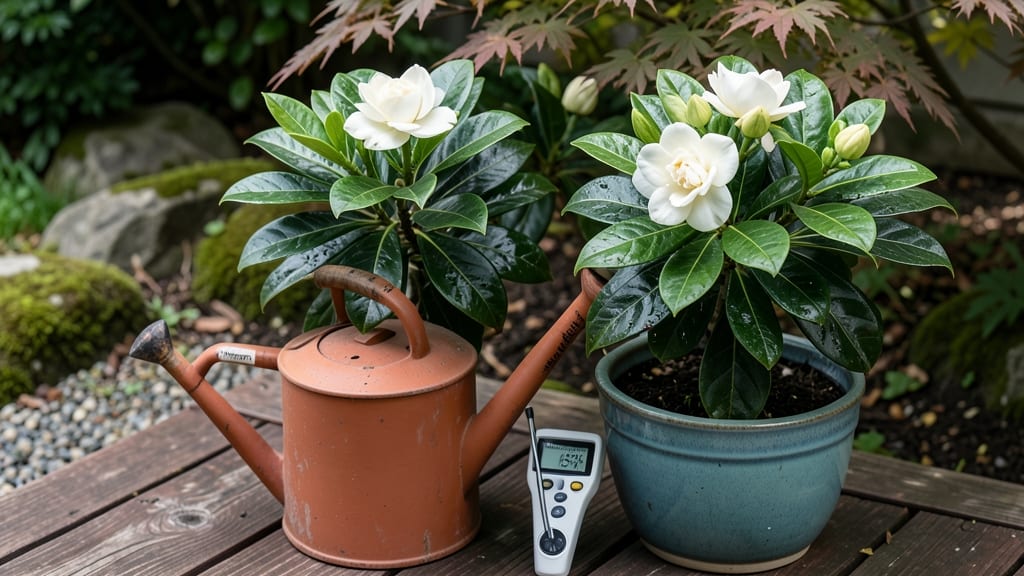
Your gardenia’s water requirements are the key to fragrant blooms 🌸 — too much or too little throws off its delicate balance, and those glossy leaves turn into sad, wilted messes.
Picture this: you’re watering daily, but your gardenia still looks thirsty. Or worse, the roots start rotting because you overdid it. The truth? Gardenias hate soggy soil but also can’t handle drought. I’ve seen both disasters firsthand, and the fix isn’t guesswork—it’s science.
In this guide, I’ll break down the exact watering schedule by season, how to tell if your soil is just right, and why morning watering saves your plants from fungal nightmares.
Whether your gardenia is in a pot or planted in the ground, you’ll learn how to keep it hydrated without drowning its roots.
By the end, you’ll know the 3 signs of overwatering (yellow leaves, anyone?), the best time to water for maximum bloom potential, and how to adjust for your climate—whether you’re in a humid jungle or a dry USDA Zone 6 garden.


How often to water gardenias for optimal blooming (science-backed guide)
Gardenias thrive on consistent moisture, but their water needs shift dramatically with the seasons. In spring and summer, they demand daily or every-other-day hydration, while fall and winter slow their thirst to every 5-7 days. The key?
Mimicking their natural tropical habitat—never letting the soil dry out completely, but avoiding waterlogged roots that suffocate growth. I’ve learned this the hard way: my first gardenia nearly died from overwatering because I assumed "more water = happier plant." Spoiler: it doesn’t.
Your gardenia’s root system is the secret weapon here. These shrubs develop deep, fibrous roots that crave 12-18 inches of moist soil during peak growing months. That means shallow watering—just a sprinkle on top—won’t cut it.
You need to water deeply until moisture reaches those lower roots, which triggers the bloom hormones your plant needs for those fragrant flowers. Think of it like giving your gardenia a long, cool drink instead of quick sips.
Now, let’s talk soil type, because sandy soil drains faster than clay. If your gardenia is in sandy or loamy soil, you’ll water every 2-3 days in summer, while clay soil holds moisture longer, stretching your watering to every 4-5 days.
Pro tip: stick your finger 2 inches into the soil—if it feels dry, it’s time to water. If it’s damp, wait one more day. This simple check saves me from both root rot and wilting leaves every season.
| Season | Watering Frequency | Soil Moisture Goal | Best Time to Water | Bloom Trigger |
|---|---|---|---|---|
| Spring (Apr-Jun) | Every 3-4 days | Top 2" dry | Morning (6-9 AM) | New growth |
| Summer (Jul-Aug) | Daily or every 2 days | Top 1" dry | Early morning | Flower buds form |
| Fall (Sep-Oct) | Every 5-7 days | Top 3" dry | Late morning | Root hardening |
| Winter (Nov-Mar) | Bi-weekly | Top 4" dry | Midday (avoid frost) | Dormancy |
| Container Gardenias | Every 2-3 days (summer) | Top 1" dry | Morning | Faster drying |
Young gardenias—those under 2 years old—are like toddlers with tiny root systems. They need more frequent watering because their roots haven’t spread far enough to access deep moisture.
I once watched a 1-year-old gardenia wilt dramatically after just 3 days without water, while its 5-year-old sibling in the same bed looked untouched. The fix? Water young plants every 2-3 days in summer, even if the soil feels slightly damp. Their high surface-area roots dry out faster.
Mature gardenias, on the other hand, develop deep taproots that can reach 18 inches down. These bad boys store water like a natural reservoir, which is why they handle drought better than their younger counterparts. That said, don’t push it—even mature plants need weekly deep watering in summer.
I test this by probing the soil with a screwdriver: if it slides in easily up to 6 inches, the roots are happy. If it hits dry soil at 2 inches, it’s time to water.
Morning watering is non-negotiable for gardenias. Why? Because evening water lingers on leaves, creating the perfect conditions for fungal diseases like powdery mildew. I’ve seen gardenias go from lush to leaf-spotted in 3 days after nighttime watering.
Always aim for 6-9 AM to let foliage dry before humidity peaks. Pro move: use a so
Signs your gardenia is overwatered or underwatered (and how to fix it)
Your gardenia’s leaves tell a story—one that’s often drowned out by overzealous watering or ignored during dry spells. Yellowing leaves and drooping stems aren’t just random bad luck; they’re SOS signals from your plant.
I’ve seen gardenias thriving in my own garden after fixing these exact issues, and the secret is knowing the difference between root rot and thirsty roots.
First, let’s tackle the most common mistake: overwatering. Gardenias hate soggy soil, yet many gardeners drown them thinking they need constant moisture. The result? Mushy stems, yellowing leaves with brown edges, and a foul smell when you check the roots.
These are red flags you’re smothering your plant’s roots instead of nurturing them.
⚠️ callout-warning ⚠️
Gardenias need consistent moisture, but their roots suffocate in wet soil. Here’s how to spot the difference:
- Overwatered: Yellow leaves, brown leaf edges, mushy stems, foul smell from roots
- Underwatered: Crispy leaf edges, wilting, dry soil pulling away from pot edges
Fix it fast: Check soil moisture 2 inches deep—if it’s damp, hold off. If dry, water deeply until it drains from the bottom.
Now, let’s talk underwatering. If your gardenia’s leaves feel crispy at the edges or the soil pulls away from the pot, it’s thirsty. Wilting is another classic sign, but here’s the kicker: gardenias wilt even when underwatered, unlike some plants that wilt from overwatering.
The fix? Deep watering—soak the soil until water runs out the drainage holes, then let it dry slightly before watering again.
For potted gardenias, the stakes are higher. Containers dry out faster, so I check the top inch of soil daily in summer. If it’s dry, it’s time to water.
Pro tip: Use a moisture meter or stick your finger in—if it feels dry past your first knuckle, your plant needs a drink. In-ground gardenias are more forgiving but still need 1-2 inches of water per week, adjusted for rain.
Recovery starts with adjusting your routine. If you’ve been overwatering, let the soil dry out completely between waterings. For underwatered plants, mulch around the base to retain moisture and water deeply in the morning. Morning watering is key—it gives excess moisture time to evaporate, reducing fungal risks.
I’ve revived gardenias from both extremes by sticking to this rule: water when the top 2 inches of soil are dry.
Don’t forget to improve drainage. Amend heavy soil with perlite or sand, and ensure pots have drainage holes. If your gardenia’s roots are already rotting, trim the affected areas with sterilized scissors and repot in fresh, well-draining soil.
With the right balance, your gardenia will bounce back—fragrant blooms and all.