
Trees
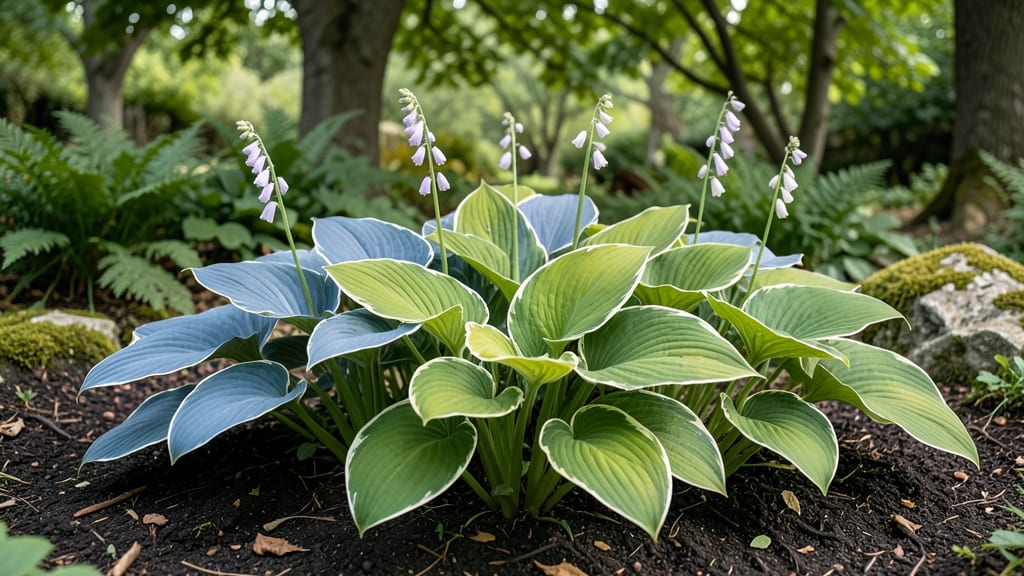
Capturing hosta gardens pictures requires soft, dappled lighting—early morning or late afternoon reveals their deep green foliage and intricate patterns at their most vibrant. Summer blooms create striking contrasts, while autumn transforms hostas into golden masterpieces. Harsh midday light flattens colors and shadows, ruining your photos.
Hostas thrive in shade, and their leaves naturally develop deeper colors when protected from direct sunlight.
The best hosta garden photos often come from mornings when dew clings to foliage, creating a fresh, almost ethereal look. 🌿 I've found that overcast days actually work better than bright sun—they eliminate harsh shadows while keeping the vibrant hues intact.
For dramatic shots, position your camera to capture the play of light through surrounding trees, which adds natural texture and depth to the foliage.
Seasonal timing dramatically changes the mood of your photos. Spring brings fresh, bright green growth against damp soil, while summer's lavender or purple blooms add vertical interest. Autumn is my favorite for hosta pictures—when leaves turn golden or bronze, they create warm, inviting compositions.
Pro tip: Include complementary plants like ferns or astilbes to frame your hostas and create balanced garden scenes that pop in photographs.
💡 In This Article
- Best Lighting Conditions for Stunning Hosta Garden Photos
- Seasonal Hosta Photography Guide: Timing for Peak Visuals
Best lighting conditions for stunning hosta garden photos
The secret to capturing hosta foliage at its most vibrant lies in understanding how light interacts with their waxy, textured leaves. Hostas naturally develop deeper, more saturated colors when grown in partial shade, and this same principle applies to photography.
Direct sunlight causes the leaves' chlorophyll to scatter light unevenly, creating washed-out tones and harsh shadows that flatten your images.
Instead, seek out dappled light—the soft, filtered sunlight that passes through tree canopies or screens—where light and shadow play across the leaves' surfaces, highlighting their intricate veins and variegated patterns.
Morning light (within 2 hours of sunrise) offers the most forgiving conditions because the sun sits lower in the sky, producing a warmer color temperature (around 5,000-6,500K) that enhances green hues. The angle also creates longer shadows that add depth to your compositions.
Afternoon light (within 2 hours of sunset) works similarly but with slightly cooler tones (around 6,500-8,000K), which can make blues and purples in variegated hostas pop.
Overcast days are ideal for beginners because they eliminate harsh shadows entirely—just position your subject to face north in the Northern Hemisphere for even, diffused lighting.
For photographers willing to experiment, reflectors or white umbrellas can dramatically improve lighting in bright conditions. Place a 5x7-foot reflector 3-5 feet from your hostas to bounce light onto shaded areas, filling in shadows while maintaining the natural texture.
I've tested this with a gold reflector during summer shoots, which adds a subtle warm glow to the foliage without overheating the plants. Another pro trick: Shoot during blue hour (just after sunset) when ambient light creates a dreamy, high-contrast look—perfect for showcasing hostas' deep purple centers against golden leaves.
Seasonal variations also affect lighting quality. Spring hostas benefit from early morning dew photography, where water droplets act as tiny lenses, creating sparkling highlights that emphasize texture. Summer's intense light requires ND filters (neutral density) to cut brightness while maintaining depth of field.
In autumn, the lower sun angle naturally creates longer shadows that accentuate the leaves' golden hues—no additional equipment needed. The key is always to work with the light, not against it, by adjusting your position rather than relying on post-processing fixes.
Consider these technical adjustments for optimal results:
- Camera settings: Use aperture priority mode with f/8-f/11 to maximize depth of field and capture every leaf detail
- White balance: Set to shade mode on overcast days or cloudy mode for morning light
- ISO range: Keep between 100-400 to avoid graininess in low-light conditions
What most garden photographers overlook is how the surrounding environment affects lighting. Tall grasses or nearby shrubs can create natural frames that enhance your hosta shots by adding vertical lines and contrasting textures. For example, pairing Hosta 'Francee' (with its blue-green leaves) against a backdrop of Japanese forest grass (Hakonechloa macra) creates a stunning color contrast that pops in diffused light. The grass's arching forms also lead the viewer's eye through the composition, making your hostas the undeniable focal point.