
Size
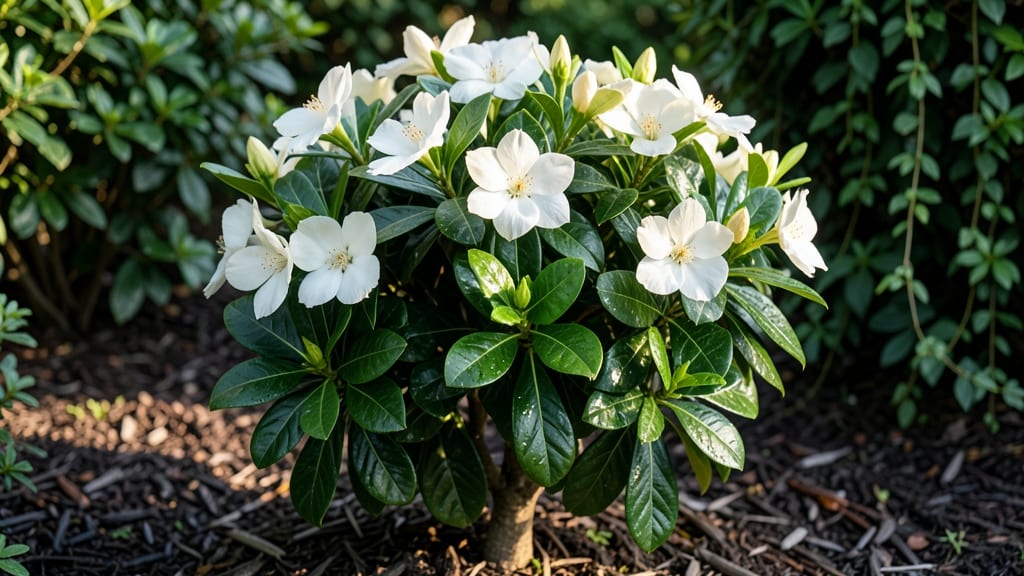
Gardenias grow to a mature height of 3 to 6 feet and spread 3 to 5 feet wide, depending on the variety, which means they’re perfect for adding drama to your garden without overpowering it.
If you’re dreaming of fragrant, creamy-white blooms but wondering whether gardenias will fit your garden’s layout, their mature size is the first question you need to answer—because some varieties sprawl like vines while others stand tall like shrubs.
For example, the classic Gardenia jasminoides 🌸 can reach 6 feet in ideal conditions, while dwarf varieties like ‘Radicans’ stay compact at just 1.5 to 2.5 feet. That means you can choose one that fits a patio container or a sunny garden bed.
In this guide, I’ll break down how fast they grow, how to control their size with pruning, and which varieties suit your space—whether you’ve got a small balcony or a sprawling backyard.


Gardenia mature size by variety: height and spread guide
If you’ve ever admired gardenias in a friend’s yard or at a nursery, you might have wondered: how big do gardenias grow? The answer depends entirely on the variety—some stay compact enough for containers, while others become small trees.
Knowing these differences helps you choose the perfect gardenia for your space, whether it’s a small balcony garden or a sunny backyard border.
Most gardenias belong to the Gardenia jasminoides species, but their mature sizes vary dramatically. Some varieties, like ‘Radicans’, grow as sprawling shrubs, while others, such as ‘Kleim’s Hardy’, remain neatly contained.
Climate also plays a role—warmer zones like USDA Zone 8+ encourage faster growth, while cooler areas may see slower development.
Below is a breakdown of 10+ common gardenia varieties, their typical mature heights, spreads, and growth habits. Use this as your guide to selecting the ideal gardenia for your garden’s layout and your personal care capacity.
🌸
| Variety | Mature Height | Mature Spread | Growth Habit | Best For |
|---|---|---|---|---|
| ‘Kleim’s Hardy’ | 3–5 ft | 3–4 ft | Upright, dense | Cold-hardy zones, containers |
| ‘Radicans’ | 2–4 ft | 4–6 ft | Trailing, sprawling | Hedges, ground cover |
| ‘Veitchii’ | 5–7 ft | 4–5 ft | Tall, upright | Specimen plants, borders |
| ‘Fortuniana’ | 3–5 ft | 3–4 ft | Bushy, rounded | Foundation planting, shrub borders |
| ‘Mystery’ | 1.5–2.5 ft | 2–3 ft | Compact, dwarf | Containers, patios, small gardens |
| ‘Augusta’ | 4–6 ft | 3–5 ft | Tall, spreading | Privacy screens, large gardens |
| ‘Lemon Drop’ | 2–3 ft | 2–3 ft | Bushy, rounded | Borders, mixed shrub beds |
| ‘Clew’s Pink’ | 3–5 ft | 3–4 ft | Upright, dense | Color accents, hedges |
| ‘Florida’ |
How to control gardenia size: pruning and training tipsOnce you’ve picked your gardenia variety, the next step is keeping it at your desired size. Gardenias grow 12 to 24 inches per year, so without pruning, they’ll quickly outgrow small spaces. The key is to prune at the right time and use the right techniques to encourage a compact, bushy shape while maintaining those fragrant blooms. I’ve found that most gardeners make one of two mistakes: pruning too late in the season or cutting back too aggressively. Both can reduce flowering or stress the plant. Instead, focus on light pruning in early spring and shaping cuts after blooming to keep your gardenia healthy and manageable. Pinching vs. Hard Pruning: What Works Best?Pinching Method
Hard Pruning
For pinching, use your fingers or clean pruners to remove the top set of leaves on new growth when stems are about 6 inches tall. This encourages the plant to branch out instead of growing tall. I do this every 4 to 6 weeks during the growing season to keep my gardenias dense and compact. If your gardenia has already outgrown its space, hard pruning in late winter or early spring is your best bet. Cut back one-third of the oldest stems to the ground and shape the remaining branches. Avoid cutting into old wood, as gardenias bloom on new growth, and you’ll risk losing flowers. Don’t forget about staking and support! Gardenias can get top-heavy with blooms, especially in containers. Use 3-foot bamboo stakes or a small trellis to keep them upright. I tie the stems loosely with soft plant ties every 6 to 8 weeks to avoid damaging the bark. Finally, seasonal maintenance is key. In fall, remove any dead or diseased branches to prevent pests, and in winter, avoid pruning unless you’re dealing with frost damage. With the right approach, you can keep your gardenia at your perfect size—whether that’s a 2-foot patio shrub or a 6-foot garden centerpiece. 🌿 |