
Tools
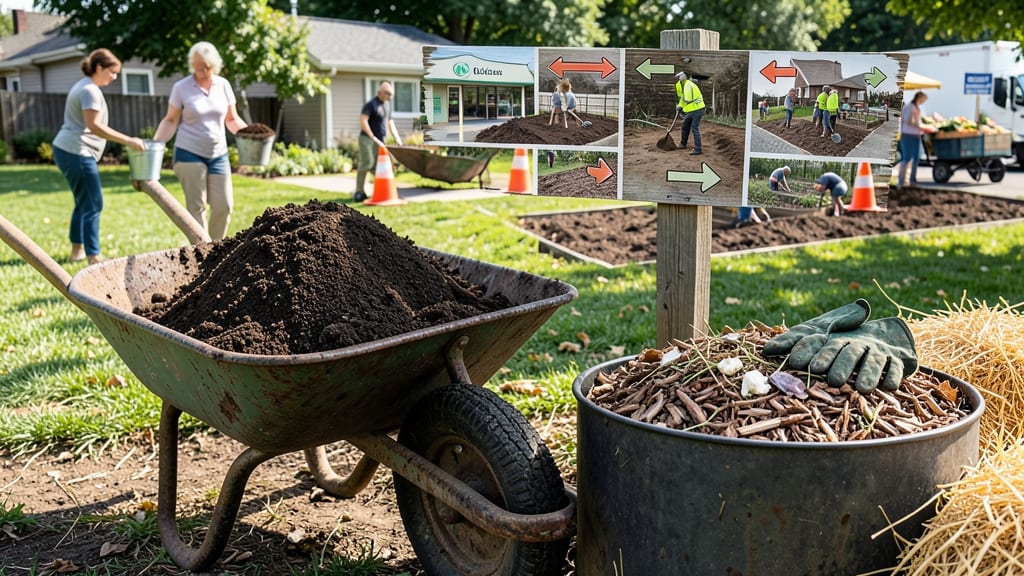
To get free soil for your garden, check local construction sites for leftover topsoil, ask neighbors or gardening groups for compost or unused bags, or visit community gardens for shared resources. Always confirm legality and quality before use.
Getting free soil for your garden often starts with asking the right people and knowing where to look.
Construction sites frequently discard nutrient-rich topsoil, which can be a goldmine for your plants if you ask politely—just ensure it hasn’t been treated with chemicals. 🌱 Community gardens and local farms are also great resources, as they often have excess compost or unused bags they’re happy to share.
I’ve found that joining gardening forums or Facebook groups can connect you with neighbors who’ve saved soil from recent landscaping projects.
Before taking any soil, always test its quality—look for signs of pests, weeds, or contaminants. A simple pH test kit can help determine if the soil matches your plants’ needs.
Many cities also offer free or low-cost soil through municipal programs, so checking with your local government can save you both time and money.
💡 In This Article
- Legal Ways to Source Free Garden Soil
- Ethical and Safe Soil-Sharing Practices
Legal ways to source free garden soil
Construction sites are one of the best-kept secrets for free, high-quality soil. When developers excavate land, they often remove the top 6-12 inches of nutrient-rich topsoil, which ends up in large piles waiting for disposal.
This soil typically contains organic matter from decomposed plants and microorganisms that boost plant growth. 🌱 The key is timing—contact the site manager early in the project (before demolition) to ask about access.
Some sites even give it away for free to avoid disposal fees, while others may charge a small handling fee ($10-$25 per cubic yard). Always confirm whether the soil has been treated with herbicides or pesticides, as some contractors use pre-emergent weed killers before storing it.
Many cities and counties offer free or low-cost soil through municipal programs, often called "soil banks" or "compost giveaways." For example, the Los Angeles Compost Giveaway Program provides free composted soil to residents, while New York City’s Soil Initiative distributes soil from construction sites to community gardens.
These programs usually require a permit or registration, and availability varies by season—spring and fall are peak times. Landfills and recycling centers also occasionally host soil drop-off events, where residents can take away unused bags of topsoil or mulch.
Call ahead to ask about their policies, as some require proof of gardening (like a small fee or volunteer hours).
State and federal regulations play a role in soil distribution, especially for large quantities. In California, for instance, transporting soil across county lines may require a permit if you exceed 10 cubic yards, while Texas allows free soil distribution as long as it’s not contaminated.
Always check your local Department of Agriculture or Environmental Protection website for rules—some areas restrict soil movement to prevent the spread of invasive species or diseases like Phytophthora, a fungus that damages roots. 🌿 A quick phone call to your city’s public works department can save you from legal trouble and ensure you’re getting safe, legal soil.
If you’re dealing with contaminated soil (e.g., from old industrial sites), some organizations offer remediation services for free. Programs like EPA’s Brownfields Initiative clean up polluted land and sometimes redistribute the soil after treatment.
For smaller gardens, you can test soil quality with a $10-$20 home pH kit or send a sample to a university extension service (many offer tests for $15-$30). Look for signs of contamination like unusual odors, dark streaks, or rubbery textures—these could indicate heavy metals or chemicals.
Even "free" soil isn’t worth it if it harms your plants or soil ecosystem.
Another legal avenue is partnering with local governments or nonprofits that manage green spaces. Parks departments often have excess soil from landscaping projects, and some even deliver it to residents for a nominal fee.
For example, the Chicago Park District offers free mulch and soil to community gardeners who volunteer a few hours. These programs prioritize sustainability, so they’re more likely to give away soil than sell it.
Always ask about lead or pesticide testing if the soil comes from urban areas, where historical contamination is more common. A simple XRF soil tester (around $100) can detect heavy metals like lead or arsenic in seconds.