
Propagation
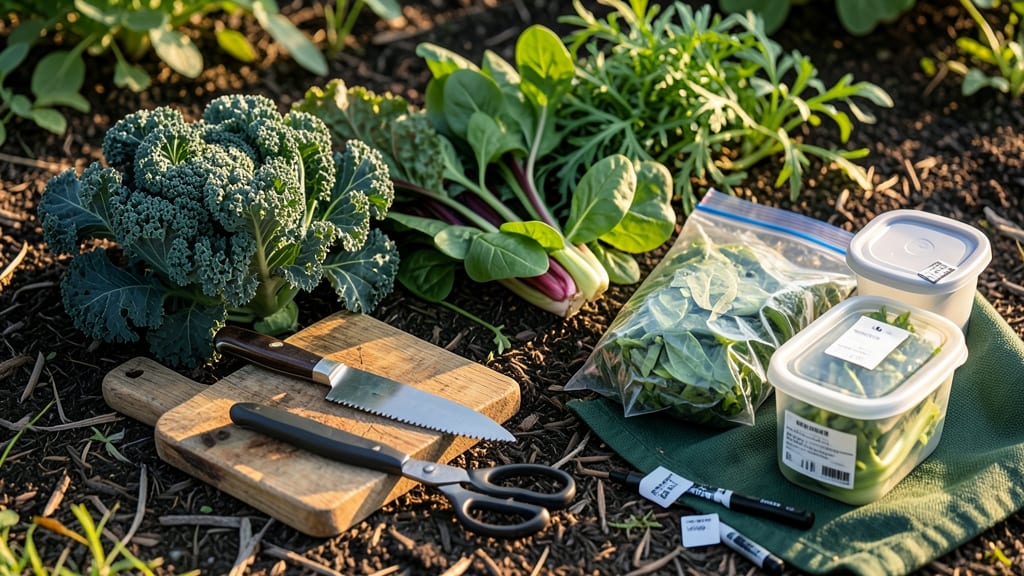
You can freeze hearty leafy greens like kale, Swiss chard, collard greens, and spinach straight from your garden by blanching them first, then storing in airtight containers or freezer bags for up to 12 months. Delicate greens like lettuce or arugula won't hold up well without proper preparation.
Freezing garden greens works best with varieties that maintain their texture and nutrients through freezing. 🥬 The key is selecting greens with sturdy cell structures—kale and Swiss chard, for example, have thick stems and broad leaves that resist wilting when thawed.
Blanching (briefly boiling then shocking in ice water) halts enzyme activity, preserving color and crispness for months. I always recommend portioning greens into single-use servings before freezing to avoid repeated thawing, which can degrade quality faster.
For best results, wash greens thoroughly to remove dirt, then dry them completely before blanching. 💫 Use a timer—most greens need just 1-3 minutes in boiling water, depending on thickness—then plunge into ice water immediately.
Spread blanched greens on a towel to dry further before packing them tightly in containers or bags. This method locks in nutrients while preventing freezer burn, so you can enjoy homegrown greens year-round.
💡 In This Article
- Best Leafy Greens for Freezing From the Garden
- Step-by-Step Freezing Process for Garden Greens
Best leafy greens for freezing from the garden
Certain garden greens freeze exceptionally well because their cellular structure resists ice crystal formation during freezing. Kale, Swiss chard, and collard greens have thick, fibrous stems and broad leaves that maintain their shape better than delicate varieties.
Their high moisture content (around 90%) gets preserved when blanched properly, preventing mushiness. The key lies in their cell wall rigidity—these greens contain more pectin and structural proteins that hold up under freezing temperatures.
Spinach also freezes well, but its thinner leaves require slightly different handling. The chlorophyll content in these greens helps retain vibrant color after thawing, unlike lettuce or arugula which oxidize rapidly. For example, kale's 0.5-1.5% fiber content provides structural integrity, while spinach's 1.5-2.5% protein helps stabilize cell membranes during freezing.
Delicate greens like romaine or butter lettuce lack this structural support, making them prone to wilting and discoloration when frozen without special techniques.
Nutrient retention is another critical factor. Studies show blanching preserves 80-90% of vitamin C and 90-100% of vitamin A in frozen greens compared to fresh. The brief heat treatment deactivates enzymes that would otherwise break down nutrients during storage.
Kale retains its beneficial antioxidants particularly well, with some compounds actually becoming more bioavailable after freezing due to cell rupture during thawing. This makes frozen kale a great year-round source of vitamin K and lutein.
Texture plays a surprising role in freezing success. Greens with coarser textures like collard greens hold up better than silky varieties. The fibrous nature creates natural air pockets that prevent ice crystals from forming large clumps.
Even after 12 months of frozen storage, properly prepared collards will still have a crisp-tender bite when cooked, while delicate greens like arugula would turn to mush. The cell wall thickness in these hearty greens acts like a natural insulation against freezer burn.
Consider these key characteristics when selecting greens for freezing:
- Cell structure: Thick stems and broad leaves (kale, Swiss chard) vs. thin, delicate leaves (lettuce)
- Moisture content: 90%+ but with structural proteins to prevent ice damage
- Fiber content: 1-2.5% provides necessary rigidity
- Antioxidant profile: Higher levels correlate with better freezing stability
For gardeners with limited space, Swiss chard stands out as an excellent freezer candidate. Its ribbed leaves contain 10-20% more calcium than spinach, and the thick stems prevent collapse during freezing.
You'll notice the vibrant colors remain intact even after months in storage, making it perfect for soups and sautés where visual appeal matters. The mild earthy flavor also translates well when thawed, unlike more delicate greens that develop bitter notes.