
Light Requirements
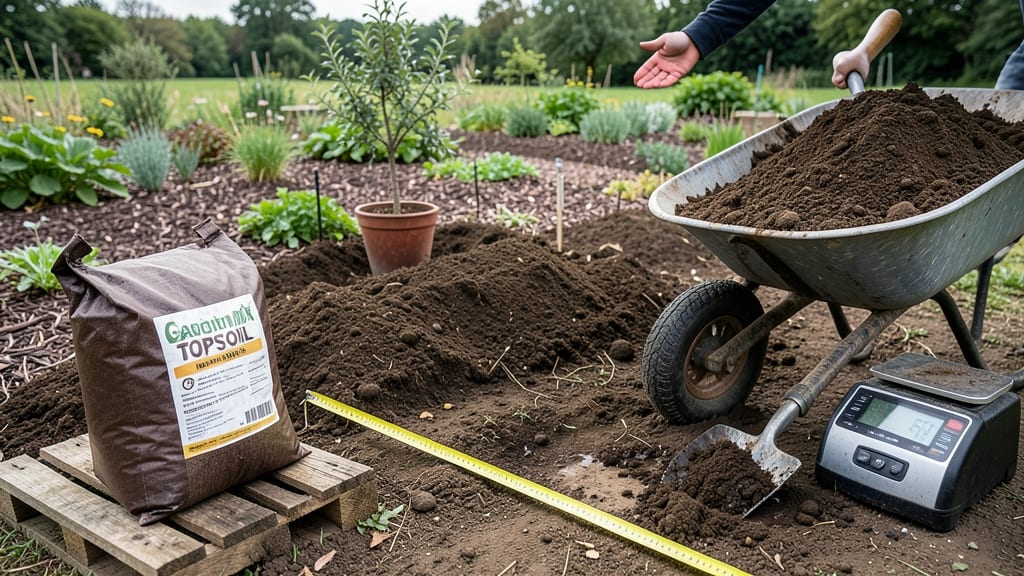
Determining how much a yard of garden soil weighs shows it typically ranges from 1,800 to 2,200 pounds, with variations based on moisture levels, organic content, and soil type—loose topsoil averages 2,000 pounds per cubic yard, while clay-heavy soils can reach 2,500+ pounds when fully saturated.
A yard of garden soil's weight isn't just about volume—it's a science of what's inside. 🌱 The moisture content alone can swing weights by hundreds of pounds, since water adds significant mass without changing the cubic yard measurement.
For example, dry, sandy soil might tip the scales at 1,800 pounds, while the same volume of wet clay soil could exceed 2,500 pounds. Even the organic matter percentage plays a role, as decomposed plant material creates lighter, airier soil structures.
This weight variation matters most when planning deliveries or storage—many suppliers use 2,000 pounds as a standard estimate, but clay-heavy soils often require heavier equipment. I always recommend checking with your local supplier about their specific soil composition before making assumptions about load capacity.
For DIY projects, a simple moisture test (squeeze a handful—if water drips, expect heavier weight) can help you adjust your calculations.
💡 In This Article
- Factors Affecting Garden Soil Weight per Cubic Yard
- Practical Tips for Estimating Soil Weight Before Purchasing
Factors affecting garden soil weight per cubic yard
Soil weight varies dramatically because it's not just dirt—it's a complex mix of minerals, organic matter, water, and air pockets. The moisture content alone can account for up to 50% of the total weight in saturated soils.
For instance, clay particles (which are plate-shaped) hold water tightly between their layers, creating a dense, heavy structure that can push a cubic yard to 2,500 pounds when fully hydrated. In contrast, sandy soils have larger particles with minimal water retention, typically weighing closer to 1,600-1,800 pounds when dry.
The organic matter percentage also plays a critical role—compost or decomposed plant material creates lighter, more porous soil structures. A soil with 10% organic content might weigh 1,800 pounds per cubic yard, while the same volume with only 2% organic matter could tip the scales at 2,200 pounds.
This is because organic material increases porosity, allowing more air space and reducing overall density. Think of it like comparing a sponge (light when dry) to a brick (dense and heavy). 🌱
Particle size distribution matters too—clay soils have the smallest particles (0.002mm diameter), creating tight packing and higher density. Sandy soils, with particles 0.05-2mm, have larger air gaps between grains, making them lighter.
The compaction level also affects weight: freshly tilled soil might weigh 1,800 pounds, but the same volume after heavy machinery compaction could reach 2,400 pounds. This explains why construction sites often use "bank cubic yards" (loose soil) versus "compacted cubic yards" for accurate volume calculations.
Temperature and season also influence weight—soil expands when frozen (water turns to ice) and contracts when dry. In my experience working with landscapers, spring deliveries often require heavier equipment because winter-saturated soils can weigh 30-40% more than their summer counterparts.
The key takeaway is that soil isn't a uniform material—its weight is constantly changing based on environmental conditions and composition. This variability is why suppliers always ask about your project's specific soil needs before quoting weights.
For precise calculations, soil scientists use a measurement called bulk density (pounds per cubic foot). Typical ranges are:
- Sandy soil: 90-110 lbs/ft³ (1,620-1,980 lbs/yd³)
- Loamy soil: 75-100 lbs/ft³ (1,350-1,800 lbs/yd³)
- Clay soil: 100-130 lbs/ft³ (1,800-2,340 lbs/yd³)