
Light Requirements
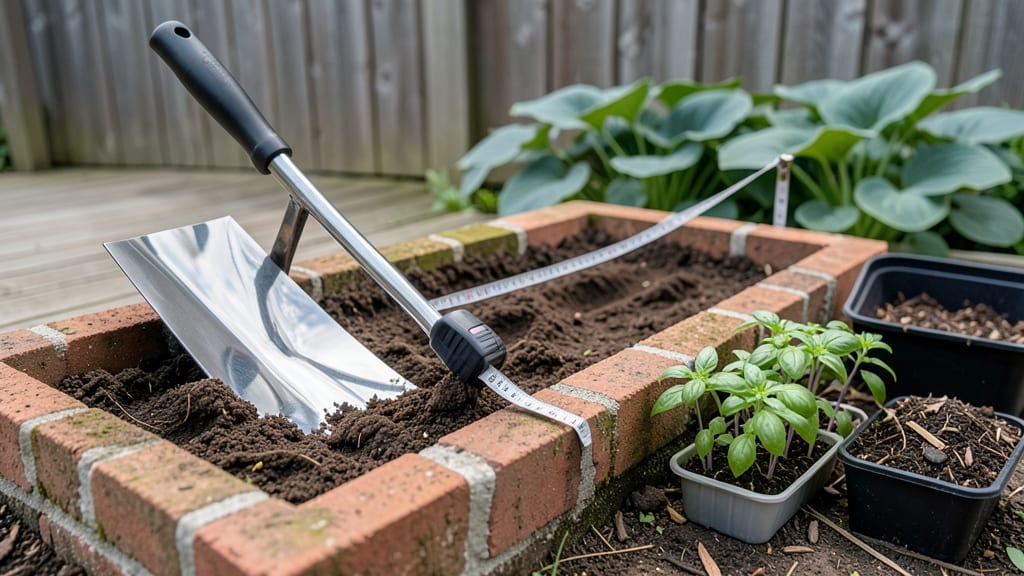
Calculating how much soil for a garden bed requires multiplying length by width by depth (in feet), then converting cubic feet to cubic yards. For example, a 4’x8’ bed at 6” depth needs 1.78 cubic feet, or about 0.066 cubic yards of soil.
Figuring out soil volume starts with your garden bed's dimensions.
To get the right amount, convert all measurements to feet first—this avoids messy calculations later. 🌱 For instance, if your bed is 5 feet long, 3 feet wide, and you want 12 inches of soil depth (which is 1 foot), you'd multiply 5 × 3 × 1 = 15 cubic feet.
Most soil is sold by the cubic yard, so divide by 27 (since 1 cubic yard = 27 cubic feet) to get 0.56 cubic yards. Pro tip: Always round up when buying soil to account for settling and potential errors in your measurements.
Depth matters too—roots need space to grow, and deeper beds often mean healthier plants. A standard depth of 6-12 inches is ideal for most vegetables, but deeper beds (18+ inches) are better for root crops like carrots or potatoes.
If your soil is heavy clay or sandy, you might need to adjust the type of soil you buy to improve drainage or fertility, which can change how much you need overall.
💡 In This Article
- Garden Bed Soil Volume Formula Explained
- Choosing the Right Soil Type and Quantity for Your Garden Bed
Garden bed soil volume formula explained
At its core, calculating soil volume relies on a simple geometric principle: volume equals length × width × depth. But here's what most gardeners miss—the units must be consistent. If you measure length and width in feet but depth in inches, your calculation will be wildly off.
For example, a 6-inch depth converts to 0.5 feet, not 6. This small conversion error can lead you to buy 30% more or less soil than needed. Always convert inches to feet first by dividing by 12, then multiply all three dimensions together.
The depth of your soil directly impacts plant health because roots need space to access nutrients and water. A 6-inch depth is the minimum for most annual vegetables, while perennials and root crops (like beets or sweet potatoes) thrive with 12-18 inches of soil.
Think of it like a sponge: deeper soil holds more moisture and nutrients, reducing the need for frequent watering.
For a 4'x8' bed with 12 inches of depth, you'd calculate 4 × 8 × 1 = 32 cubic feet—that's about 1.19 cubic yards of soil, enough to support a thriving vegetable garden.
Converting cubic feet to cubic yards can be confusing because most soil is sold by the yard. Remember this rule: 1 cubic yard = 27 cubic feet. So if your calculation gives you 45 cubic feet, divide by 27 to get 1.67 cubic yards.
Always round up to the nearest quarter-yard when purchasing, since soil settles slightly after spreading. Pro tip: Buy a 1-cubic-yard bag (about 27 cubic feet) for smaller beds—it's easier to handle and less likely to go to waste.
Measurement mistakes happen more often than you'd think. One common error is ignoring the existing soil level in in-ground beds. If you're adding soil to an existing garden, measure the depth of your current soil first, then calculate how much additional soil you need.
For raised beds, account for the frame height—if your bed is 12 inches tall but you only want 6 inches of soil, you'll need to fill the remaining space with wood chips or landscape fabric to prevent root intrusion.
Always double-check your math with a calculator to avoid costly over- or under-purchasing.
Here's another critical factor: soil type affects volume. Loose, fluffy compost expands more than dense topsoil, meaning you might need 10-20% less by volume. For example, a 1-cubic-yard bag of compost might cover slightly more area than the same volume of topsoil.
If you're mixing soil types (like adding compost to topsoil), calculate each component separately. For instance, a 50-50 mix of topsoil and compost for a 4'x8' bed at 12 inches depth would require 1.5 cubic yards total (0.75 yards each), not 1.19 yards of a single type.
Visualizing soil volume helps prevent surprises. Imagine stacking 27 one-foot cubes—that's a single cubic yard. For a 4'x8' bed at 6 inches, you'd need about 1.78 cubic feet, which is roughly 1/15th of a cubic yard.
That's why most gardeners buy soil in 0.5-cubic-yard increments—it's the most practical unit for small to medium beds. When in doubt, sketch your bed dimensions and do a quick volume check before heading to the nursery. 🌱