
Light Requirements
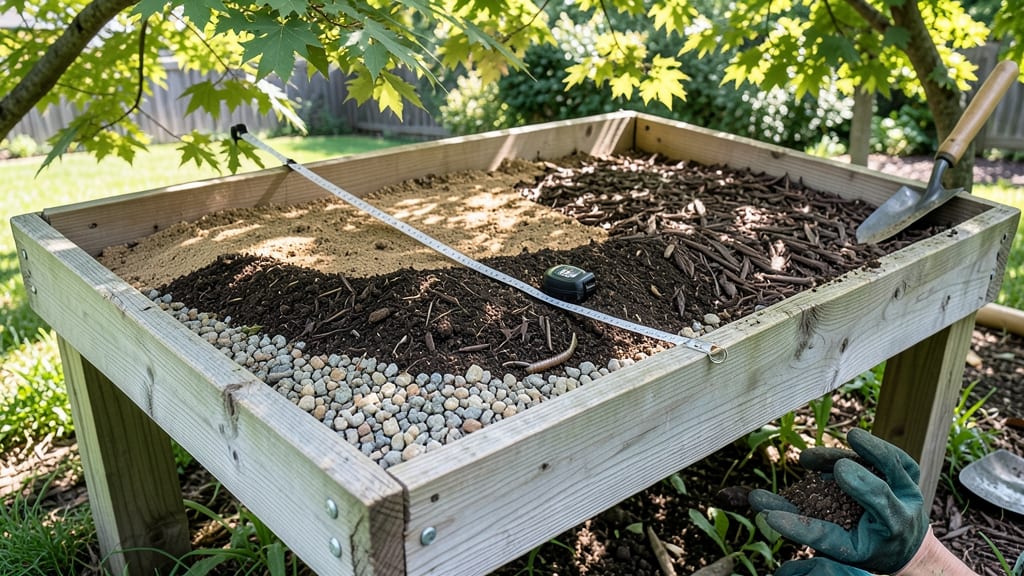
Filling a raised garden bed with the right amount of soil ensures your plants thrive 🌱—but guesswork leads to wasted money, poor drainage, or stunted roots.
You’ve probably seen raised beds overflowing with soil or left half-empty, wondering if it really matters. The truth? Depth isn’t one-size-fits-all. Shallow beds struggle with root-heavy crops like tomatoes, while overfilled beds invite drainage issues and higher costs.
Below, I’ll show you how to calculate the perfect soil depth for your bed’s size and the plants you’re growing—no math anxiety required.
Most gardeners aim for 6 to 12 inches of soil, but that’s just the starting point. Heavy feeders like squash or deep-rooted perennials need extra space, while shallow-rooted herbs can thrive in less.
We’ll break down the science behind soil layers, how to measure your bed’s volume, and which amendments (like compost or sand) keep your soil healthy long-term.
Ready to stop overbuying soil or watching your plants fight for space? By the end, you’ll know exactly how much to fill your raised bed—down to the cubic foot—and how to adjust for different crops. Let’s get growing!
Raised garden bed soil depth guide by plant type: root depth requirements
The standard 6-12 inches of soil in raised beds works for many plants, but some varieties—like tomatoes or asparagus—need deeper roots to thrive. Shallow soil restricts growth, while overfilling wastes resources and can cause compaction.
Understanding root depth requirements ensures your plants access nutrients, water, and stability. Below, we break down soil depths by plant type, including adjustments for heavy feeders and perennials.
Most leafy greens (e.g., lettuce, spinach) and shallow-rooted herbs (basil, cilantro) thrive in just 6-8 inches of soil. However, deep-rooted vegetables like carrots or potatoes need 12-18 inches to prevent forking or stunted growth.
Fruiting plants such as tomatoes and peppers benefit from 12-18 inches to support their heavy foliage and fruit production.
For perennials like asparagus or rhubarb, aim for 12-24 inches of soil depth. These plants develop extensive root systems over years, and shallow beds will limit their long-term productivity. Even berries (strawberries, raspberries) prefer 10-12 inches to establish strong roots and produce abundant fruit.
🌱
| Plant Type | Root Depth | Soil Depth Needed | Notes |
|---|---|---|---|
| Leafy Greens | Shallow | 6-8 inches | Lettuce, spinach, kale |
| Herbs | Moderate | 8-12 inches | Basil, parsley, chives |
| Root Vegetables | Deep | 12-18 inches | Carrots, potatoes, beets |
| Fruiting Plants | Moderate-Deep | 12-18 inches | Tomatoes, peppers, cucumbers |
| Perennials | Very Deep | 12-24 inches | Asparagus, rhubarb, berries |
| Flowers | Moderate | 8-12 inches | Marigolds, zinnias, lavender |
If your raised bed is only 6-8 inches deep, prioritize shallow-rooted plants like radishes or green onions. For deeper beds, layer the soil with a mix of topsoil, compost, and organic matter to improve drainage and fertility.
Heavy feeders like tomatoes or peppers will reward you with larger yields if given the extra space.
For container gardening or small raised beds, consider deep-rooted varieties like bush beans or determinate tomatoes, which adapt well to 10-12 inches of soil. Always leave 1-2 inches of space below the bed’s rim to prevent spillage during watering.
Test your soil depth annually, as organic matter decomposes and settles. Top up with compost or aged manure to maintain optimal levels. Avoid overfilling, as excess soil can lead to poor drainage and root rot, especially in clay-heavy mixes.
🌿
When planning your raised bed layout, group plants with similar root depth requirements together. For example, place carrots and potatoes in one section with deeper soil, while lettuce and basil can share a shallower area. This zoning strategy maximizes space and simplifies maintenance.
For new gardeners, start with a 12-inch soil depth as a baseline. This accommodates most vegetables and herbs while allowing room for adjustments as you learn which plants thrive in your climate. Over time, you’ll refine your approach based on what grows best in your specific conditions.
🌱
Step-by-step soil volume calculator: how to measure for your raised bed
Calculating the exact amount of soil for your raised bed prevents waste and ensures your plants have the right growing space. Start by measuring your bed’s length, width, and depth.
For example, a 4x8 ft bed filled to 12 inches needs a precise soil volume—otherwise, you’ll end up with leftover bags or struggling roots. The key is using the cubic feet formula and adjusting for soil type, since compost blends settle more than topsoil.
Most gardeners aim for 6 to 12 inches of soil depth, but heavy feeders like tomatoes or squash need 12+ inches. Lightweight herbs like basil thrive in 6 inches.
To avoid guesswork, we’ll use a simple formula: Length (ft) × Width (ft) × Depth (ft) = Cubic Feet. Then, multiply by 1.3 for compost-heavy mixes (they compact over time) or 1.1 for loam-based soils. Let’s break it down step by step.
- 1 Measure your bed’s length, width, and depth in feet. Example: A 4x8 ft bed with 12-inch depth = 1 ft depth.
- 2 Calculate cubic feet: Length × Width × Depth. For our example: 4 × 8 × 1 = 32 cubic feet.
-
3
Adjust for soil type:
- Compost-heavy mix: Multiply by 1.3 (32 × 1.3 = 41.6 cubic feet).
- Loam-based soil: Multiply by 1.1 (32 × 1.1 = 35.2 cubic feet).
- 4 Round up to the nearest whole number. For compost-heavy soil, you’d need 42 cubic feet (or 10.5 bags if each bag is 4 cubic feet).
- 5 Test-fit your soil before finalizing. Fill the bed halfway, then check if the soil level is even. Use a level tool or straight board to ensure consistency.
- 6 Add a 1-inch layer of compost on top after planting to maintain nutrients and prevent erosion.
For a 3x6 ft bed filled to 10 inches, the math looks like this: 3 × 6 × 0.83 = 15 cubic feet (10 inches = 0.83 ft). If using a 50/50 compost-loam mix, multiply by 1.2 for a total of 18 cubic feet.
This ensures your soil stays loose and fertile for root growth. Always leave 2–3 inches below the rim for easy watering and weeding.
Remember, soil settles over time, especially with organic matter. After the first rain or when you plant, check depth again and top off if needed. Heavy clay soils may need sand or perlite to improve drainage, while sandy soils benefit from peat moss or coconut coir to retain moisture.
Adjust your mix based on your local soil type for the best results.
Now that you’ve calculated the perfect volume, grab your garden rake, wheelbarrow, and gloves, and fill that bed like a pro. Your plants will thank you with stronger roots, better yields, and fewer headaches down the line. Happy gardening! 🌱