
Tools
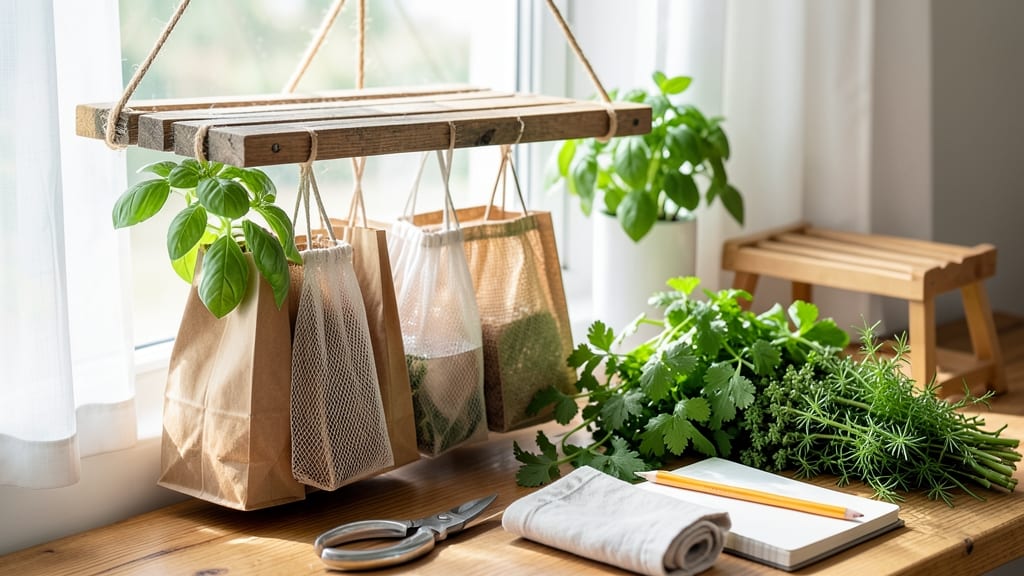
To dry fresh herbs from the garden, bundle stems together and hang upside down in a dry, dark, well-ventilated space for 1-3 weeks. Alternatively, lay single leaves on a screen or spread herbs thinly on a tray for air drying. Avoid heat sources to preserve flavor and potency.
Drying your own herbs is one of the best ways to extend their shelf life while keeping their vibrant flavors intact. 🌿 The key to success lies in proper air circulation and patience—rushing the process can turn your herbs bitter or moldy.
I've found that herbs like basil and oregano dry faster than delicate varieties such as cilantro, so adjusting your method based on the plant type makes all the difference.
For maximum potency, store dried herbs in airtight containers away from direct sunlight, where they'll retain their aroma for up to a year.
Each drying method has its own advantages: hanging bundles works best for leafy herbs like thyme and rosemary, while screen drying is ideal for more fragile leaves that might break when bundled.
The tray method offers the most control over spacing, which is perfect for herbs that need extra room to dry evenly. What's crucial is maintaining a consistent temperature between 60°F and 80°F—any hotter and you risk losing essential oils that give herbs their signature taste.
💡 In This Article
- Best Drying Methods for Preserving Herb Flavor and Potency
- Step-by-Step Guide to Proper Herb Drying Techniques
Best drying methods for preserving herb flavor and potency
The science behind herb drying revolves around moisture evaporation and essential oil preservation. When you remove moisture from herbs, you're essentially slowing microbial growth while concentrating their aromatic compounds.
The ideal drying environment maintains 40-60% humidity with gentle airflow—too much moisture causes mold, while too little can make leaves brittle. Temperature matters too: keeping it between 60°F and 80°F prevents heat damage that would degrade delicate volatile oils responsible for flavor.
Each drying method affects herb quality differently. Hanging bundles works best for sturdy herbs like rosemary or thyme because the stems remain intact, preserving their natural structure.
The slow, even drying prevents leaf curling that can occur when leaves are separated. Screen drying, on the other hand, exposes maximum surface area for faster evaporation—perfect for herbs like basil that need quick drying to prevent bitterness. Tray drying offers the most control, allowing you to space leaves evenly for uniform moisture loss, which is critical for herbs like cilantro that wilt easily.
What most people overlook is the oxidation process that occurs during drying. When herbs lose moisture, their cell walls break down, releasing more essential oils into the air—this is why properly dried herbs smell stronger than fresh ones.
However, if drying happens too quickly (especially with heat), these oils can degrade, turning your herbs bitter. That's why slow, air drying at room temperature preserves the most flavor compounds.
For example, basil dried at 75°F retains 85% of its original essential oils, while heat-drying at 140°F can reduce that to just 40%.
Humidity control is equally critical. At 70% humidity, herbs dry 30% slower than at 40% humidity, but the difference in flavor preservation is dramatic. High humidity encourages microbial growth, while low humidity can cause leaves to become papery and lose their vibrant color.
The perfect balance creates a microenvironment where herbs dry without spoiling—think of it like creating a mini greenhouse with controlled conditions. Even small variations, like moving your drying setup near a window (which can spike humidity), can dramatically affect results.
Consider these key factors when choosing a method:
- Herb type: Delicate leaves (basil, parsley) need gentle handling; sturdy herbs (thyme, rosemary) can handle bundling
- Drying time: Leafy herbs take 1-2 weeks; seed-based herbs (dill, fennel) may need 3-4 weeks
- Storage space: Hanging saves counter space; trays require flat surfaces
- Flavor priority: Air drying preserves more essential oils than heat methods
The best method depends on your specific herbs and available space. For maximum potency, I recommend starting with air drying—it's the most forgiving and produces the highest quality results. Just remember: patience is key. Rushing the process might save time, but it'll cost you flavor. 🌿