
Tools
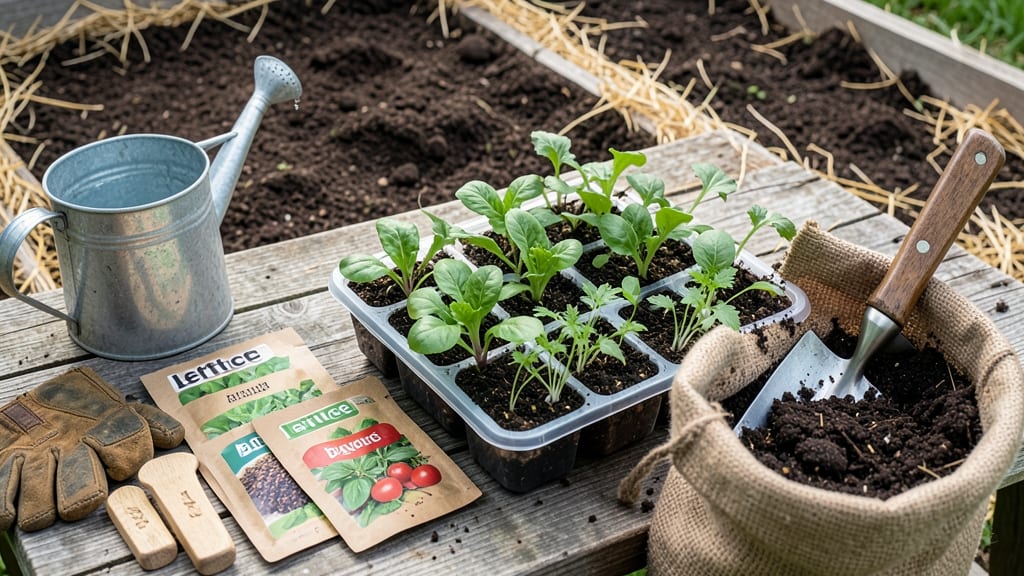
To start a garden from scratch, begin by selecting a sunny spot with at least six hours of sunlight daily, then test and improve your soil with compost. Choose hardy starter plants like basil or lettuce, design your layout with proper spacing, and maintain consistent watering for steady growth.
Starting a garden from scratch doesn't have to be overwhelming—even complete beginners can create thriving plots with the right approach. 🌱 The key is focusing on three pillars: sunlight exposure, soil quality, and plant selection.
I've found that many first-time gardeners underestimate how much sunlight their space actually gets, so using a simple sunlight tracker for a few days helps avoid costly mistakes.
For soil, a basic pH test (available at garden centers) will tell you whether you need to add lime or sulfur before planting.
When choosing plants, stick to varieties with short growing seasons like radishes (ready in 3-4 weeks) or bush beans (60 days). These give quick rewards that keep beginners motivated. The spacing between plants is often overlooked—crowding leads to competition for nutrients and increases disease risk.
I recommend using a simple grid system with string and stakes to visualize your layout before digging.
💡 In This Article
- Essential Steps to Prepare Your Garden Soil
- Beginner-Friendly Plants for First-Time Gardeners
Essential steps to prepare your garden soil
Healthy soil acts like a living ecosystem where roots anchor, water filters, and nutrients become available to plants. The foundation starts with a soil test—most garden centers offer DIY kits for under $20.
This reveals your soil's pH (the acidity/alkalinity scale from 0-14) and nutrient levels. Most vegetables thrive in slightly acidic to neutral soil (pH 6.0-7.0), while blueberries need acidic soil (pH 4.5-5.5).
For example, if your test shows pH 5.0 but you want to grow tomatoes (ideal pH 6.0-6.8), you'll need to add pelletized lime at a rate of 50 lbs per 1,000 sq ft.
The next critical step is amending with organic matter. Compost transforms hard, compacted soil into loose, crumbly "loam" that holds moisture and air. Aim for 2-3 inches of compost mixed into the top 6-12 inches of soil.
For clay soil (which drains poorly), blend in sand or perlite to improve aeration, while sandy soil benefits from peat moss or coconut coir to retain water. The decomposition process releases beneficial microbes that help roots absorb nutrients—think of it as a natural fertilizer factory. 🌱
Nutrient balance matters just as much as pH. Essential elements like nitrogen (for leafy growth), phosphorus (for roots), and potassium (for disease resistance) should be present in roughly 3:1:2 ratios. A slow-release organic fertilizer like fish emulsion (5-1-1 ratio) or bone meal (3-15-0 ratio) provides these without burning plants.
I've seen beginners overdo synthetic fertilizers, which can lead to "fertilizer burn"—yellowing leaves and stunted growth. Instead, think of soil amendments as a long-term investment: a 5-gallon bucket of compost can improve 100 sq ft of garden bed.
Timing your soil prep is crucial. In temperate climates, work the soil 4-6 weeks before planting to allow amendments to integrate. For spring planting, this means starting in late winter. In warmer regions, you can amend soil year-round, but avoid working wet soil—it compacts easily.
A simple test: squeeze a handful—if it holds shape but crumbles when you poke it, it's ready. If it sticks together like clay, wait for drier conditions. 💧
Don't overlook the role of beneficial organisms. Healthy soil teems with earthworms, fungi, and bacteria that break down organic matter. To encourage these, avoid chemical pesticides that kill helpful microbes. Instead, use compost tea (steeped compost in water) or mycorrhizal fungi inoculants to boost microbial activity.
These tiny helpers can increase nutrient availability by up to 80%, making your plants more resilient.
Finally, consider mulching. A 2-3 inch layer of straw or wood chips helps retain moisture, suppress weeds, and gradually decompose to feed the soil. Organic mulches break down over time, while inorganic mulches (like gravel) only suppress weeds.
For vegetable gardens, straw is ideal—it decomposes slowly and won't introduce weeds. 🌿