
Light Requirements
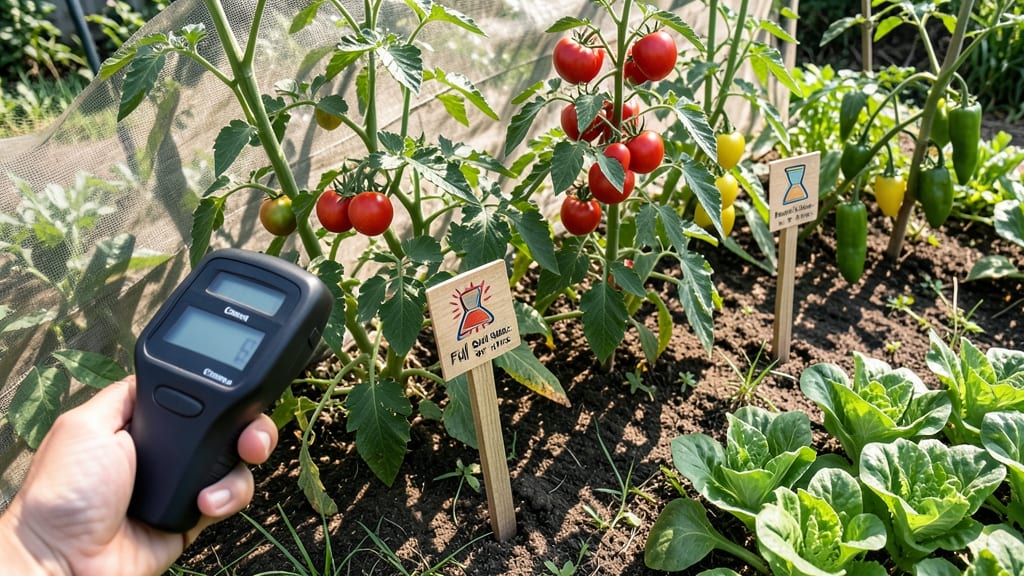
A vegetable garden needs 6 to 8 hours of sunlight daily to thrive, but not all crops demand the same intensity—some even wilt under too much heat.
Picture this: your tomatoes stretching toward the sky like sunflowers, while your lettuce bolts to seed in the same spot. That’s the difference between perfect placement and wasted effort. The right sunlight balance turns your garden from a guesswork project into a productive powerhouse.
Here’s how to match your garden’s sunlight to your crops’ needs—from full-sun lovers like peppers to shade-tolerant greens—and how to tweak your layout for the best results.
You’ll learn which vegetables need partial shade, how to test your garden’s sunlight, and simple tricks to stretch sunlight where it’s scarce.

Sunlight requirements by vegetable type: full sun vs. partial shade needs
Sunlight is the lifeblood of your vegetable garden, but not all crops have the same appetite for it. Tomatoes and peppers thrive under full sun (6+ hours), while leafy greens like spinach tolerate partial shade (3-6 hours).
Understanding these needs prevents wasted effort and maximizes your harvest. Let’s break down the sunlight spectrum for your favorite veggies.
Most gardeners assume more sun is always better, but some vegetables—like radishes or arugula—actually bolt (go to seed prematurely) in intense heat. The key is matching each plant’s sunlight tolerance to your garden’s microclimates.
A north-facing bed might get only 3 hours of sun, while a south-facing spot could hit 8+ hours.
Here’s how to categorize your vegetables by sunlight needs, with real-world examples to guide your planting layout. Use this as your garden’s sunlight blueprint to avoid common pitfalls like stunted growth or bitter flavors.
| Vegetable | Sunlight Needs | Notes |
|---|---|---|
| Tomatoes | 6–8+ hours (Full Sun) | Needs consistent sun; less than 6 hours reduces fruit set. |
| Peppers | 6–8 hours (Full Sun) | Heat-loving; partial shade can lead to poor fruiting. |
| Cucumbers | 6–8 hours (Full Sun) | Use trellises to optimize space; vines need airflow. |
| Spinach | 3–6 hours (Partial Shade) | Bolts in heat; morning sun with afternoon shade ideal. |
| Lettuce | 3–5 hours (Partial Shade) | Heat-sensitive; shade cloth helps in summer. |
| Radishes | 3–4 hours (Partial Shade) | Fast-growing; too much sun causes bitterness. |
| Green Beans | 6–8 hours (Full Sun) | Bush types tolerate partial shade but yield less. |
| Carrots | 4–6 hours (Partial Sun) | Thin soil prevents forked roots; loosen beds. |
| Swiss Chard | 3–6 hours (Partial Shade) | Cut-and-come-again; heat-tolerant once established. |
| Basil | 6+ hours (Full Sun) | Drought-sensitive; mulch to retain moisture. |
For full-sun lovers like tomatoes and peppers, aim for 6+ hours of direct sunlight daily. These crops rely on sunlight for photosynthesis and fruit development. Plant them in the sunniest spots of your garden, often the south-facing beds in the Northern Hemisphere.
Vegetables in the partial-shade category (3–6 hours) thrive with morning sun and afternoon shade. This setup prevents bolting in heat-sensitive crops like lettuce or spinach. Use dappled shade from nearby trees or install shade cloth during peak afternoon heat.
Shade-tolerant crops (under 3 hours) are rare but include arugula and microgreens. These are perfect for container gardens on patios or under tree canopies. Pair them with taller plants to create natural shade for other sun-loving crops.
How to measure and optimize sunlight in your garden layout
Sunlight is the backbone of your vegetable garden, but not all plants need the same amount. Full-sun lovers like tomatoes and peppers thrive with 6-8 hours of direct light, while leafy greens like spinach tolerate 3-4 hours of partial shade.
The challenge? Sunlight shifts with the seasons and your garden’s microclimates. Without measuring it properly, you might end up with leggy plants or stunted growth—even in sunny climates.
Start by observing your garden’s sunlight patterns for at least 2-3 weeks before planting. Use a sunlight journal or app like SunCalc to track how shadows move throughout the day.
For example, a spot that gets 6 hours of sun in June might only receive 4 hours in September due to the sun’s lower angle. This seasonal shift can drastically change which crops thrive in your space.
- 1 Test sunlight with a DIY shade test: Place a white board or chalkboard in your garden for a full day. Mark the shadow’s edges every hour to map sunlight exposure. Repeat in spring, summer, and fall for accuracy.
- 2 Use companion planting to optimize space: Pair sun-loving tomatoes with shade-tolerant lettuce under their canopy. This maximizes sunlight for both while reducing competition.
- 3 Adjust for seasonal shifts: In summer, move heat-sensitive crops like basil to morning sun and afternoon shade. In winter, extend growing seasons with cold frames or row covers to capture extra light.
- 4 Leverage vertical space: Use trellises or cages for vining plants like cucumbers or pole beans to grow upward, freeing up ground space for shade-loving herbs below.
- 5 Rotate crops annually to prevent soil depletion and adjust for changing sunlight. For example, if your south-facing bed gets too hot in summer, switch from peppers to shade-tolerant arugula in peak heat.
Don’t overlook microclimates in your garden—even a 5-foot difference in elevation can change sunlight by 1-2 hours. For instance, a north-facing slope might get less sun than flat ground, while a south-facing wall can create a sun trap for heat-loving plants.
Use these natural variations to your advantage by placing delicate greens in cooler microclimates and heat-resistant crops in sunnier spots.
For container gardens, rotate pots quarter-turns every few days to ensure even sunlight exposure. This is especially critical for balcony gardens where shadows from buildings or trees can shift rapidly.
A simple sunlight tracker app can alert you to these changes and help you adjust your layout before issues arise.
Finally, seasonal pruning can help manage sunlight. In late summer, prune overly dense foliage on plants like zucchini to improve air circulation and light penetration to lower leaves. This not only boosts yield but also reduces the risk of fungal diseases that thrive in shaded, humid conditions.
By mastering these techniques, you’ll transform your garden into a sunlight-efficient powerhouse, ensuring every plant gets exactly what it needs—whether it’s 6 hours of blazing sun or just a gentle 3-hour morning glow. 🌱☀️✂️