
Tools
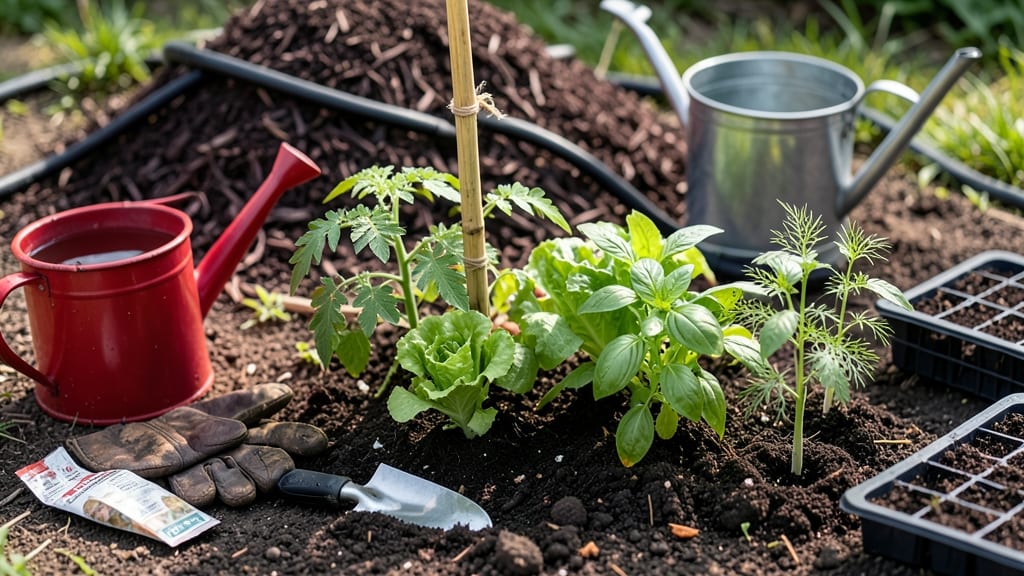
To start a garden in your backyard, begin by choosing a sunny location, testing your soil's fertility, selecting easy-to-grow plants like basil or spinach, and enriching the soil with compost before planting. Keep your first garden small to simplify maintenance and monitor growth regularly.
Starting a backyard garden doesn't have to be overwhelming—it's all about smart planning. 🌱 The right sun exposure (at least 6 hours daily) and soil health (test pH and nutrients) set the foundation for success.
I always recommend starting with low-maintenance plants like herbs or lettuce, which thrive even with beginner mistakes. Containers work perfectly for small spaces, while in-ground beds offer more flexibility for larger projects.
What many beginners overlook is the power of seasonal timing. Planting at the right time—after the last frost in spring or before the first frost in fall—maximizes growth. A 10x10-foot plot is ideal for first-timers, giving enough space to experiment without feeling crushed by weeds or pests.
Track your progress with a simple journal to learn what works best in your climate.
💡 In This Article
- Essential Backyard Garden Planning Steps
- Beginner-Friendly Backyard Garden Ideas
Essential backyard garden planning steps
First, assess your yard's sunlight patterns for at least 24 hours—most vegetables and herbs need 6-8 hours of direct sun daily, while leafy greens tolerate 4-6 hours.
I use a simple trick: mark your yard with stakes every 10 feet and observe which areas get morning sun (cooler, ideal for heat-sensitive plants) versus afternoon sun (hotter, better for drought-tolerant varieties). Shade from trees or buildings can create microclimates where some plants thrive while others struggle.
The soil's composition determines what grows easily. Test your soil's pH (ideal range: 6.0-7.0 for most plants) and nutrient levels using a $10 home kit or send a sample to your local extension service for detailed analysis.
Sandy soil drains too quickly, while clay holds water like a sponge—both extremes require amendments. For example, adding 2-3 inches of compost improves clay soil's structure by creating air pockets, while peat moss helps sandy soil retain moisture. 🌱
Seasonal timing depends on your USDA hardiness zone. In Zone 5, for instance, cool-season crops like spinach or peas should go in early spring (March-April) or late summer (August-September), while warm-season tomatoes prefer after the last frost (mid-May).
Check your local frost dates—planting too early risks frost damage, while waiting too long shortens the growing season. Pro tip: Use row covers to extend early/late seasons by 2-4 weeks.
Space constraints often limit beginners, but vertical gardening solves this. A 6-foot trellis can support pole beans or cucumbers, saving 30% of ground space compared to sprawling vines. For small yards, raised beds (even 2x4-foot sizes) offer better drainage and warmer soil in spring.
I've seen 4-inch-deep containers grow lettuce and herbs successfully—just ensure they have drainage holes to prevent root rot.
Don't overlook the importance of drainage. Poor drainage leads to root rot, especially in heavy clay soils.
Before planting, dig a 6-inch-deep hole and fill it with water—if it drains in 1 hour, your soil is good; if it takes longer, amend with organic matter like compost or coconut coir.
A slight slope (1-2 degrees) in your garden bed helps water flow away from plants naturally. 💧
Finally, plan for maintenance. A 3-foot-wide path between beds makes weeding and harvesting easier, while mulching with 2-3 inches of straw suppresses weeds and retains moisture. Start with a 10x10-foot plot—any larger risks overwhelming beginners with weeds and pests.
Track your progress weekly to adjust watering (typically 1-1.5 inches per week) and notice which plants thrive in your conditions.