
Fertilization
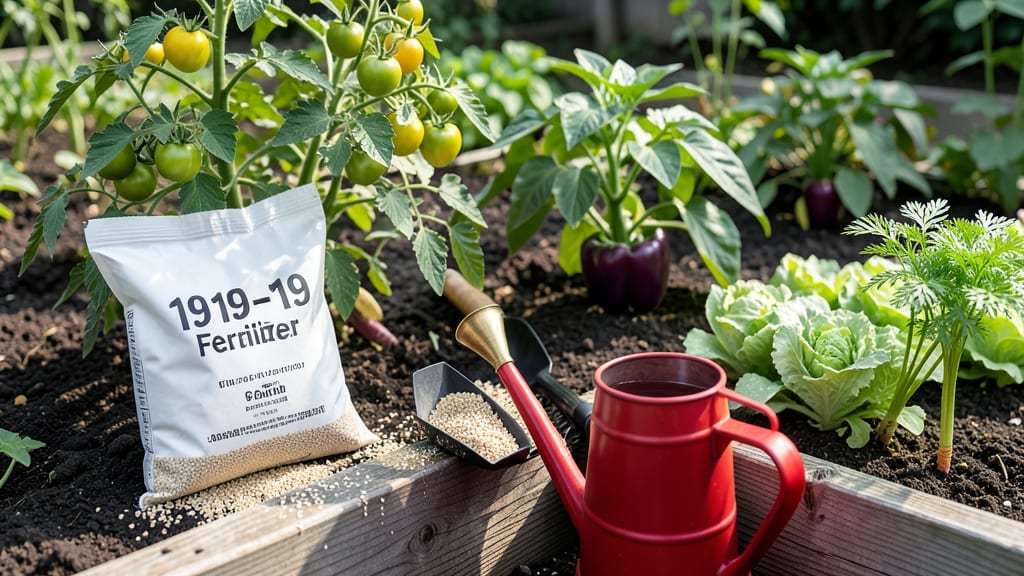
19-19-19 fertilizer can be good for vegetable gardens when used carefully, offering balanced nitrogen, phosphorus, and potassium to support leafy growth, root development, and flowering—but its high salt index may require dilution for sensitive plants like tomatoes or peppers.
This balanced fertilizer works well for general vegetable growth because its equal parts nitrogen, phosphorus, and potassium promote overall plant health. 🌱 For leafy greens like spinach or kale, the nitrogen helps produce lush foliage, while fruiting plants such as peppers benefit from the phosphorus boost during flowering.
However, the high salt content means you should dilute it to half-strength for delicate crops or use it sparingly to avoid soil buildup.
I’ve found that applying it in early spring or after harvest gives plants a strong start without overwhelming them. For heavy feeders like corn or squash, a light application every 6-8 weeks keeps them thriving without risking salt damage. Always water thoroughly before and after to help prevent root burn.
💡 In This Article
- Understanding 19-19-19 NPK Ratios for Vegetable Growth
- When and How to Use 19-19-19 for Vegetable Gardens
Understanding 19-19-19 NPK ratios for vegetable growth
The 19-19-19 ratio means this fertilizer contains equal parts nitrogen (N), phosphorus (P), and potassium (K) by weight, each providing 19% of the total composition. This balance makes it versatile for vegetable gardens because different crops need these nutrients in varying proportions at different growth stages.
For example, leafy greens like lettuce or spinach thrive on nitrogen-heavy diets to produce abundant foliage, while fruiting plants such as tomatoes or peppers require more phosphorus during flowering and fruiting stages. 🌱 The equal distribution ensures you're not overloading one nutrient while neglecting others.
Nitrogen fuels vegetative growth, helping plants develop strong stems and leaves. Phosphorus supports root development and energy transfer within the plant, which is critical for establishing plants early in their lifecycle. Potassium strengthens cell walls, improves disease resistance, and enhances water regulation—key for drought-prone areas.
The challenge with 19-19-19 is its high salt index (100), which can stress plants if not managed properly. Salts draw water out of plant roots through osmosis, potentially causing dehydration and nutrient uptake issues.
For phosphorus-heavy vegetables like potatoes or carrots, you might need to adjust your approach. While 19-19-19 provides adequate phosphorus, these crops often benefit more from a higher phosphorus ratio like 5-10-10 during their root development phase.
The key is monitoring plant responses: if leaves turn yellow between veins (a nitrogen deficiency) or if flowers drop off (phosphorus deficiency), you may need to tweak your fertilizer blend. Soil testing is your best friend here—it reveals what your garden is already deficient in.
Consider this real-world scenario: I used 19-19-19 on my pepper plants during the flowering stage, but noticed some blossom end rot—a classic potassium deficiency symptom. The issue wasn't the fertilizer itself but rather the soil's existing potassium levels.
After amending with wood ash (a natural potassium source) and reducing the fertilizer's frequency, the problem resolved. This shows how context matters more than the fertilizer's NPK numbers alone. 💡
The 1:1:1 ratio works best for general maintenance rather than targeted deficiencies. For example, it's excellent for establishing new vegetable beds in spring when plants need balanced nutrition to get started.
However, for long-term health, consider rotating with other fertilizers that address specific needs—like a phosphorus-heavy option for root crops or a nitrogen boost for leafy greens later in the season.
What most gardeners overlook is how the physical form of 19-19-19 affects its effectiveness. Granular forms release nutrients slowly over time, making them ideal for pre-planting applications. Water-soluble versions, on the other hand, provide an immediate boost but require more frequent applications.
Choose based on your plants' current needs: slow-release for establishment, quick-release for mid-season corrections.
Remember, the magic isn't in the numbers alone—it's in how you apply them. Think of 19-19-19 as your garden's multivitamin: it covers all bases, but you still need to adjust the dosage based on what your plants are telling you through their growth patterns and any visible deficiencies. 🌿