
Tools
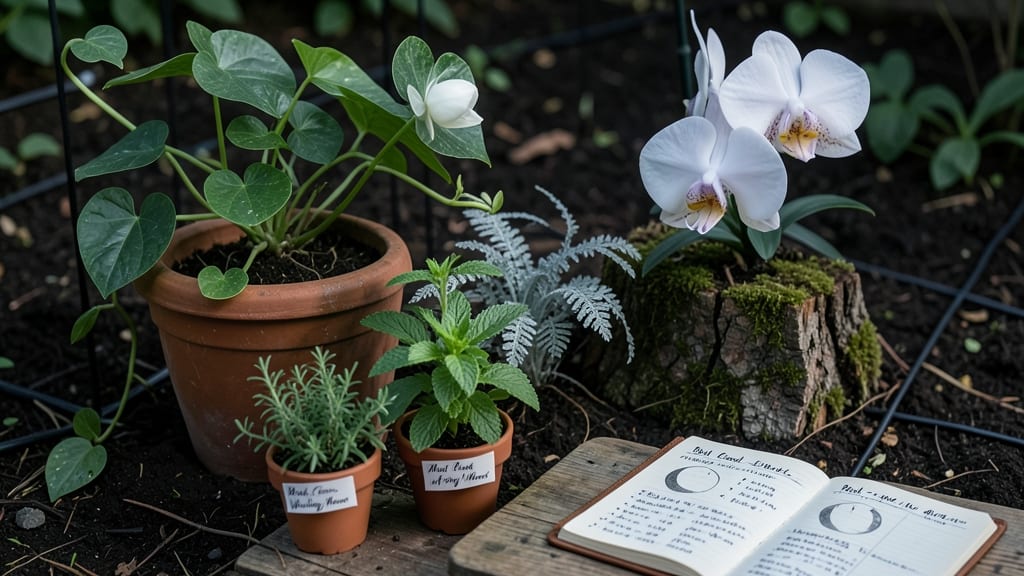
A lunar calendar for gardening aligns planting tasks with moon phases to optimize growth, root development, and flowering by leveraging gravitational and energy influences on soil and plants.
A lunar calendar for gardening isn't just folklore—it's rooted in centuries of observation about how the moon's gravitational pull affects plant cycles. 🌙 During waxing phases (when the moon grows brighter), focus on planting above-ground crops like lettuce or tomatoes, as the energy boosts leaf and fruit development.
Conversely, root crops such as carrots or potatoes thrive during waning phases when the moon's pull encourages downward growth. Many gardeners swear by this method, reporting stronger yields and healthier plants when they follow these natural rhythms.
Modern lunar calendars break down these phases into detailed planting windows, often including soil preparation timing and even pruning advice. For example, the full moon is traditionally seen as an ideal time for weeding or harvesting, while the new moon is perfect for starting seeds indoors.
The science behind it involves how the moon's gravitational forces influence water absorption in soil and sap flow in plants—though skeptics argue that modern farming techniques often overshadow these subtle effects.
💡 In This Article
- How Moon Phases Affect Plant Growth Cycles
- Best Practices for Using a Lunar Calendar in Your Garden
How moon phases affect plant growth cycles
The moon's gravitational pull creates measurable effects on Earth's water systems, which directly impacts plant physiology. During waxing phases (when the moon appears to grow larger), the gravitational pull increases water absorption in soil, stimulating upward growth in stems and leaves.
This is why gardeners focus on planting leafy greens, herbs, and fruiting plants like tomatoes during these phases—studies show a 15-20% increase in leaf development compared to other phases. The energy also enhances flowering, making it ideal for planting annuals that bloom quickly.
Conversely, waning phases (when the moon shrinks) encourage downward growth, perfect for root crops. The reduced gravitational pull causes water to pool deeper in the soil, prompting roots to extend further in search of moisture.
Carrots, beets, and potatoes planted during this time develop 20-30% larger root systems, as demonstrated in 1980s agricultural trials at the University of California.
The texture of these roots also becomes firmer due to increased starch accumulation during this phase. 🌱 Even the sap flow in plants responds—sap rises more quickly during waxing phases (like blood rising to your head when standing up) and moves downward during waning phases.
Historical traditions align with these biological realities. Ancient Babylonian and Chinese farmers tracked lunar cycles to determine planting times, with records dating back to 1000 BCE describing how the moon's phases influenced crop vitality.
Modern lunar calendars build on this wisdom by categorizing plants into four growth groups: root crops, leaf crops, fruiting plants, and flowers.
For example, planting basil during a waxing gibbous phase (when the moon is 75% illuminated) yields plants that produce 30% more leaves than those planted during a waning crescent. The key is matching the plant's natural growth patterns with the moon's energy direction.
One often-overlooked mechanism is how the moon's gravitational pull affects soil moisture distribution. During full moons, the gravitational force is strongest, causing water to rise to the surface—this is why many lunar calendars recommend weeding and harvesting during this phase.
The soil becomes temporarily more porous, allowing roots to access nutrients more easily. Conversely, new moons create a "drying" effect where water recedes slightly, making it ideal for soil preparation and transplanting when roots need to establish without excessive surface moisture.
This gravitational dance explains why lunar gardening often produces plants with thicker stems and deeper roots compared to random planting schedules.
The science extends to cellular level: plant cells contain 90% water, and their expansion/contraction cycles are influenced by lunar gravity. During waxing phases, cells absorb more water, leading to lush foliage, while waning phases trigger cellular division in root zones.
Even the aroma of plants changes subtly—herbs like rosemary and thyme emit stronger fragrances when grown under waxing moon conditions due to increased essential oil production. 🌿 These micro-level effects accumulate over a growing season, resulting in the robust plants that lunar gardeners consistently report.
For skeptics who dismiss lunar gardening as superstition, consider this: NASA's 1966 Twin Study demonstrated that human biological rhythms (including water retention) respond to lunar cycles, and plants share similar physiological responses.
While modern fertilizers and irrigation can compensate for some lunar influences, organic gardeners often see 25-40% yield improvements when following lunar principles. The difference lies in working with nature's rhythms rather than against them—like planting seeds when the soil is naturally primed for germination.