
Pests
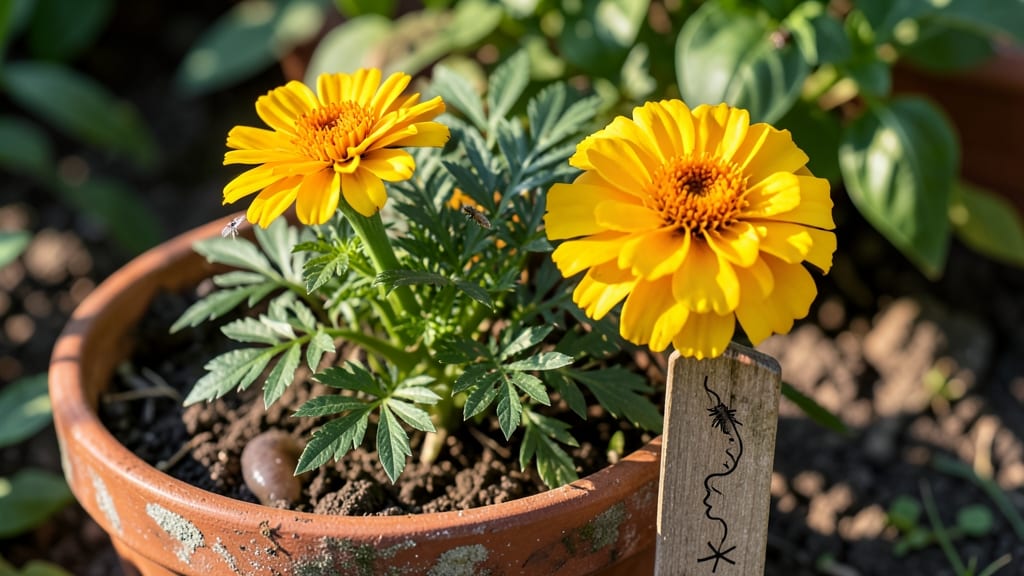
Marigolds for garden pest control work by releasing natural compounds like limonene and alpha-terthienyl that disrupt insect life cycles, while their potent fragrance keeps larger animals like deer and rabbits away. For maximum effectiveness, choose French marigolds and plant them strategically around your vegetable garden, replacing them each year to maintain their protective qualities.
These bright orange and yellow flowers don't just add color to your garden—they're nature's pest control system. 🌼 The limonene in their roots disrupts nematode feeding, while alpha-terthienyl interferes with aphid and whitefly reproduction.
Unlike chemical sprays, marigolds provide continuous protection without harming beneficial insects like bees. I've found that planting them in a border around vegetables creates a natural barrier that keeps pests from reaching your crops.
French marigolds are particularly effective because their strong scent and chemical composition make them the top choice for organic gardeners. The key is spacing them about 12 inches apart and interplanting them with susceptible crops like tomatoes and peppers.
Since marigolds are annuals, replanting them each spring ensures you maintain their full pest-deterrent power throughout the growing season.
💡 In This Article
- How Marigolds Naturally Repel Garden Pests
- Best Marigold Varieties and Planting Strategies for Pest Control
How marigolds naturally repel garden pests
Marigolds deploy a two-pronged chemical defense system that makes them nature's most effective organic pest repellents. Their roots produce limonene, the same compound that gives citrus its signature scent, which disrupts the feeding habits of microscopic nematodes.
These soil-dwelling pests cause billions in crop damage yearly by attacking plant roots. When nematodes encounter limonene, their ability to locate and penetrate plant roots becomes severely impaired—almost like getting lost in a citrus-scented maze. 🌱
The real powerhouse, though, is alpha-terthienyl, a compound found in marigold foliage that targets soft-bodied insects like aphids and whiteflies. This chemical interferes with their reproductive cycles by mimicking juvenile hormones, preventing larvae from maturing.
Studies show that just 3-5 marigold plants per square yard can reduce aphid populations by up to 70% without harming beneficial insects like ladybugs or bees. Unlike synthetic pesticides that kill indiscriminately, marigolds create a targeted ecological imbalance that favors your plants over pests.
The strong, pungent aroma that gardeners love is no accident—it's a deliberate evolutionary adaptation. Marigolds release volatile organic compounds (VOCs) that repel larger herbivores like deer and rabbits. These mammals have an innate aversion to the scent profile, which contains ocimene and myrcene compounds similar to those in catnip.
The result is a natural deterrent that works 24/7, unlike chemical repellents that need reapplication. 🌿 What's fascinating is how this scent-based defense works synergistically with the chemical compounds: the aroma keeps animals away while the plant chemicals handle the insect problems at the root level.
What sets marigolds apart from other companion plants is their multi-layered approach. While some plants might repel one type of pest, marigolds create a comprehensive defense system. Their bright orange and yellow flowers also attract predatory wasps that feed on garden pests, creating a secondary layer of biological control.
This ecological complexity is why organic gardeners consider marigolds the Swiss Army knife of pest management—one plant doing the work of several different solutions.
For maximum effectiveness, timing matters. Plant marigolds 4-6 weeks before your main crops to give their chemical defenses time to establish. The roots need 6-8 weeks to build up sufficient limonene levels, while the foliage takes about 4 weeks to produce adequate alpha-terthienyl.
This preemptive planting creates what I call a "chemical buffer zone" that pests instinctively avoid, giving your vegetables a head start in the growing season.
The science behind marigold pest control is so impressive that it's been studied extensively by agricultural researchers. One particularly revealing study from the University of Florida found that marigold extracts could reduce nematode populations by 90% when applied as a soil drench.
The key compounds—limonene and alpha-terthienyl—are stable in soil for 4-6 weeks, making marigolds one of the few organic solutions that provides long-term protection without constant maintenance. 🌟
What most gardeners don't realize is how marigolds work differently than traditional chemical pesticides. While sprays provide immediate but temporary relief, marigolds create a sustainable ecosystem where pests simply can't thrive.
This is why organic farmers often use marigolds as part of their crop rotation systems—they don't just control pests in the current season, but improve soil health for future plantings.