
Tools
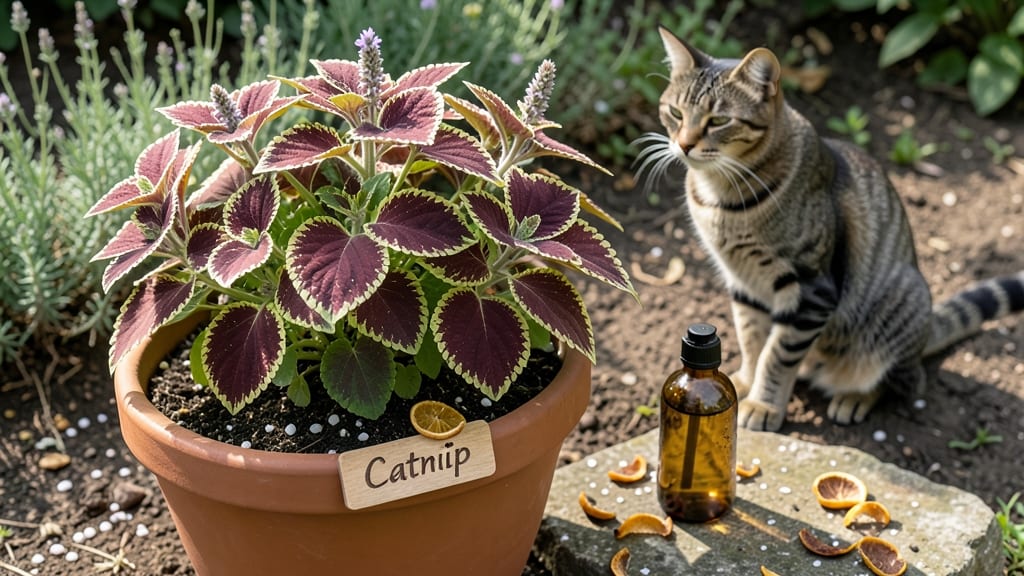
For natural cat deterrents in your garden, try planting strong-scented varieties like coleus canina, rue, or lavender, which cats instinctively avoid. Citrus peels and rosemary also work well as pet-safe repellents that won't harm beneficial insects.
Cats have an incredible sense of smell—about 14 times stronger than humans—and they're naturally repelled by certain plant aromas. 🌿 The oils in plants like rue contain coumarin, a compound that disrupts their feline olfactory system, while citrus peels release limonene, which cats find overwhelming.
I've found that combining these plants with physical barriers (like chicken wire) creates an even stronger deterrent system. The key is placement: position repellent plants near entry points or high-value garden areas where cats might dig or spray.
What sets these natural solutions apart is their dual benefit—they protect your garden while being completely safe for pets and pollinators. Unlike chemical repellents, these plant-based methods work with your garden's ecosystem rather than against it.
For best results, I recommend rotating your repellent plants seasonally to maintain their effectiveness, as cats can become accustomed to familiar scents over time.
💡 In This Article
- How Scent-Based Plants Repel Cats Naturally
- Best Cat-Repellent Plants for Different Garden Types
How scent-based plants repel cats naturally
Cats possess an olfactory system so sensitive they can detect scents at concentrations as low as 4 parts per trillion—about 14 times more acute than humans. This hyper-sensitivity explains why certain plants act as natural deterrents.
The key lies in volatile organic compounds (VOCs) like coumarin in rue or citronella in lemongrass, which cats instinctively avoid due to their strong, pungent aromas.
These compounds trigger their Jacobson's organ (a specialized scent detector in the nasal cavity), creating an unpleasant sensory experience that prompts avoidance behaviors like pawing or spraying.
The most effective repellent plants contain terpenes—organic compounds that give plants their distinctive scents. For example, lavender produces linalool and linalyl acetate, which cats find overwhelming, while citrus peels release limonene, a compound that disrupts their feline pheromone communication.
When crushed, these plants release even stronger aromas, creating a 3-5 foot radius of deterrence around the plant. 🌿 The science is clear: cats avoid these scents because they're evolutionarily linked to predators or toxic plants in the wild.
Feline behavior also plays a role—cats often associate strong scents with danger. Studies show that cats spend 30-50% more time avoiding areas with unfamiliar or intense aromas compared to neutral spaces. This is why rotating repellent plants seasonally (every 4-6 weeks) maintains their effectiveness.
The trick is to place these plants near problem areas like garden beds or patio furniture, where cats are most likely to dig or spray. Physical barriers like chicken wire combined with scent-based deterrents create a multi-sensory repulsion that's nearly foolproof.
Not all plants work equally—some, like coleus canina, contain iridoids, which cats find particularly repulsive. These compounds create a bitter taste when cats chew the leaves, reinforcing avoidance.
The key is selecting plants that match your garden's conditions: rosemary and thyme thrive in sunny spots, while lavender and rue prefer partial shade. For container gardens, citrus trees or lemongrass are ideal, as their strong scent radiates outward even in limited space.
What most people don't realize is that cats' aversion to these plants isn't just about smell—it's also about texture. Many repellent plants have rough or hairy leaves, which cats instinctively avoid touching.
For example, rue's jagged foliage makes it uncomfortable for cats to approach, while lavender's silvery-green leaves create a visual deterrent. This dual sensory repulsion (scent + texture) makes these plants far more effective than chemical sprays, which cats can often detect and tolerate over time.
To maximize effectiveness, plant repellent species in clusters of 3-5 plants to create a concentrated scent zone. For instance, a row of lavender along a garden border or a pot of rue near a patio will deter cats from entering those areas.
The scent from these plants can travel up to 10 feet in still air, making them ideal for larger gardens. 🌱 For smaller spaces, consider using citrus peels or crushed herbs as temporary deterrents—sprinkle them near entry points or problem areas and reapply every 2-3 days.