
Tools
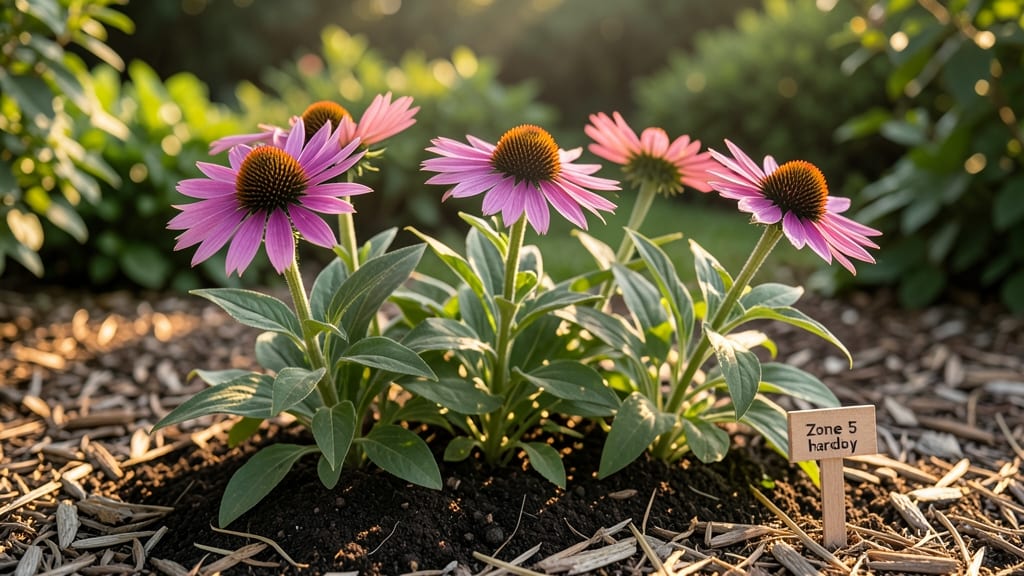
A perennial garden in Zone 5 requires strategic planting times: cool-season plants like hostas and coneflowers thrive when planted in early spring (March–April) or fall (September–October) after frost risk subsides, while heat-loving varieties such as lavender should wait until late May–June. Local frost-free dates usually fall between May 10–20, but microclimates can shift these windows by weeks.
Zone 5's planting success hinges on understanding your specific frost dates, which can vary 10–14 days between urban and rural areas. 🌱 For example, cities like Chicago often see their last frost around May 15, while rural Indiana might push that to May 22.
I always check local weather records for the past 5 years to account for these microclimate differences—especially if you're near large bodies of water or at higher elevations.
The key is to time your planting so roots establish before summer heat sets in, giving perennials the best chance to thrive through their first winter.
Another critical factor is soil temperature. Most cool-season perennials need soil to warm to at least 50°F before planting, while heat-lovers prefer soil above 60°F. I recommend using a soil thermometer for 3–5 days to confirm readiness.
For varieties like peonies, which take 2–3 years to establish, early spring planting gives them the full growing season to develop strong root systems before winter dormancy.
💡 In This Article
- Understanding Zone 5 Frost Dates and Microclimates
- Best Perennials for Zone 5 Planting Success
Understanding Zone 5 frost dates and microclimates
Zone 5's frost patterns are shaped by a complex interplay of geography and weather systems. The average last spring frost typically arrives between May 10–20, but this window can shift dramatically based on elevation—areas just 1,000 feet higher may experience frost 1–2 weeks later due to cooler air pooling.
Wind exposure also plays a critical role: open fields lose heat rapidly at night, while sheltered garden beds near fences or buildings retain warmth, potentially extending the growing season by 7–10 days.
For example, a garden in northern Wisconsin might see its last frost on May 15, while a similarly zoned area in western New York could push that to May 22.
The science behind these variations lies in how cold air behaves. At night, dense cold air sinks into low-lying areas, which is why valley gardens often experience later frosts.
Conversely, urban "heat islands" can create microclimates where concrete and asphalt store daytime heat, delaying frost by 5–7 days compared to rural surroundings.
This is why I always recommend testing your specific microclimate by planting a frost-sensitive annual (like basil) in early May—if it survives, your zone is likely warming faster than the average.
Understanding these patterns helps you select perennials that match your local conditions. Some plants, like Russian sage or catmint, tolerate light frosts (28–32°F) once established, while others, such as lavender, need full summer heat to thrive and should only be planted after the May 20 deadline.
The key is to align your planting with the 30-day frost-free window—if you plant too early, young roots may still be vulnerable when late frosts hit.
For fall planting, the reverse logic applies: aim to get perennials established 6–8 weeks before the first hard frost (typically October 15–November 1). This gives roots time to develop before winter dormancy.
Mulching with 3–4 inches of straw or leaves can push this window back by 2–3 weeks by insulating soil. I've seen hostas survive winters with mulch in Zone 5b, where temperatures dip to 15°F, while unprotected daylilies may suffer foliage damage.
Here's a quick reference for adjusting to your microclimate:
- Urban gardens: Plant 1 week later than rural averages due to heat retention
- High elevations (>2,000 ft): Delay planting by 2 weeks for cool-season plants
- Wind-exposed areas: Use windbreaks or plant near structures to create 5°F warmer microclimates
- South-facing slopes: Can extend growing season by 10–14 days compared to north-facing
Pro tip: Track your local frost dates for 3 years to account for climate variability. In my experience, 2021's late spring frost in Minnesota (April 28) caught many gardeners off guard—planting too early can mean replanting or losing young perennials.
The National Oceanic and Atmospheric Administration (NOAA) provides historical frost data by county, which I use to fine-tune my planting schedule. 🌡️