
Planting
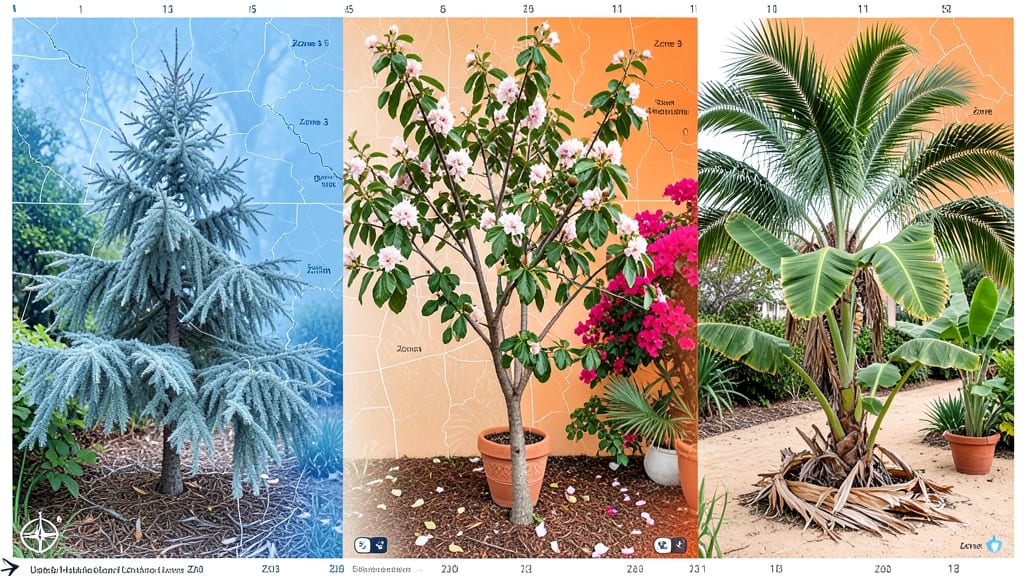
Understanding plant gardening zones helps you select the right plants for your area based on winter temperature ranges, but local conditions like sun exposure or wind can adjust these zones by up to 5 degrees, changing when and what you can safely plant.
Plant gardening zones are based on the USDA's average annual minimum temperatures, which help gardeners predict which plants will survive winter in their region. 🌱 However, your yard might not follow the standard zone perfectly—south-facing walls, slopes, or urban heat can create microclimates that make Zone 6 feel more like Zone 7.
I've seen this firsthand when my north side struggled with tender perennials that thrived just 20 feet away on the sunny patio. The key is observing your space for at least a season before committing to plant purchases.
For example, a frost pocket—a low-lying area where cold air settles—can delay spring planting by weeks, while a sunny microclimate might let you grow Zone 8 plants in Zone 7. Tools like minimum temperature sensors and shade mapping apps can help you pinpoint these variations.
Even a 5-degree difference can mean the difference between a thriving rose bush and a frost-bitten disappointment.
💡 In This Article
- How USDA Plant Hardiness Zones Define Plant Survival
- Mapping Your Yard’s Microclimates for Precise Planting
How USDA plant hardiness zones define plant survival
The USDA Plant Hardiness Zone Map divides North America into 13 zones based on the average annual minimum winter temperature—the coldest temperature expected to occur in any given winter.
Each zone spans a 10°F range, with Zone 1 experiencing temperatures below -50°F and Zone 13 staying above 60°F.
These zones help gardeners predict which plants can survive winter in their area by correlating with a plant's hardiness rating, which is determined through rigorous testing in controlled environments.
Here's the science behind it: Plants have cellular adaptations that allow them to withstand cold, such as producing antifreeze proteins or increasing sugar concentrations in their cells to lower freezing points.
For example, a Zone 5 plant (average minimum -15°F to -10°F) can survive because its cells can handle ice formation without rupturing, while a Zone 9 plant (average minimum 20°F to 30°F) would suffer irreversible damage in those conditions. 🌡️ The USDA zones also account for frost-free days, which influence when plants can be safely transplanted outdoors in spring.
However, these zones aren't perfect for every plant. Tropical and subtropical species, like citrus trees or bougainvillea, have different survival thresholds based on heat tolerance and humidity rather than cold hardiness.
These plants are often labeled with chill-hour requirements (the number of hours below 45°F needed to trigger flowering), which can be just as critical as winter lows. For instance, a peach tree might need 500-800 chill hours to produce fruit, making it unsuitable for warm climates like Zone 10.
Another exception is perennial plants, which can go dormant in winter but may still require specific soil conditions or protection. For example, hostas (Zone 3-9) can survive -30°F temperatures but may rot if planted in soggy, poorly-drained soil.
The USDA zones provide a baseline, but local soil type, moisture levels, and even wind exposure can further influence survival rates. That's why gardeners often adjust their expectations based on real-world observations over multiple seasons.
To put it into perspective, a Zone 6 garden (average minimum -10°F to 0°F) might successfully grow hydrangeas (Zone 3-9) but struggle with palm trees (Zone 8-11).
The zones act as a starting point, but your actual growing conditions—like a microclimate near a heat-retaining brick wall—can push your effective zone higher by 2-5 degrees. Understanding these nuances helps avoid costly mistakes when selecting plants.
For tropical plants, the focus shifts to heat zones rather than cold hardiness. The American Horticultural Society's Heat Zone Map categorizes areas based on the number of days above 86°F, which is critical for plants like oleanders or hibiscus.
A Zone 10 garden (average minimum 30°F to 40°F) might still experience 100+ days above 86°F, making it suitable for heat-loving plants that wouldn't survive in cooler climates.