
Tools
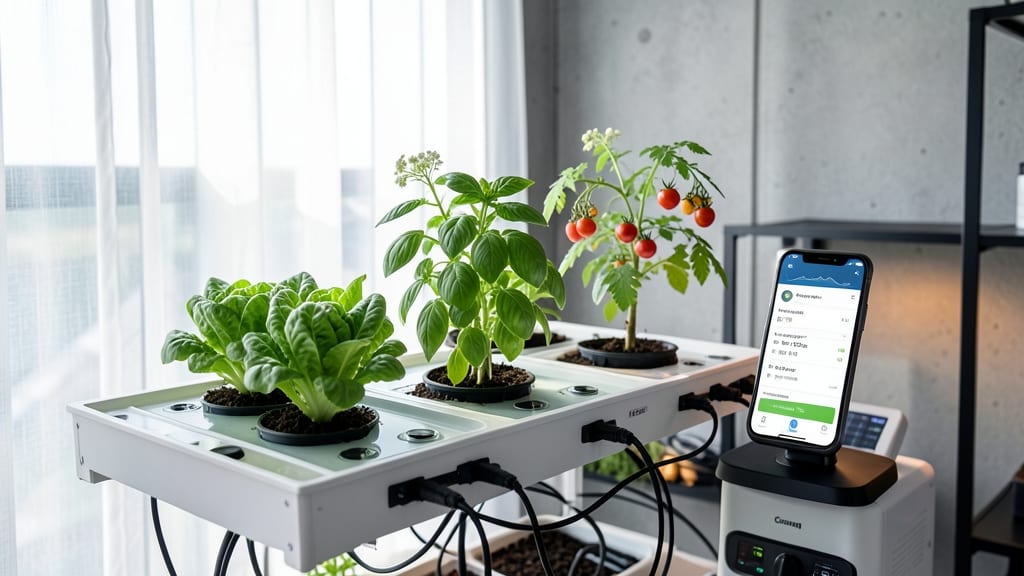
A smart gardening system automates irrigation, tracks soil health, and enhances plant growth using wireless sensors and internet-connected devices, cutting down on manual effort while maximizing efficiency for both home gardens and large-scale farms.
These systems work by combining real-time soil moisture sensors with weather forecasts to deliver precise water amounts—no over- or under-watering. 🌱 Many also integrate with drip irrigation networks or smart sprinklers, adjusting schedules based on plant type and local climate. The best part?
They learn over time, adapting to your garden's unique needs and even sending alerts when conditions are off. For example, some models can detect nutrient deficiencies or pest activity through leaf analysis, giving you actionable insights without constant monitoring.
What sets them apart from traditional timers is their AI-driven optimization. Instead of watering on a fixed schedule, they analyze data like humidity, rainfall, and plant growth stages to make smart decisions.
This isn't just about convenience—studies show smart systems can increase yields by up to 30% by preventing stress from over- or under-watering. Whether you're managing a backyard herb garden or a commercial greenhouse, the right system pays for itself in water savings and healthier plants.
💡 In This Article
- How Smart Gardening Systems Work: Sensors, IoT, and Automation
- Choosing the Right Smart Gardening System for Your Garden
How smart gardening systems work: sensors, IoT, and automation
At the heart of these systems are soil moisture sensors that measure water content at precise depths—typically 2-6 inches—where plant roots actively absorb hydration. These sensors use capacitance or resistance-based technology to detect moisture levels, sending data wirelessly to a central hub or app.
For instance, a sensor like the Aqara Soil Moisture Sensor can detect variations as small as 5% moisture change, allowing for hyper-precise watering adjustments.
The magic happens when this data is paired with weather APIs, which factor in local rainfall forecasts, humidity, and evaporation rates to dynamically adjust irrigation schedules. 💧
Most systems integrate with drip irrigation networks or smart valves that deliver water directly to plant roots with minimal waste. Unlike traditional sprinklers that lose 30-50% of water to evaporation or runoff, drip systems achieve 90% efficiency by targeting only the root zone.
Advanced models, like the Rachio 3, even use AI algorithms to learn your garden's specific needs—adjusting watering times based on plant types, growth stages, and historical data.
For example, tomatoes might need 1-2 inches of water per week, while succulents thrive on just 0.5 inches monthly—the system handles these variations automatically.
Beyond watering, many smart systems incorporate nutrient monitoring through leaf or soil sensors that detect deficiencies in nitrogen, phosphorus, or potassium. Devices like the GroEat Smart Sensor use spectral analysis to identify plant stress, sending alerts if leaves show signs of chlorosis (yellowing) or necrosis (browning).
This proactive approach prevents issues before they escalate, saving time and resources. The IoT (Internet of Things) connectivity ensures all these components sync seamlessly—your phone becomes the command center, where you can override schedules, monitor battery levels, or even control LED grow lights for indoor gardens. 🌱
What makes these systems truly revolutionary is their ability to adapt in real-time. For example, if a sudden rainstorm is forecasted, the system can pause watering for 24-48 hours to avoid over-saturation, which can lead to root rot.
Conversely, during a heatwave, it might increase frequency to compensate for higher evaporation rates. This level of responsiveness is impossible with manual watering or basic timers, which rely on fixed schedules that often miss critical environmental shifts. The result?
Healthier plants, up to 30% less water waste, and a fraction of the effort.
For commercial growers, the benefits extend to labor savings and scalability. A system like the Orbit B-Hyve can manage 100+ sensors across acres, while cloud-based platforms allow farmers to monitor multiple locations remotely.
The data collected—such as water usage patterns and plant growth metrics—can be analyzed to optimize future seasons. Even in home gardens, the payoff is clear: fewer dead zones, fewer pests (since stressed plants attract fewer insects), and a more predictable harvest. 🌿
The technology behind smart gardening isn’t just about automation—it’s about precision agriculture brought to the backyard. By leveraging sensors, IoT, and AI, these systems turn guesswork into data-driven decisions, ensuring your garden thrives with minimal intervention.
Whether you're a hobbyist or a large-scale operator, the key is choosing a system that aligns with your garden’s scale and specific needs—more on that in the next section!