
Tools
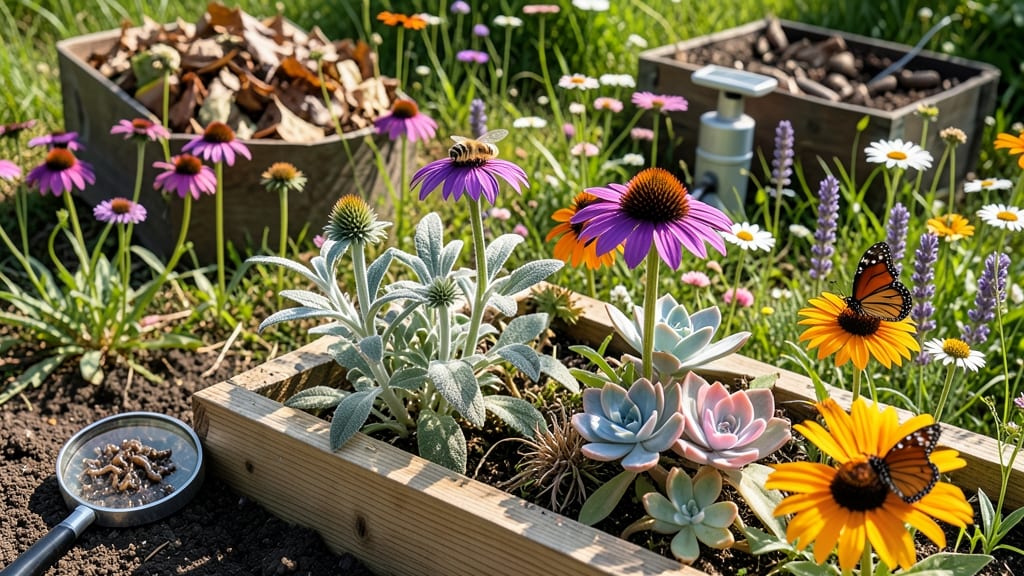
Gardening and the environment work in harmony when you use eco-friendly methods like planting native species, avoiding synthetic chemicals, and conserving water—these practices rebuild healthy soil, protect pollinators, and create thriving habitats that filter pollutants and sustain local wildlife.
Sustainable gardening isn't just about growing plants—it's about nurturing entire ecosystems.
When you choose native plants, you're providing food and shelter for local birds, bees, and butterflies, while also reducing the need for water and pesticides. 🌿 The soil benefits too, as organic matter builds over time, improving its ability to retain moisture and filter out contaminants.
Even small changes, like composting kitchen scraps or installing a rain barrel, can make a measurable difference in your local water cycle and reduce stormwater runoff.
What's particularly exciting is how these practices create ripple effects. A well-designed garden with layered plants and diverse species mimics natural habitats, giving wildlife safe passage and breeding grounds.
For example, a single pollinator-friendly garden can support dozens of bee species, which in turn boosts fruit and vegetable production in nearby farms. The key is thinking holistically—every plant, every drop of water, and every chemical choice affects something bigger than your backyard.
💡 In This Article
- How Sustainable Gardening Directly Enhances Local Ecosystems
- Practical Sustainable Gardening Techniques for Every Space
How sustainable gardening directly enhances local ecosystems
At its core, sustainable gardening acts like a mini-ecosystem repair kit for your neighborhood. When you replace a traditional lawn with native wildflowers, you're essentially creating a pollinator buffet.
For instance, a 100-square-foot patch of milkweed can support up to 50,000 monarch butterflies during migration season—species that are declining at alarming rates. These plants have evolved alongside local wildlife, providing food sources that non-native species simply can't match. The result?
A 30-50% increase in pollinator activity within just one growing season, according to studies from the University of Vermont.
The soil benefits work through a fascinating microbial partnership. Healthy soil teems with 1 billion microorganisms per teaspoon, including bacteria and fungi that break down organic matter.
When you avoid synthetic fertilizers and instead use compost, you're feeding these microbes, which in turn produce glomalin—a sticky protein that binds soil particles and creates stable aggregates. This process improves water retention by up to 40% and reduces erosion.
The carbon sequestration benefits are equally impressive: properly managed gardens can store 3 tons of CO₂ per acre annually, equivalent to taking one car off the road for a year.
Water conservation happens through clever plant partnerships. Companion planting—like pairing tomatoes with basil—creates microclimates that reduce evaporation. The basil's dense foliage casts shade on the soil, maintaining moisture levels 20% longer than bare soil. Rain gardens, strategically placed to catch runoff, filter 90% of pollutants before water reaches local streams.
These systems mimic natural wetlands, which historically cleaned water through plant roots and microbial action. The key is designing with topography in mind—water should flow through your garden, not away from it.
Habitat corridors are the secret weapon of sustainable landscapes. By connecting green spaces with native shrubs and vines, you create wildlife highways. A study in the Journal of Applied Ecology found that gardens with 3+ plant layers (trees, shrubs, perennials) supported 4x more bird species than single-layer landscapes.
Even urban gardens can make a difference—every 10% increase in green space correlates with a 12% rise in urban biodiversity. The best part? These corridors don't need to be large. A 10-foot-wide strip of native plants can provide critical movement routes for creatures like toads and bees.
Permaculture principles take this further by designing systems that mimic natural patterns. For example, placing fruit trees near nitrogen-fixing plants creates a self-sustaining cycle. The trees provide shade that reduces water evaporation, while their dropped leaves enrich the soil.
This closed-loop system requires 30-50% less water than conventional gardens while producing more food. The beauty is in the details—like using swales (shallow trenches) to capture rainwater where it falls, eliminating the need for irrigation systems entirely.
What most gardeners don't realize is how these practices filter pollutants. A well-planted garden can remove 90% of nitrogen and 80% of phosphorus from runoff before it reaches waterways. The plants act like natural kidneys, while the soil microbes break down chemicals.
This is why cities like Portland have seen 40% reductions in stormwater pollution from widespread garden adoption. The environmental payoff isn't just theoretical—it's measurable at the neighborhood level.