
How To
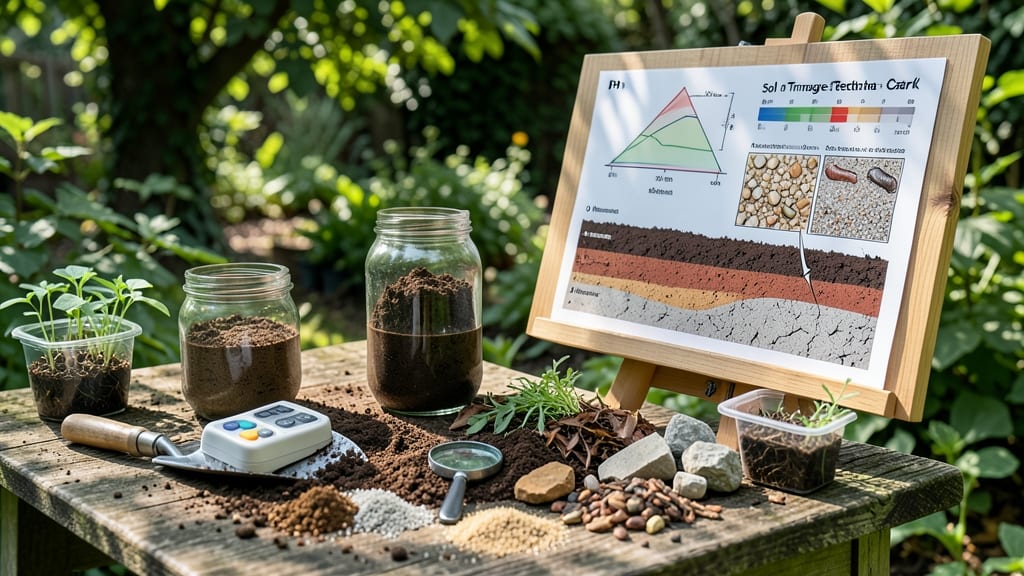
Soil science for gardeners involves mastering soil composition, structure, and fertility to create the ideal growing medium, ensuring plants receive the right balance of nutrients, water, and air for strong roots and maximum yields.
Understanding soil science isn't just about dirt—it's about creating a thriving ecosystem for your plants. 🌱 The right soil mix supports root growth, prevents waterlogging, and delivers essential minerals like nitrogen, phosphorus, and potassium.
For example, loamy soil (a balanced mix of sand, silt, and clay) drains well while retaining moisture, while sandy soil may need organic amendments to hold nutrients. I always test my garden soil's pH first—most vegetables thrive between 6.0 and 7.0, but blueberries demand acidic conditions (4.5-5.5).
Small adjustments with lime or sulfur can make a huge difference in plant health and harvest size.
Beyond composition, soil structure matters just as much. Compacted soil suffocates roots by blocking oxygen, while loose, crumbly soil allows roots to spread easily. Adding compost or aged manure improves both structure and fertility over time.
Think of soil science as the foundation of gardening—get it right, and your plants will reward you with lush growth and bountiful harvests.
💡 In This Article
- How Soil Composition Affects Plant Growth
- Testing and Improving Garden Soil for Optimal Results
How soil composition affects plant growth
The foundation of any thriving garden lies in soil composition, where particle size and mineral content create the perfect balance between water retention and aeration. Sandy soil, made up of large particles, drains water quickly but lacks nutrients—ideal for drought-resistant plants like lavender but poor for moisture-loving vegetables.
Clay soil, with its tiny particles, holds water like a sponge but can become compacted, suffocating roots unless amended with organic matter. Loam, the gold standard, combines equal parts sand, silt, and clay, offering the best of both worlds: 40-60% porosity for air and water movement while retaining essential nutrients.
Organic matter plays a crucial role in soil health by improving structure and fertility. Compost or well-rotted manure adds humus, which binds soil particles into crumbly aggregates, increasing water absorption by up to 50% compared to bare mineral soil.
Microorganisms in organic matter break down nutrients into plant-available forms, like converting nitrogen from the air into usable ammonium. For example, a soil with just 1% organic matter can hold 20,000 gallons of water per acre—a game-changer for drought-prone gardens. 🌱
Soil pH directly impacts nutrient availability, with most plants thriving in slightly acidic to neutral ranges (6.0-7.0). At this pH, essential nutrients like phosphorus and potassium remain soluble, while extreme pH levels (below 5.0 or above 8.0) lock them away.
For instance, azaleas and blueberries require acidic soil (4.5-5.5) to access iron and manganese, while alkaline-loving plants like asparagus prefer 7.0-8.0. Testing your soil's pH with a simple kit can reveal whether lime (to raise pH) or sulfur (to lower it) is needed for optimal growth.
Particle size also affects how roots explore the soil. Fine-textured clay soils may force roots to grow horizontally in search of oxygen, while coarse sandy soils offer deep vertical growth but poor nutrient retention.
The ideal loamy soil provides a three-dimensional network where roots can spread easily, accessing both water and air. For example, tomato plants in loam can develop root systems 3-4 feet deep, compared to just 6-12 inches in compacted clay. This deeper reach translates to stronger plants and higher yields.
Don't overlook the role of soil biology—healthy soil teems with microbes, fungi, and earthworms that decompose organic matter and cycle nutrients. A single teaspoon of fertile soil can contain billions of bacteria and miles of fungal filaments, creating a living ecosystem that feeds plants.
When you till or disturb soil, you disrupt this delicate balance, which is why no-till gardening methods preserve soil structure and microbial life. The result? Plants that grow faster, resist diseases better, and produce more abundant harvests.
To put it simply: soil composition isn't just about dirt—it's about creating a dynamic, living medium where roots can thrive. By understanding the interplay between particle size, organic matter, and microbial activity, you're not just growing plants—you're cultivating a self-sustaining garden ecosystem.
The right soil mix makes all the difference between struggling seedlings and a bountiful harvest. 💫