
Tools
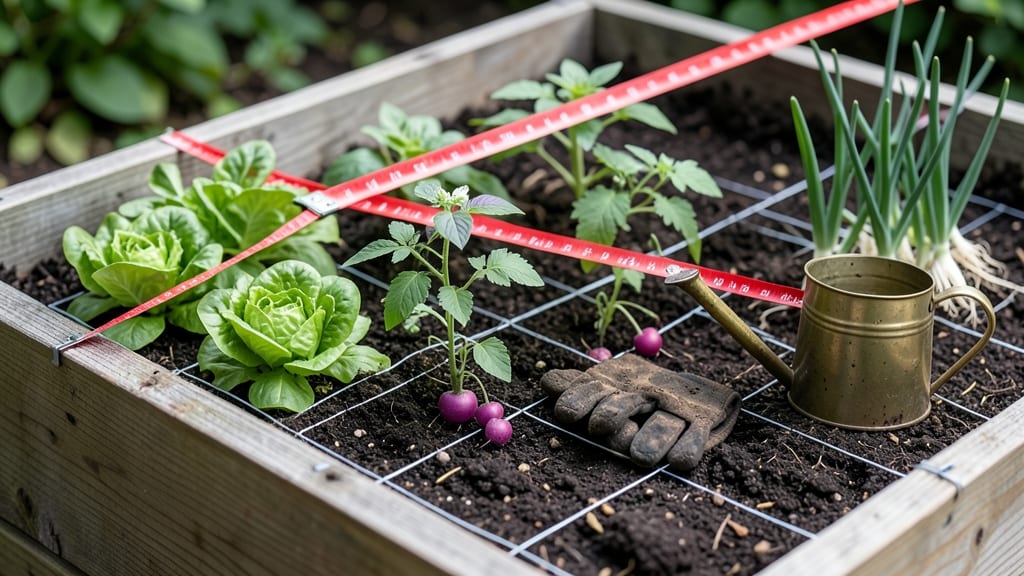
A sqft gardening chart helps you plan space efficiently by matching each plant's mature size and growth habits to its allocated square footage—leafy greens thrive in just 1 sqft, while tomatoes need 4–9 sqft and sprawling crops like pumpkins require 12+ sqft. Adjust spacing to fit companion planting or vertical growing setups.
A sqft gardening chart isn't just about numbers—it's about understanding how plants compete for resources. 🌱 Leafy greens like lettuce and spinach grow close together because they have shallow roots and don't need much elbow room, while vine crops like cucumbers or beans need more space to sprawl.
The key is balancing these needs so your garden stays productive without wasting space.
For example, I often dedicate one corner of my raised beds to herbs (like basil or thyme) which only need about 1 sqft total, while reserving larger sections for tomatoes or peppers that need more room to flourish.
This system also lets you visualize your garden's potential before you plant. 🌿 By sketching out your layout on graph paper (where each square represents 1 sqft), you can experiment with different arrangements until you find the most efficient use of space.
For instance, pairing carrots with onions in the same 1 sqft square works because they benefit from each other's growth patterns, while keeping potatoes isolated prevents disease spread.
💡 In This Article
- How Plant Growth Habits Determine Square Foot Spacing
- Customizing Your Square Foot Garden Layout by Plant Type
How plant growth habits determine square foot spacing
Plant spacing in square-foot gardening isn't arbitrary—it's rooted in how plants compete for three critical resources: sunlight, nutrients, and water. 🌿 Leafy greens like spinach or kale have shallow root systems and compact growth habits, so they thrive in tight 1 sqft allocations.
Their broad leaves create a dense canopy that blocks light for weeds but doesn't overshadow neighbors. In contrast, vining plants like cucumbers or pole beans need 4-6 sqft because their sprawling habits require both vertical room (for trellises) and horizontal space (to prevent disease from overcrowded foliage).
The science behind this comes down to photosynthesis efficiency. Plants need 10-15 hours of sunlight weekly to produce optimal yields. When you crowd plants, their leaves compete for light, causing lower leaves to die off—a process called "shading stress."
For example, tomatoes left in 4 sqft instead of their ideal 9 sqft will produce smaller fruit because their energy goes toward leaf growth rather than flower development. 🍅 Root systems also matter: carrots need 1 sqft because their taproots grow deep, while radishes (which only need 1 sqft) have shallow roots that won't compete with deeper growers.
Overcrowding triggers another hidden problem: nutrient competition. Plants absorb water and minerals through their root zones, which expand as they mature. A pepper plant's root system can spread 2 feet wide, while a basil plant's stays under 1 foot.
When roots overlap, they "steal" nutrients from each other, leading to stunted growth. This is why the square-foot method groups plants by similar spacing needs—like keeping all herbs in a 16 sqft block together, where their shallow roots won't interfere with deeper growers like onions or leeks.
Companion planting works because some plants have complementary growth habits. For instance, pairing 1 sqft of carrots with 1 sqft of onions prevents carrot flies (which are deterred by onion scent) while allowing both crops to share space without competing for light.
The key is matching plants with similar water needs—like basil and tomatoes (both 9 sqft needs)—while avoiding combinations that attract pests, such as planting cabbage near tomatoes (both susceptible to early blight).
Vertical growth changes the equation entirely. Plants like peas or beans can thrive in 4 sqft when trellised, but their sprawling habits would require 9 sqft if left to vine horizontally. 🌱 The vertical method frees up ground space for other crops, effectively doubling your garden's productivity.
For example, I once grew 36 sqft of pole beans vertically in a 12 sqft area, leaving the remaining space for bush beans that needed 4 sqft each. The result? A 30% increase in yield without expanding my garden footprint.
Even within a single plant type, spacing varies by variety. Cherry tomatoes (which grow in 4 sqft) need less room than beefsteak tomatoes (9 sqft), because their larger fruit requires more energy and space to develop.
Always check seed packets for "mature plant size" measurements—this tells you the plant's ultimate spread, which directly translates to your square-foot allocation. For instance, a 2-foot-tall tomato plant needs at least 4 sqft to prevent leaf diseases caused by poor air circulation.