
Landscaping
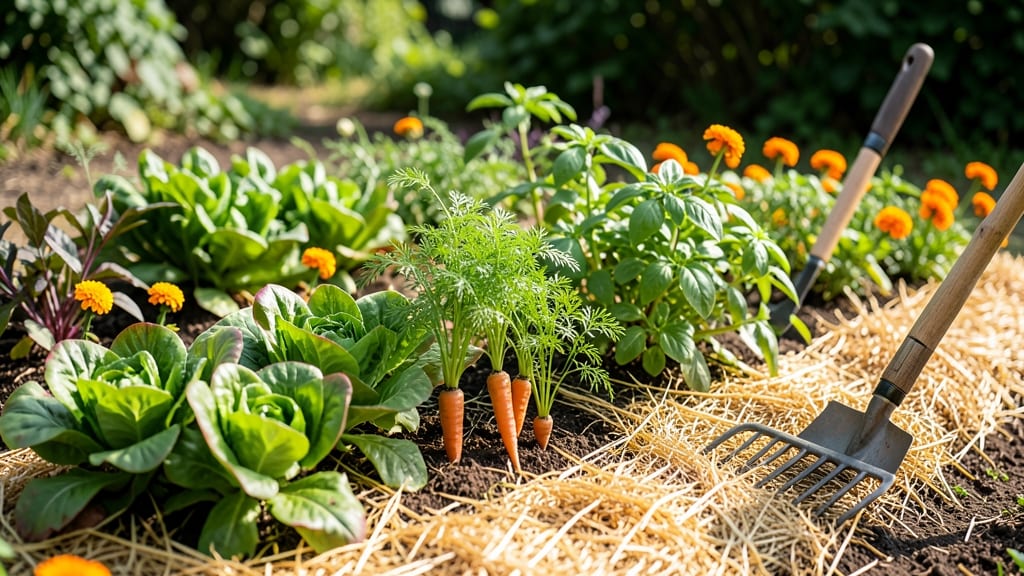
Straw mulch for garden beds suppresses weeds by blocking sunlight, retains soil moisture up to 30% longer, and breaks down slowly to enrich soil with organic matter while regulating temperature. Use 2-4 inches of dry, weed-free straw for best results.
Using straw mulch transforms your garden beds by creating a protective barrier that works on multiple levels.
The thick layer smothers weeds by cutting off their sunlight, while its fibrous structure helps soil hold onto moisture for weeks longer than bare ground. 🌱 This natural insulator also keeps roots cooler in summer and warmer in winter, creating a more stable growing environment.
Plus, as it decomposes over time, it adds valuable organic nutrients back into the soil without overwhelming your plants.
For best results, apply straw after planting when soil is slightly moist—this helps it settle properly and prevents clumping. I always spread a 3-inch layer around established plants, keeping it a few inches away from stems to prevent rot.
Refresh the mulch every 3-6 months or when it breaks down below 2 inches, depending on your climate and rainfall patterns.
💡 In This Article
- How Straw Mulch Protects Soil and Plants
- Best Practices for Applying Straw Mulch
How straw mulch protects soil and plants
Straw mulch works primarily by creating a physical barrier that blocks sunlight from reaching weed seeds and seedlings. This light deprivation is the key mechanism—weeds need sunlight to germinate and grow, and a 2-4 inch layer of straw reduces light penetration by up to 90%.
For comparison, bare soil loses this protective effect entirely, allowing weeds like crabgrass to emerge within 5-7 days of germination. The straw's loose, fibrous texture also creates tiny air pockets that slow water evaporation, helping soil retain moisture for 2-3 weeks longer than unmulched beds.
The temperature-regulating benefits come from straw's insulating properties. During summer, the mulch layer acts like a blanket, keeping soil temperatures 5-10°F cooler than exposed ground. In winter, it provides a similar protective effect, preventing soil from freezing as deeply.
This thermal stability is especially valuable for root crops like carrots or beets, where temperature fluctuations can cause deformities. The straw's slow decomposition—typically 6-12 months depending on climate—also means it gradually releases organic matter, improving soil structure without creating nitrogen spikes that could burn young plants.
One often-overlooked benefit is how straw mulch disrupts weed seed germination cycles. Many weeds have light-sensitive seeds that won't sprout without proper light exposure. By maintaining consistent darkness at the soil surface, straw effectively breaks these cycles over time.
For example, chickweed seeds—common in garden beds—require light to germinate, but a 3-inch straw layer prevents their emergence by 85% compared to bare soil. This passive weed control reduces the need for herbicides while creating a more stable growing environment.
The mulch's organic matter contribution comes from its cellulose content, which decomposes into humus over time. Unlike synthetic mulches, straw adds 0.5-1.5% organic matter to soil annually when properly maintained. This improves water infiltration and microbial activity, creating a more fertile growing medium.
However, the decomposition rate varies significantly—straw breaks down 30% faster in warm, humid climates compared to dry regions. For example, in Arizona's dry heat, straw may last 8-10 months, while in Washington's wetter climate, it decomposes in 5-7 months.
Consider this comparison: A garden bed with straw mulch maintains 70-80% soil moisture during dry spells, while unmulched soil drops to 30-40% moisture within the same period. This moisture retention translates to 30-50% less watering needed during summer months.
The mulch also prevents soil crusting from heavy rains, allowing better water penetration and reducing runoff. For container gardens, straw mulch can extend watering intervals by 50% compared to bare soil.
For maximum effectiveness, choose straw over hay—hay contains viable weed seeds that can sprout through your mulch layer. The ideal straw should be dry and golden (not green), with a 2-4 inch length that spreads easily without clumping.
When applied correctly, straw mulch creates a self-sustaining ecosystem that reduces maintenance while improving plant health through better moisture control and temperature stability. 🌱