
Tools
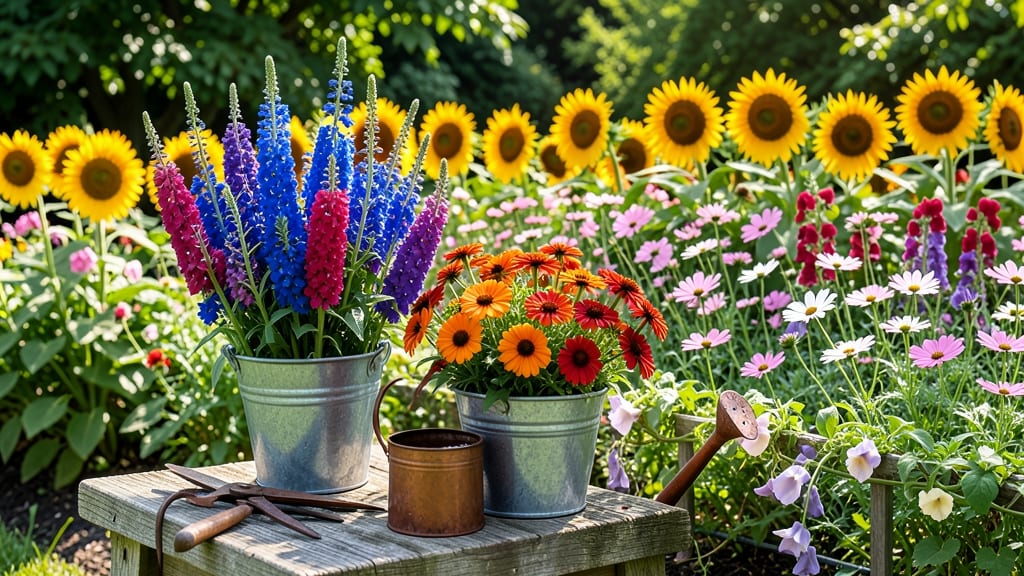
A cutting garden creates vibrant blooms and edible flowers by focusing on fast-growing varieties like zinnias and snapdragons, combined with succession planting and sturdy supports. Layering sun-loving perennials with annuals extends the harvest season, while mulching and drip irrigation preserve plant health and reduce upkeep. Placing it near the kitchen streamlines access for fresh bouquets and culinary uses.
A cutting garden isn't just about pretty flowers—it's a functional space designed for frequent harvesting. 🌸 The key is selecting plants that rebound quickly after cutting, like cosmos or nasturtiums, while pairing them with structural perennials such as lavender or Russian sage.
This combination ensures you'll always have fresh stems ready for arrangements or salads. I've found that dedicating 10-15% of the garden to edible flowers like calendula or borage adds both visual appeal and culinary versatility without overwhelming the space.
The real magic happens in how you structure it. Raised beds with trellises create vertical growing space for tall varieties while keeping pathways clear for easy access. I recommend grouping plants by water needs and sunlight requirements to simplify maintenance.
For example, drought-tolerant salvias and sunflowers can share space with moisture-loving delphiniums as long as you use drip irrigation to deliver water precisely where it's needed.
💡 In This Article
- Plant Selection for Cutting Gardens: Fast-Growing Blooms and Edible Flowers
- Design Layouts for Maximum Harvests: Pathways, Supports, and Seasonal Zones
Plant selection for cutting gardens: fast-growing blooms and edible flowers
The secret to a productive cutting garden lies in selecting plants with rapid regrowth cycles and strong stems that can withstand frequent harvesting.
Varieties like zinnias and cosmos produce 3-5 inches of new growth per week after cutting, while snapdragons and sunflowers develop thick, woody stems capable of supporting multiple blooms. Dahlias, though slower to establish, reward patience with 10-12 inch stems that last 7-10 days in vases—longer than most annuals.
The key is their tuberous roots, which store energy for quick recovery after each harvest.
Edible flowers add dual functionality, with nasturtiums producing peppery petals in just 6-8 weeks from seed, while borage blooms within 8-10 weeks and self-seeds prolifically. Calendulas, with their orange-yellow petals, grow 12-18 inches tall and tolerate light frost, making them ideal for late-season harvests.
The science behind their resilience involves shallow root systems that absorb water efficiently and high chlorophyll content that supports rapid photosynthesis after cutting. 🌼 What most gardeners overlook is how these plants' open growth habits prevent overcrowding, which would otherwise stress the stems.
Companion planting amplifies these benefits by creating natural pest barriers and improving soil health. For instance, planting marigolds near zinnias deters aphids, while lavender repels cabbage moths that might target nearby edible flowers.
The three-foot rule applies here: keep compatible plants within 3 feet of each other to maximize cross-pollination and shared nutrient benefits. This spatial arrangement also makes harvesting more efficient, as you can move through the garden in a single pass to collect stems from multiple varieties.
Seasonal timing matters just as much as variety selection. Early spring should feature hardy perennials like delphiniums (which bloom 6-8 weeks after planting) alongside cool-season annuals such as sweet alyssum. By late summer, transition to heat-tolerant zinnias and cosmos, which continue producing until first frost.
The biological reason for this rotation is that different plants have distinct optimal temperature ranges—delphiniums thrive at 60-70°F, while zinnias perform best at 75-85°F. This strategy ensures your cutting garden never hits a "dead zone" in production.
Stem strength is often the unsung hero of cutting gardens. The best varieties develop secondary xylem (woody tissue) that increases stem diameter by 20-30% over the growing season.
Sunflowers, for example, can support 12-18 inch stems by mid-summer, while Russian sage produces 3-4 foot stems that remain sturdy even after multiple cuts. To maximize this trait, always cut stems at a 45-degree angle just above a leaf node—this encourages lateral branching and thicker regrowth.
The 3-5 inch rule applies here: leave at least 3-5 inches of stem after cutting to maintain the plant's energy reserves.
For edible flowers, focus on varieties with high petal-to-stem ratios that maintain flavor after cutting. Violet flowers (like pansies) have 10-15 petals per stem and keep their delicate taste for 3-5 days in water, while squash blossoms can be harvested once daily during their 3-5 day blooming window.
The culinary advantage is clear: these flowers add color and flavor to dishes without requiring specialized growing conditions. 🌺 Pairing them with traditional cutting flowers creates a garden that's as useful in the kitchen as it is beautiful in arrangements.