
Tools
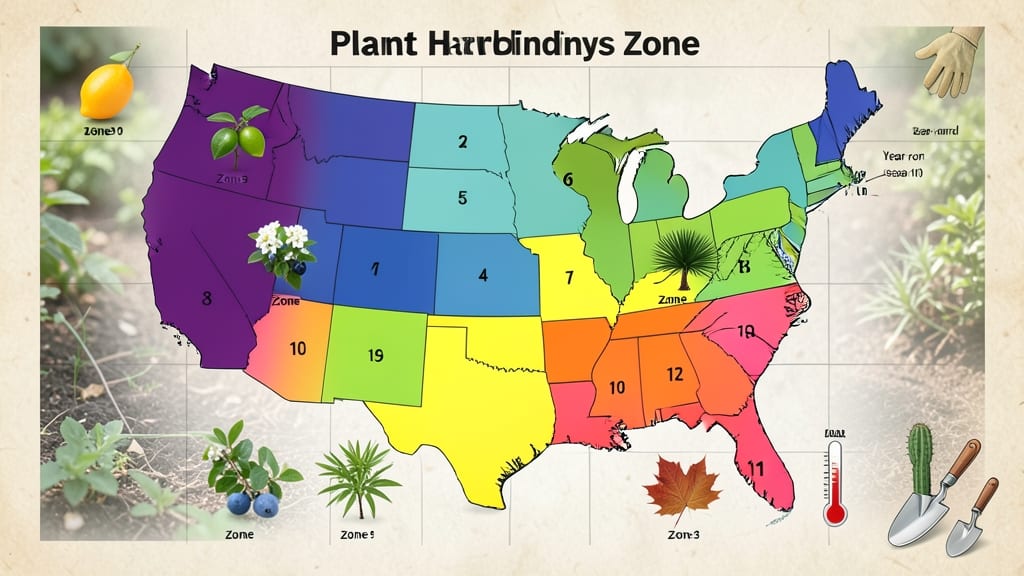
Understanding US climate zones for gardening means using the USDA Plant Hardiness Zone Map, which organizes regions by average annual minimum temperatures to guide which plants will thrive in your specific area.
The USDA Plant Hardiness Zone Map divides the country into 13 zones based on the average lowest winter temperature in each area. 🌡️ This system helps gardeners match plants to their local climate, ensuring they'll survive winter freezes.
For example, Zone 3 (below -40°F) supports hardy trees like birch and spruce, while Zone 10 (above 30°F) allows tropical plants like bougainvillea to flourish year-round. Microclimates—like urban heat islands or sheltered valleys—can also shift your effective zone by 1-2 levels, so always check your specific location.
Beyond temperature, these zones reflect frost-free periods and seasonal patterns that dictate planting times. For instance, Zone 5 gardeners (like those in Chicago) must time spring planting after the last frost date, typically around mid-May, while Zone 9 (Southern California) can plant year-round.
Understanding your zone isn't just about survival—it's about maximizing growth and yield for your local conditions.
💡 In This Article
- How USDA Plant Hardiness Zones Determine Plant Survival
- Best Plants for Each US Gardening Climate Zone
How USDA plant hardiness zones determine plant survival
The USDA Plant Hardiness Zone Map relies on average annual minimum temperatures—the coldest temperatures plants must endure—to define survival thresholds. Each zone represents a 10°F range, with Zone 1 (-60°F) being the coldest and Zone 13 (100°F+) the warmest.
This system is based on 30 years of climate data, ensuring it reflects long-term patterns rather than short-term fluctuations. For example, a plant labeled "Zone 5" can survive winters as cold as -20°F but may struggle in Zone 4 (-30°F) where frost can linger longer.
Geographic shifts in zones occur due to elevation, latitude, and proximity to large bodies of water. Coastal areas often experience milder winters because water retains heat longer, creating microclimates that can be 1-2 zones warmer than inland regions.
For instance, Seattle (Zone 8) sits at a similar latitude to Denver (Zone 5) but enjoys a maritime climate that prevents extreme cold. Conversely, mountain slopes may drop 3-5°F per 1,000 feet in elevation, creating cooler microclimates even within the same general zone.
Microclimates—small areas with unique environmental conditions—play a critical role in plant survival. A south-facing wall can raise temperatures by 5-10°F compared to shaded areas, allowing tender plants to thrive in otherwise colder zones.
Similarly, urban heat islands (where pavement and buildings trap warmth) can shift effective zones upward by 1-2 levels. This is why gardeners in Zone 6 cities like Boston might successfully grow Zone 7 plants near heat-retaining structures.
The science behind these zones involves cellular damage thresholds in plants. Most plants enter dormancy when temperatures drop below 40°F, but their cells begin freezing at zone-specific temperatures.
For example, Zone 3 plants have cell membranes reinforced with proteins that prevent ice crystal formation down to -40°F, while Zone 10 plants lack these adaptations entirely. This biological adaptation is why zone-mismatched plants often exhibit stunted growth or die during unexpected cold snaps.
Frost-free periods—another key factor—determine planting windows and growing seasons. Zones with longer frost-free periods (like Zone 10) allow for year-round gardening, while colder zones (Zone 3) limit planting to 60-90 days between last frost and first frost.
This timing affects everything from seed selection to harvest planning. For instance, tomatoes need 70-85 days to mature, so they're only viable in Zone 5 if planted after the last frost date (typically late May).
Understanding these mechanisms helps gardeners make informed choices. A Zone 4 gardener might choose Russian olive trees (hardy to -40°F) over Zone 7 crape myrtles, which would succumb to winter freezes.
Similarly, knowing your microclimate can expand your plant palette—adding orange trees to a Zone 9 patio while keeping them protected from occasional dips below 28°F. 🌱