
Tools
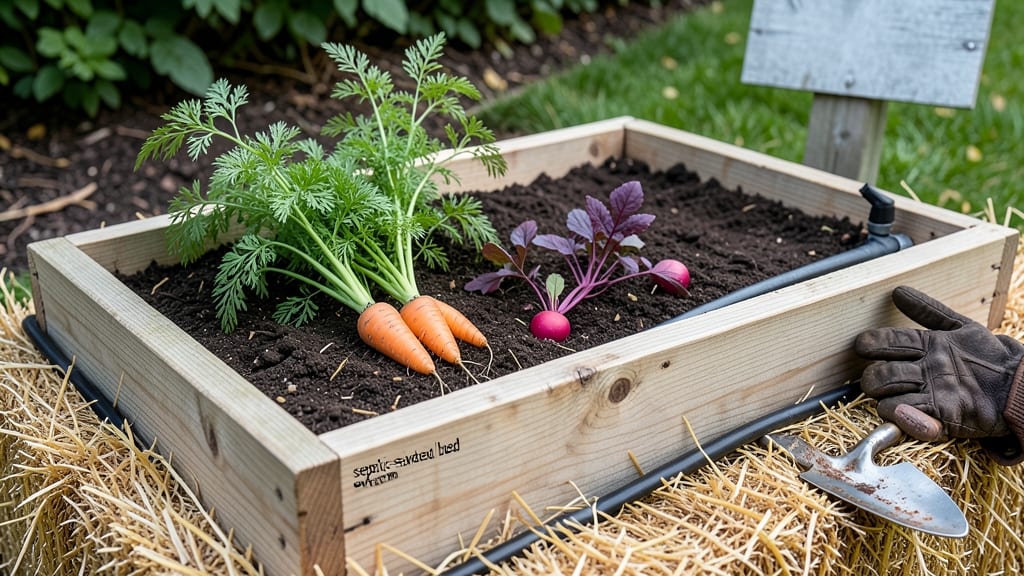
Creating a vegetable garden near a septic field requires keeping plants at least 10–20 feet away to avoid damaging drainage pipes or risking groundwater contamination, though shallow-rooted vegetables like lettuce or herbs can sometimes be planted closer with careful soil testing and proper drainage.
Septic systems rely on precise drainage, and root systems can disrupt pipes or leach fields if planted too close. 🌱 The 10–20 foot buffer isn't arbitrary—it accounts for how roots spread underground, especially in sandy soils where contaminants travel faster.
For example, a single tomato plant's roots can extend 3–4 feet horizontally, while deep-rooted crops like carrots need even more space. Testing your soil's percolation rate first helps determine if you can safely reduce that distance for lighter crops.
Even with proper spacing, soil amendments like compost can improve drainage and reduce contamination risks. I always recommend starting with a soil test to check pH and nutrient levels before planting near septic areas—this helps prevent accidental runoff carrying fertilizers into the system.
💡 In This Article
- Septic System Safety Zones for Vegetable Gardens
- Best Low-Risk Vegetables for Septic-Adjacent Gardens
Septic system safety zones for vegetable gardens
The 10–20 foot safety zone around septic fields isn't just a rule—it's rooted in how wastewater moves through soil. Septic systems rely on a leach field (or drain field), where pipes distribute treated effluent into gravel trenches.
Roots from nearby plants can clog these pipes or disrupt the gravel layer, reducing the system's ability to process waste. The EPA recommends 10 feet for most plants, but local codes often require 20 feet for deep-rooted species due to variations in soil permeability.
Soil composition dramatically changes safe distances. In sandy soils, water and contaminants move 10–100 times faster than in clay, meaning roots can reach pipes quicker.
For example, a carrot's taproot can penetrate 12–18 inches deep, but in sandy soil, its lateral roots may spread 3–5 feet horizontally—close enough to damage pipes. Clay soils, however, slow root growth and contaminant flow, allowing slightly closer planting (10 feet) with proper soil testing. 🌱
Here's how roots interact with septic systems: shallow roots (1–2 feet deep, like lettuce) pose minimal risk, but aggressive spreaders (e.g., blackberries) can create 20-foot-wide root zones.
The key is understanding your soil's percolation rate (how fast water drains). A slow percolation rate (clay-heavy) means contaminants linger near the surface longer, increasing contamination risks for shallow-rooted plants.
Local regulations often exceed EPA guidelines. For instance, Minnesota requires 50 feet for fruit trees near septic fields, while California's Health & Safety Code mandates 10 feet for vegetables but adds 20 feet for trees/shrubs.
Always check your county's septic ordinances—some prohibit gardening within 50 feet entirely. The National Onsite Wastewater Recycling Association (NOWRA) provides state-specific guidelines to avoid costly system repairs.
Even with proper spacing, drainage patterns matter. Planting on a slope (even 2–3 degrees) can direct runoff away from the septic field. I've seen gardens on 10% grades (about 5.7 degrees) where water naturally flows away, reducing contamination risks.
Adding swales or berms (raised soil ridges) can further redirect water, creating a natural buffer zone even when planting closer than 20 feet.
What most gardeners overlook is the root zone's seasonal expansion. In spring, roots grow aggressively to access water—this is when damage often occurs. A 10-foot buffer in summer may become 12–15 feet by fall.
For high-risk plants (e.g., asparagus, which spreads via crowns), I recommend 20+ feet or installing a root barrier (buried plastic sheeting) at the 10-foot mark to contain lateral growth.