
Pests
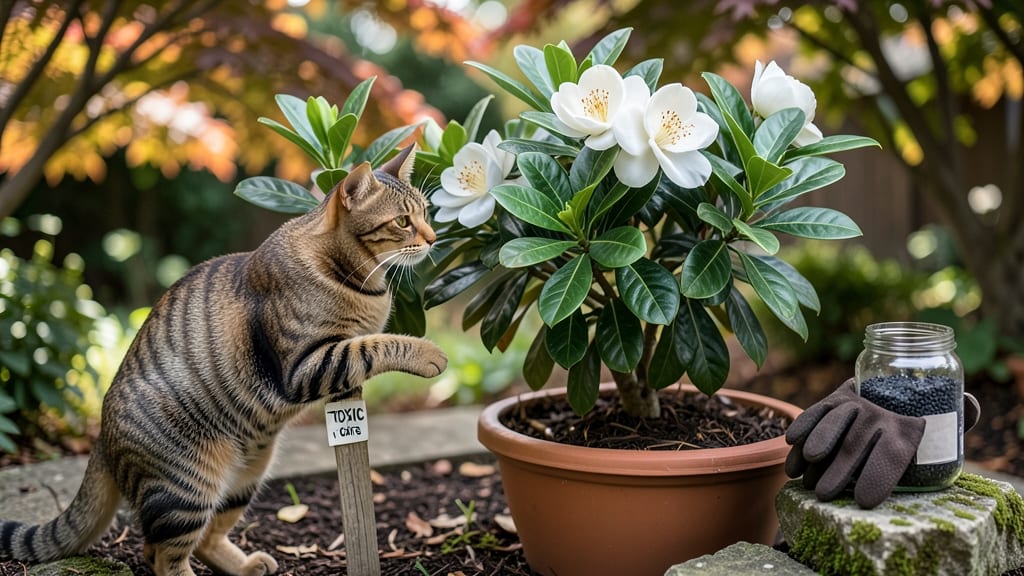
Gardenia and cats are a dangerous combination because gardenias contain toxic compounds like saponins and essential oils that can trigger vomiting, drooling, and lethargy if chewed or ingested. Protect your feline by placing these plants out of reach or replacing them with cat-safe options like spider plants or Boston ferns.
Gardenia toxicity stems from its natural chemical defenses—saponins create mouth irritation and digestive upset, while essential oils can overwhelm a cat's liver. 🐱 The ASPCA confirms even small nibbles may lead to symptoms like diarrhea or weakness within hours.
If you love gardenias but have curious cats, consider elevated planters or feline-friendly substitutes like catnip or wheatgrass, which actually support your pet's health.
For immediate safety, remove gardenias from low-hanging shelves or windowsills where cats can jump. If ingestion occurs, contact your vet or the ASPCA Poison Control Center right away—early intervention makes all the difference. 💫
💡 In This Article
- Why Gardenias Pose Risks to Cats
- Pet-Friendly Garden Alternatives to Gardenias
Why gardenias pose risks to cats
Gardenia plants contain saponins—natural compounds that create soapy foam when mixed with water. In cats, these irritate the mouth and digestive tract, triggering immediate drooling and vomiting.
The plant's essential oils, particularly linalool and geraniol, are even more concerning—they can cause respiratory distress when inhaled or ingested, as cats lack the liver enzymes to metabolize them efficiently. 🐾
The toxicity level varies by plant part: leaves and flowers contain higher concentrations of saponins, while stems have more essential oils.
A single nibble on a leaf might cause mild symptoms like excessive salivation or mild diarrhea, but chewing larger amounts can lead to lethargy, weakness, or even tremors within 6-12 hours.
Veterinary data shows that cats under 5 pounds are at higher risk due to their smaller body mass and sensitive systems.
What makes gardenias particularly dangerous is their sweet, citrusy scent—cats are naturally drawn to unfamiliar aromas. Unlike bitter-tasting plants, gardenias often go unnoticed until ingestion occurs. The ASPCA reports that 70% of feline poisonings from ornamental plants happen indoors, making houseplants like gardenias especially risky. 🚨
Symptoms progress in stages: first comes oral irritation (pawing at the mouth), followed by gastrointestinal upset (vomiting, diarrhea), and in severe cases, neurological effects like uncoordinated movements or rapid breathing.
The key factor is timing—acting within the first 2 hours of exposure gives veterinarians the best chance to induce vomiting or administer activated charcoal to bind toxins.
Even if your cat seems fine after nibbling, monitor for delayed reactions. Some cats develop liver enzyme elevations 24-48 hours later, requiring immediate veterinary intervention. The safest approach is complete avoidance—gardenia's beautiful white blooms aren't worth the risk when pet-safe alternatives exist. 🌸
For pet owners with existing gardenias, consider these immediate steps: relocate plants to high shelves (>6 feet off the ground) or behind baby-proof gates, and train cats to avoid the area using positive reinforcement.
If you notice any symptoms, contact your vet or the Pet Poison Helpline at (855) 764-7661 for guidance.