
Vegetables
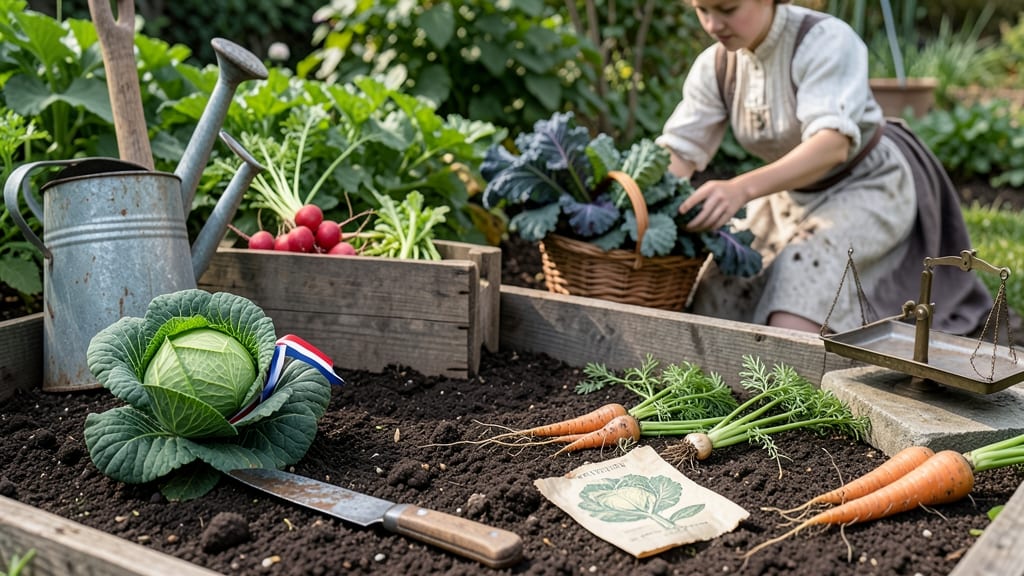
Victory gardens in World War 1 became essential food sources by growing vegetables, fruits, and herbs to reduce reliance on imports and combat food shortages during wartime rationing. These gardens boosted morale and local food security across Europe and beyond.
These community-driven plots weren't just about growing food—they were a strategic response to blockades and shipping disruptions that threatened entire nations. 🌱 By 1918, over 5 million acres of U.S. land alone were cultivated in victory gardens, producing about 40% of the nation's fresh vegetables.
The British even launched "Dig for Victory" campaigns, transforming public parks and backyards into productive farms overnight. What's fascinating is how these gardens became symbols of patriotism, with families competing to grow the most tomatoes or carrots while rationing their own meals.
The movement also had lasting effects on modern gardening. Many WWI-era techniques—like intensive planting, crop rotation, and seed saving—are still used today. Plus, the gardens gave women unprecedented roles in agriculture, skills they later applied to post-war farming and activism.
💡 In This Article
- How WWI Victory Gardens Revolutionized Home Food Production
- Best Plants for Modern Victory Gardens Inspired by WWI Techniques
How WWI victory gardens revolutionized home food production
The success of victory gardens during World War I relied on a brilliant mix of government coordination and grassroots participation. Authorities distributed free seeds and planting guides through local agricultural extensions, often featuring 10-15 high-yield varieties like potatoes, cabbage, and carrots that thrived in small spaces.
Propaganda posters showed women with pitchforks holding banners reading "Food Will Win the War," while radio broadcasts taught gardening basics to urban families who'd never farmed before.
Crop selection was strategic—gardens prioritized calorie-dense, long-storing vegetables that could be preserved through winter.
Potatoes, for example, yielded 300-500 pounds per 100 square feet when planted in hills, while cabbage heads could reach 2-3 pounds each with proper spacing. 🌱 The British "Dig for Victory" campaign even encouraged growing swede turnips, which produced 50% more food per acre than potatoes.
Children were mobilized to plant "war gardens" in schoolyards, with teachers measuring growth weekly to track national progress.
Labor organization transformed how families approached food production. Women, who made up 75% of the workforce in victory gardens, learned intensive planting techniques like double-digging (turning soil 18-24 inches deep) to maximize root growth. Many communities established seed exchanges where gardeners swapped heirloom varieties, ensuring genetic diversity.
This collaborative approach created a sense of shared purpose—neighbors competed to grow the largest vegetables, with winners displayed at town fairs and their photos published in newspapers.
The psychological impact was equally significant. Gardening provided a tangible way to contribute to the war effort when men were fighting overseas. Studies from the era show that households with victory gardens consumed 20-30% more vegetables than those without, directly reducing strain on commercial food supplies.
The movement also laid groundwork for modern community gardens, proving that small-scale agriculture could feed entire populations when organized effectively.
One lesser-known innovation was the use of unconventional growing spaces. Rooftops, alleyways, and even window boxes were pressed into service, with some urban families growing radishes in 30 days or lettuce in 45 days using succession planting.
This adaptability became a model for urban farming movements a century later. The gardens' success demonstrated that food security wasn't just about large farms—it was about every citizen becoming part of the solution.