
Tools
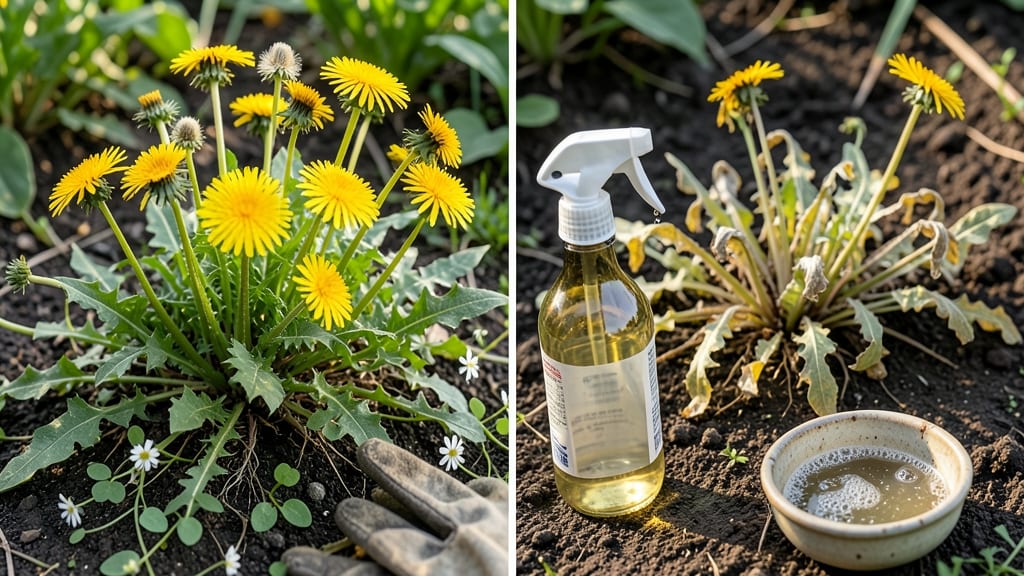
Vinegar in the garden effectively controls weeds, deters pests like ants and aphids, and adjusts soil pH when diluted properly. Always apply sparingly to avoid harming plants or beneficial soil microbes.
Vinegar’s secret weapon is its acetic acid, which disrupts weed growth by breaking down cell walls while repelling insects with its strong scent. 🌱 For soil pH adjustment, I recommend testing your garden beds first—most plants thrive in slightly acidic to neutral soil (pH 6.0-7.0), so a 1:3 vinegar-to-water ratio works for most applications.
Just remember: undiluted vinegar can harm beneficial microbes and sensitive plants, so always spot-test first!
When targeting weeds, spray directly on leaves during dry, sunny weather for best results. For pests, mix equal parts vinegar and water in a spray bottle and apply to affected areas—ants and aphids hate the smell!
The key is consistency: reapply every 2-3 weeks during growing seasons to maintain control without over-acidifying your soil.
💡 In This Article
- How Vinegar Works as a Natural Weed Killer and Pest Repellent
- Safe Vinegar Application Techniques for Soil pH Adjustment
How vinegar works as a natural weed killer and pest repellent
Vinegar’s effectiveness as a weed killer comes down to its high acetic acid content—typically 4-8% in household varieties—which acts like a chemical disruptor. When sprayed directly on weeds, the acetic acid penetrates plant cell membranes, causing them to absorb excess water and swell uncontrollably.
This process, called osmotic shock, leads to rapid dehydration and death within 24-48 hours. 🔥 The key is precision: vinegar lacks the selective action of synthetic herbicides, so it kills all plant matter it touches, including desirable crops.
For pest control, vinegar’s strong vinegar scent—particularly the acetic acid and trace aldehydes—acts as a natural deterrent. Ants, aphids, and even slugs avoid areas treated with diluted vinegar because their sensory receptors detect the sharp odor as a threat.
A 1:1 vinegar-to-water mix sprayed around plant bases creates an invisible barrier that repels crawling insects without harming the plants themselves. The scent dissipates quickly in sunlight, so reapplication every 7-10 days maintains effectiveness during active growing seasons.
What most gardeners overlook is how vinegar’s pH (2.0-3.0) interacts with soil chemistry. When applied to weeds, the acidity doesn’t penetrate deep enough to alter soil pH significantly, but concentrated applications can temporarily raise soil acidity in the top 1/4-inch layer.
This is why vinegar works best as a contact herbicide rather than a systemic treatment—it targets visible foliage without lingering in the soil long-term. For maximum weed control, apply on dry, sunny days when plants are actively photosynthesizing.
Targeted application is everything. Use a spray bottle with a fine mist nozzle for weeds and a hose-end sprayer for larger areas. Avoid spraying on windy days to prevent drift onto desirable plants.
For stubborn weeds like dandelions, a 10% vinegar solution (neat white vinegar) works best, while a 5% solution (1:1 dilution) suffices for annual weeds. Always test a small area first—some ornamental plants may show temporary leaf burn.
Beyond weeds and pests, vinegar’s acetic acid helps break down organic matter in mulch, accelerating decomposition. This creates a microbiome-friendly environment where beneficial bacteria thrive, though undiluted vinegar can temporarily suppress these microbes.
The sweet spot is a 1:3 vinegar-to-water ratio for general garden maintenance, applied lightly to mulch surfaces. 🌿 This approach leverages vinegar’s natural properties without disrupting your garden’s delicate balance.
For persistent pest problems, combine vinegar with dish soap (1 tsp per gallon) to create a sticky residue that traps insects. The soap breaks surface tension, helping the vinegar solution cling better to plant surfaces.
This combo works particularly well against aphids and spider mites, which vinegar alone might not fully eradicate. Always apply in the early morning or late evening to minimize harm to pollinators.