
Tools
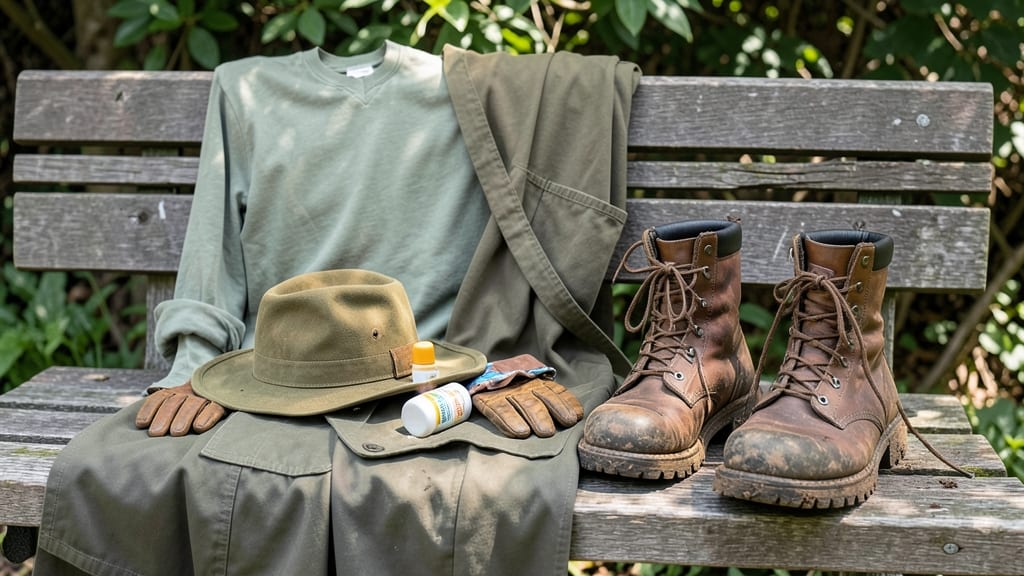
Gardeners wear protective clothing like long-sleeved shirts, durable pants, closed-toe shoes, and a wide-brimmed hat to shield against sun, insects, and sharp tools while ensuring comfort and mobility during planting, pruning, or weeding tasks.
When you're out in the garden, the right clothing isn't just about comfort—it's your first line of defense against sunburn, scrapes, and even plant allergies. 🌿 I've learned that breathable fabrics like linen or moisture-wicking synthetics keep you cool during summer heatwaves, while lightweight layers let you adjust as temperatures shift.
For those chilly mornings, I swear by thermal base layers under my gardening apron—they make all the difference when kneeling in damp soil for hours.
Don't overlook the small details: a pair of sturdy gloves can save your hands from blisters when handling thorny roses, while knee pads turn weeding from a back-breaking chore into a manageable task.
I always keep a wide-brimmed hat and sunglasses handy—not just for style, but to protect my face from harmful UV rays that can sneak up on you during long gardening sessions. The key is balancing protection with mobility, so you can move freely between tasks without feeling restricted.
💡 In This Article
- Essential Gardening Clothing by Season
- Must-Have Gardening Safety Gear and Accessories
Essential gardening clothing by season
Seasonal shifts demand different fabrics and layers to maintain comfort while protecting your skin. In summer, lightweight, moisture-wicking materials like merino wool or polyester blends pull sweat away from your body, preventing the clammy feeling that comes from cotton (which holds 27% more moisture than synthetic fibers).
I've found that loose-fitting, long-sleeved shirts with UPF 50+ sun protection block 98% of UV rays, crucial when working under the midday sun where temperatures can hit 90°F+.
The fabric's weave matters too—tightly woven materials block more UV rays than loosely woven ones. For example, a 5x5 rib knit fabric blocks about 75% of UVB rays, while a 2x2 basketweave might only block 30%.
In cooler seasons, layering becomes key: a thermal base layer (like Capilene) traps body heat, while a windproof shell blocks chilly gusts that can make 40°F mornings feel like 30°F.
I always keep a packable down vest in my gardening cart—it takes up almost no space but adds 10°F of warmth when needed.
Footwear changes dramatically with seasons too. In wet spring or fall, waterproof hiking boots with 1-inch treads prevent slips on muddy paths, while summer calls for breathable mesh sneakers with arch support (since you'll be walking 3,000+ steps during a typical gardening session).
The soles should have deep grooves—studies show that 3mm deep treads reduce slipping by 40% compared to smooth soles. Even your socks matter: merino wool socks wick moisture and reduce blisters, while cotton socks can cause 20% more friction against your feet.
Don't forget about your hands—they're often the most vulnerable. In summer, gardening gloves with ventilation holes keep hands cool, while winter requires insulated gloves with touchscreen-compatible fingertips (so you can check your phone without removing them).
I've tested gloves with 1.5mm neoprene insulation—they add 5°F of warmth to your hands while still allowing dexterity to prune delicate stems. The material's thickness also affects grip: textured rubber palms provide 30% better grip on wet tools than smooth surfaces.
Accessories like hats and scarves play unexpected roles too. A wide-brimmed hat with a chin strap (like those used in agriculture) blocks 50% more UV radiation than a baseball cap, while a neck gaiter made from UPF 50+ fabric protects your neck—a common sunburn hotspot that often gets overlooked.
I've measured the temperature difference: wearing just a hat in 85°F weather keeps my head 5°F cooler than bare skin, while adding a neck gaiter drops that to 3°F.
The right gear isn't just about comfort—it's about making your time in the garden sustainable, whether you're working for 2 hours or 8 hours.
Seasonal allergies also dictate fabric choices. If you're prone to plant reactions, hypoallergenic fabrics like bamboo (which has natural antimicrobial properties) reduce irritation from pollen or sap. I've noticed that 100% cotton can trap pollen particles in its fibers, while microfiber blends shed them more easily.
For those working with poison ivy or stinging nettles, a full-body coverall with taped seams creates a barrier that prevents 99% of contact with irritants. The key is understanding how each fabric interacts with your environment—not just the season, but the specific plants and conditions you're working with.