
Tools
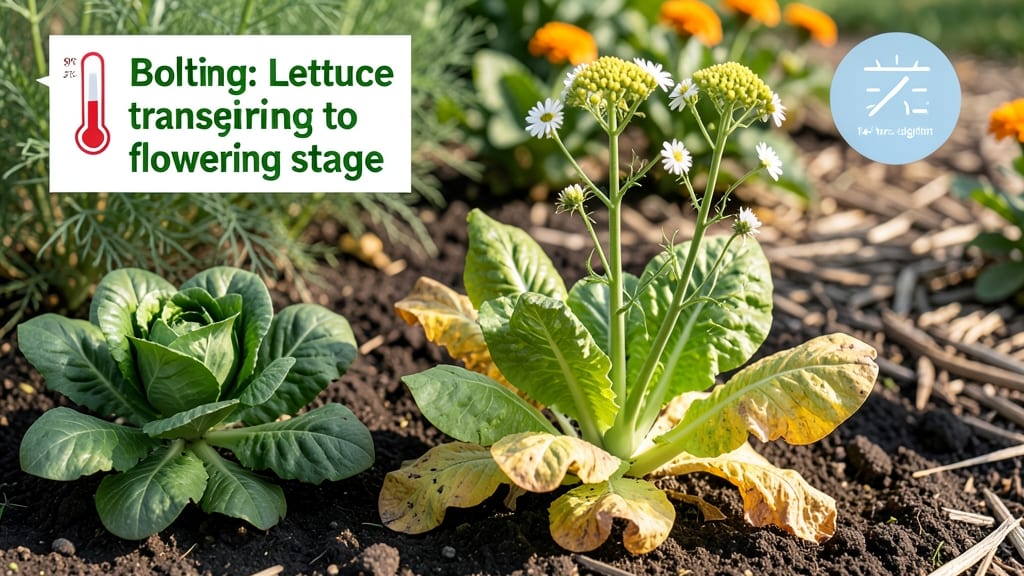
What does bolt mean in gardening? It refers to when a plant suddenly grows flowers and seeds as a stress response to heat, age, or improper care, often making its leaves or stems inedible before harvest.
This happens because plants release stress hormones like ethylene and florigen, which trigger rapid flowering. 🌱 For example, basil bolts quickly in hot weather, while lettuce may bolt when days get longer—both responses are survival mechanisms that shift energy from leaves to seed production.
Understanding these triggers helps gardeners adjust planting times or use shade cloth to preserve leafy crops.
Many gardeners confuse bolting with normal growth, but the key difference is speed: bolting skips the gradual development stage and rushes straight to flowering. This is why some varieties are bred specifically to resist bolting, especially in warm climates.
💡 In This Article
- Why Plants Bolt and How Stress Triggers It
- Preventing Bolting in Leafy Greens and Herbs
Why plants bolt and how stress triggers it
Bolting happens when plants detect environmental stress and trigger a hormonal cascade that prioritizes reproduction over leaf growth. The process begins with ethylene, a gas released during stress like heat or drought, which signals the plant to prepare for flowering.
This hormone activates florigen, a protein that travels from leaves to the shoot tip, telling the plant to bolt. Think of it like a biological alarm system—when conditions become unfavorable, the plant shifts its energy from producing edible leaves to creating seeds for the next generation.
Temperature is the most common trigger, especially for cool-season crops like lettuce or spinach. When soil temps rise above 75°F, these plants detect it as a signal to bolt quickly, often within 3-5 days.
Day length also plays a role: long-day plants (like cilantro) bolt when daylight exceeds 14 hours, while short-day plants (like basil) bolt when days get shorter. Even subtle changes, like 10°F temperature swings or inconsistent moisture, can accelerate bolting by disrupting the plant's natural growth rhythm.
Genetics determine how sensitive a plant is to these triggers. For example, basil varieties like 'Genovese' bolt rapidly in heat, while heat-tolerant types like 'Thai basil' resist bolting longer. Similarly, 'Black Seeded Simpson' lettuce' bolts faster than 'Romaine' when exposed to warm conditions.
This genetic variation explains why some gardeners succeed with leafy greens in hot climates while others struggle—it's not just about care, but also about choosing the right varieties for your region's climate patterns.
What makes bolting so frustrating is how quickly it transforms your crop. One day you're harvesting tender basil leaves, and the next, the plant is sending up a 3-foot flowering stalk with bitter, woody stems. The leaves that remain are often tough and fibrous, making them inedible.
This shift happens because the plant redirects nutrients from leaf production to flower and seed development—a survival tactic that leaves gardeners with little time to intervene.
Drought stress is another major culprit, especially in sandy soils where moisture drains quickly. When roots struggle to absorb water, the plant perceives this as a signal to reproduce before dying. Even overwatering can cause bolting in some plants by disrupting nutrient uptake and creating root stress.
The key is maintaining consistent moisture—keeping soil evenly damp (not soggy) helps delay bolting in heat-sensitive crops.
Light exposure also influences bolting. Plants grown in partial shade (like under 30% shade cloth) often bolt later than those in full sun, because the reduced light intensity slows their metabolic rate.
This is why many gardeners use shade cloth during summer months to protect leafy greens. The cloth doesn't block all light—just enough to reduce stress signals while still allowing photosynthesis to continue.