
Size
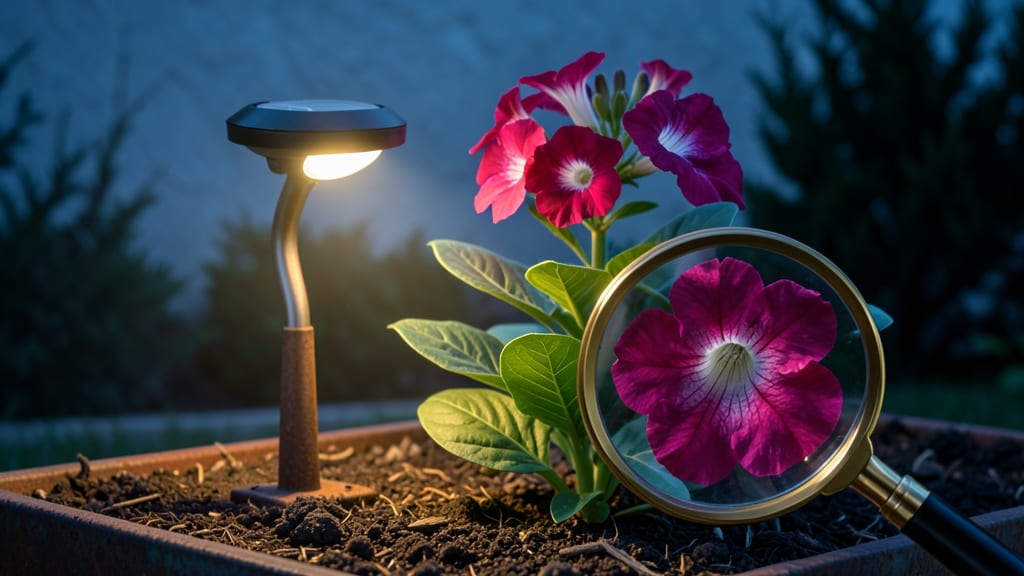
A night owl can grow a garden full of low-light-tolerant, late-blooming plants like moonflowers, evening primrose, or night-scented stocks, which thrive under moonlight and cooler evening temperatures while requiring minimal daytime sun exposure.
A night owl gardener can actually leverage the moon's glow and cooler nights to cultivate plants that many daytime gardeners overlook. 🌙 These nocturnal-friendly plants often produce stunning flowers and fragrant blooms after sunset, attracting moths and other evening pollinators.
For example, moonflowers (Ipomoea alba) unfurl their large white blossoms at dusk, while evening primrose (Oenothera biennis) releases its sweet scent as temperatures drop. The key advantage?
These plants conserve moisture better in cooler evening air, reducing the need for frequent watering—a perfect match for someone who gardens primarily after dark.
Beyond flowers, some vegetables like okra and certain beans also perform well in these conditions, making it possible to grow edible crops without needing full sun exposure. The trick lies in selecting varieties adapted to lower light levels and understanding their unique growth patterns.
Many of these plants have deep root systems that help them access moisture from deeper soil layers, another adaptation that works beautifully for nighttime gardeners.
💡 In This Article
- Best Late-Blooming Plants for Nighttime Gardens
- Gardening Tips for Moonlight-Friendly Crops
Best late-blooming plants for nighttime gardens
Moonlight isn't just poetic inspiration—it's a growth advantage for plants adapted to cooler, low-light conditions. These species have evolved to capitalize on evening hours when temperatures drop 10-15°F cooler than daytime peaks, reducing water evaporation by up to 60%.
The key mechanism is their CAM (Crassulacean Acid Metabolism) pathway, which allows them to fix carbon dioxide at night when stomata (pores) stay open safely in the humidity.
This is why plants like Mirabilis jalapa (four-o'clocks) burst into vibrant blooms precisely at 6 PM, timed with their pollinators like hawk moths.
Evening primrose (Oenothera biennis) takes this further with its self-pollinating flowers that open wide only after sunset, releasing a heady, honey-like fragrance that attracts night-flying insects.
The plant's deep taproots (reaching 3-5 feet deep) access moisture from underground reservoirs, making them drought-resistant once established. 🌙 Another standout is the Nicotiana sylvestris (night-scented tobacco), whose white flowers glow faintly under moonlight—a trait called lunar fluorescence that helps nocturnal pollinators locate them.
These plants don't just survive in moonlight; they thrive because their entire biology is optimized for the night shift.
For edible options, consider Physalis peruviana (cape gooseberry), whose yellow lantern fruits ripen perfectly in partial shade and cooler evenings. The berries develop their signature sweet-tart flavor when exposed to 12-14 hours of indirect light daily, making them ideal for night owls who can't dedicate full sun.
Even leafy greens like Malva parviflora (cheeseweed) produce tender shoots in 3-4 weeks under moonlight, with a nutty, spinach-like taste that intensifies when grown in cooler conditions.
The science behind these adaptations goes beyond just timing. Many night-blooming plants have thicker cuticles on their leaves, reducing water loss by 40% compared to daytime plants.
Their pigments shift too—chlorophyll becomes less dominant, while anthocyanins (the compounds that make blueberries blue) increase, giving them a deep purple hue that absorbs more moonlight. This pigmentation isn't just for show; it helps the plants photosynthesize at night, albeit at a slower rate than daytime plants.
What makes these plants particularly rewarding for night owls is their fragrance. Many release their most intoxicating scents after dark, creating a garden that comes alive when most people are indoors.
For example, Datura wrightii (sacred datura) emits a trance-inducing, musky aroma at night, while Hesperis matronalis (dame's rocket) fills the air with a sweet, almond-like scent that peaks around 9 PM. This sensory experience turns gardening into an evening ritual rather than a daytime chore.
One often-overlooked benefit is that these plants repel daytime pests like aphids and spider mites, which struggle in cooler nighttime conditions. Their strong fragrances also mask the scents of nearby vegetables, creating a natural confusion defense against cabbage moths and other crop destroyers. 🌟 The result?
A garden that's not just productive but also self-sustaining with minimal intervention—perfect for someone who prefers working after the sun goes down.