
Tools
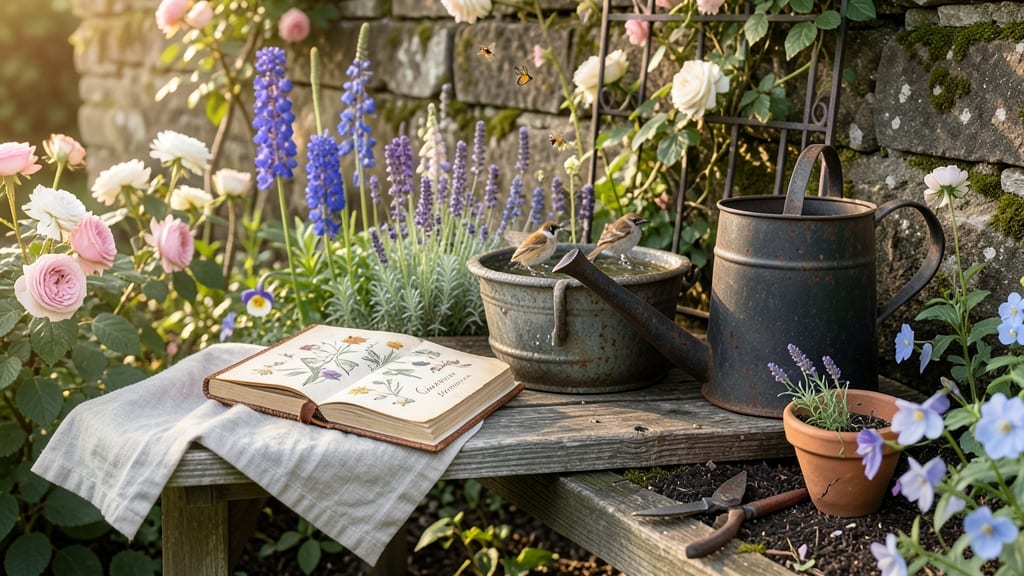
An English garden creates a romantic, naturalistic landscape through wildflower meadows, meandering pathways, and layered plantings that mix structured and freeform elements. Its beauty lies in seasonal variety and an effortless, timeless appeal rather than strict geometric lines.
This garden style originated in 18th-century England as a reaction against rigid French formal gardens. 🌿 The key is creating a sense of discovery with untamed yet carefully curated plantings—think roses climbing over rustic arbors, cottage-style herb gardens, and winding gravel paths that invite exploration.
Unlike French gardens with their clipped hedges and symmetrical layouts, English gardens embrace organic shapes and textures, often incorporating stone walls, old wooden gates, and hidden seating areas. The result is a space that feels both grand and intimate, perfect for evoking nostalgia while remaining low-maintenance.
What makes English gardens so enduring is their adaptability. Whether you're working with a small urban courtyard or a sprawling countryside estate, the principles remain the same: prioritize seasonal interest, mix heights and textures, and let nature guide the layout.
The wildflower meadows aren't just decorative—they support local ecosystems while providing year-round color. For me, the magic happens in how these gardens balance structure and spontaneity, making them feel alive rather than static. 🌸
💡 In This Article
- Historical Roots of English Garden Design
- Defining Features of a Classic English Garden
Historical roots of English garden design
The English garden style we recognize today began taking shape in the 16th century, when wealthy landowners rejected the strict geometric layouts of French Renaissance gardens. 🌿 Before that, medieval monastic gardens focused on practicality—herbs for healing, vegetables for sustenance, and fragrant flowers arranged in rectangular plots.
These early designs reflected both utility and spirituality, with knot gardens symbolizing divine order.
The true revolution came in the 18th century, led by landscape architects like Lancelot "Capability" Brown and William Kent. Brown's philosophy centered on creating "natural" landscapes that mimicked wild scenery, using gentle slopes and winding paths to guide visitors through carefully composed vistas.
His work at Stourhead and Blenheim Palace demonstrated how to blend formal elements like grand lawns with informal plantings of native trees and shrubs. Kent, meanwhile, introduced the picturesque style—scenic viewpoints designed to evoke emotion, often featuring ruins or temples strategically placed to frame the landscape.
What set these designs apart was their democratic appeal.
Unlike French gardens that required vast estates and armies of gardeners to maintain, English gardens embraced irregularity and used native plants that thrived with minimal intervention. 🌸 The 1798 publication of "Essays on the Theory of Landscape Gardening" by Brown's protégé, Humphry Repton, codified these principles, arguing that gardens should appear untouched by human hands while actually being meticulously designed.
This tension between nature and artifice became the hallmark of English garden design.
The Victorian era further popularized the style, as middle-class homeowners adopted cottage garden elements—roses, lavender, and herbaceous borders—that could be maintained in smaller spaces. The Arts and Crafts movement of the late 1800s reinforced this trend, promoting handcrafted garden ornaments and rustic materials like stone and wood.
Even today, these historical layers influence modern English gardens, where you'll often find a mix of formal parterres (structured flower beds) alongside wildflower drifts and naturalistic woodlands.
One fascinating detail is how these gardens reflected broader cultural shifts.
The Enlightenment era's emphasis on reason gave way to Romanticism's appreciation for nature's beauty and emotional power. 🌿 This philosophical change is visible in garden design—whereas earlier gardens emphasized order, later ones prioritized discovery and serendipity, with hidden seating areas and unexpected focal points.
The result is a style that feels both timeless and perpetually fresh.
What most people don't realize is that English gardens were also a political statement. In an era of rigid class structures, these landscapes offered a vision of nature as accessible and democratic. The wildflower meadows weren't just decorative—they represented a return to simpler, more natural ways of living.
This philosophy continues to resonate today, making English gardens more than just aesthetic choices; they're living examples of how humans can coexist with nature.