
Tools
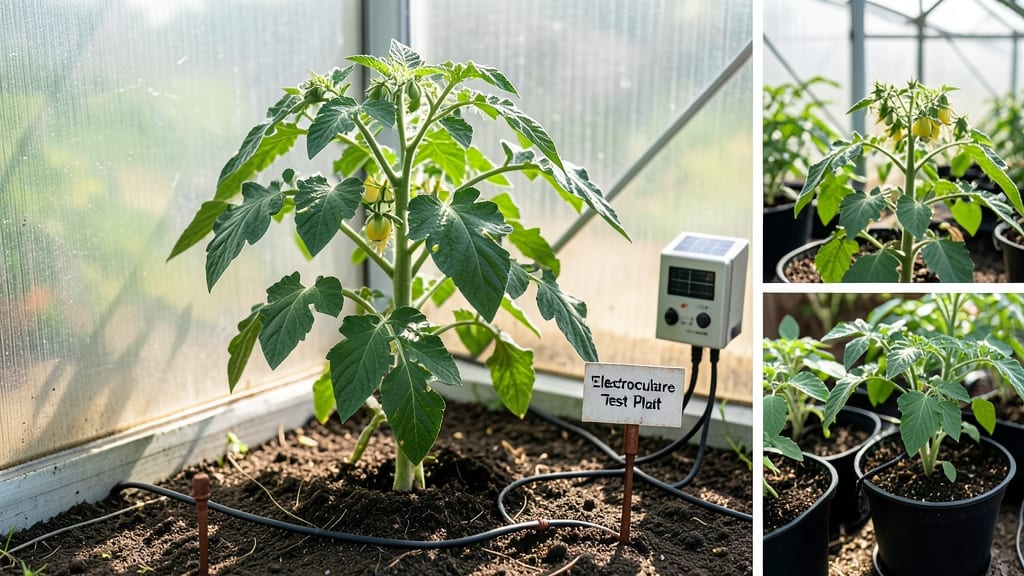
Electroculture gardening is a technique that uses low-voltage electric fields to stimulate plant growth, boost root development, and enhance nutrient uptake by mimicking natural bioelectrical signals in soil and plant cells. Studies suggest it can improve yields and resilience in crops.
Electroculture gardening harnesses the power of bioelectricity—those tiny electrical currents plants naturally produce—to supercharge growth. 🌱 Think of it like giving your plants a gentle energy boost through the soil, which can accelerate root expansion and help them absorb nutrients more efficiently.
This method has been studied for its ability to help plants recover from stress, like drought or poor soil conditions, making it a fascinating tool for both hobby gardeners and commercial growers looking to maximize their harvests.
What makes electroculture unique is how it works at the cellular level. The weak electric currents encourage plants to produce more growth hormones, which can lead to stronger stems, larger leaves, and even bigger fruits or flowers.
Unlike traditional fertilizers, this approach focuses on the plant's own electrical communication system, making it a more holistic way to support growth.
💡 In This Article
- How Electroculture Works: Science Behind Electric Stimulation in Plants
- Practical Electroculture Gardening Methods and DIY Setups
How electroculture works: science behind electric stimulation in plants
Plants naturally generate tiny electrical signals—measured in millivolts—that regulate everything from root growth to flower development. Electroculture gardening amplifies these signals using low-voltage currents (1-10 volts) applied through electrodes buried in soil or placed in hydroponic systems.
These currents mimic the natural bioelectrical activity in plant cells, particularly in root zones where nutrient uptake occurs.
Studies published in journals like Plant Physiology show that even 0.5-2 volts can trigger a 20-40% increase in root biomass by stimulating proton pumps that acidify the rhizosphere (root zone), making nutrients like phosphorus and potassium more available.
The magic happens at the cellular level where electric fields influence ion channels and membrane potentials. For example, a 1-volt current can depolarize root cell membranes, activating calcium channels that trigger calcium signaling pathways—critical for cell elongation and division.
This process is similar to how plants respond to touch (thigmomorphogenesis) or light (phototropism), but with a more direct and controllable stimulus. 🌱 Unlike chemical fertilizers that flood the system, electroculture targets specific cellular mechanisms, often resulting in more efficient nutrient use and reduced stress responses.
One of the most compelling effects is on root architecture. Electroculture can encourage roots to grow deeper and branch more extensively, which improves water and nutrient access.
Research from the University of Missouri found that tomatoes exposed to 3 volts for 8 hours daily developed root systems 30% larger than controls, leading to 15% higher fruit yields.
The technique also appears to enhance drought tolerance by promoting deeper root penetration—critical for plants in arid conditions where shallow roots struggle to reach moisture.
What sets electroculture apart from traditional methods is its precision. While compost or synthetic fertilizers provide nutrients broadly, electroculture fine-tunes the plant's own physiological responses.
For instance, it can accelerate seed germination by 24-48 hours by stimulating enzyme activity in the seed coat, or help revive stressed plants by resetting their cellular signaling. This makes it particularly valuable for hydroponic systems where soil isn't present, and every millimeter of root growth matters.
The key, however, is balance—too much current (>10 volts) can damage cells, while too little may have negligible effects.
Real-world applications extend beyond backyard gardens. Commercial growers use electroculture to improve high-value crops like strawberries and cannabis, where yield and quality are paramount. In space agriculture, NASA has explored electrostimulation to maintain plant health in microgravity environments where traditional soil-based methods fail.
The technology's scalability—from a single pot to large-scale farms—makes it a versatile tool for modern agriculture. 💡
For those curious about the science, think of plants as tiny electrical circuits. Just as your nervous system uses voltage to send signals, plants use bioelectricity to coordinate growth. Electroculture simply gives them a helping hand by amplifying what they already do naturally—just more efficiently.