
Tools
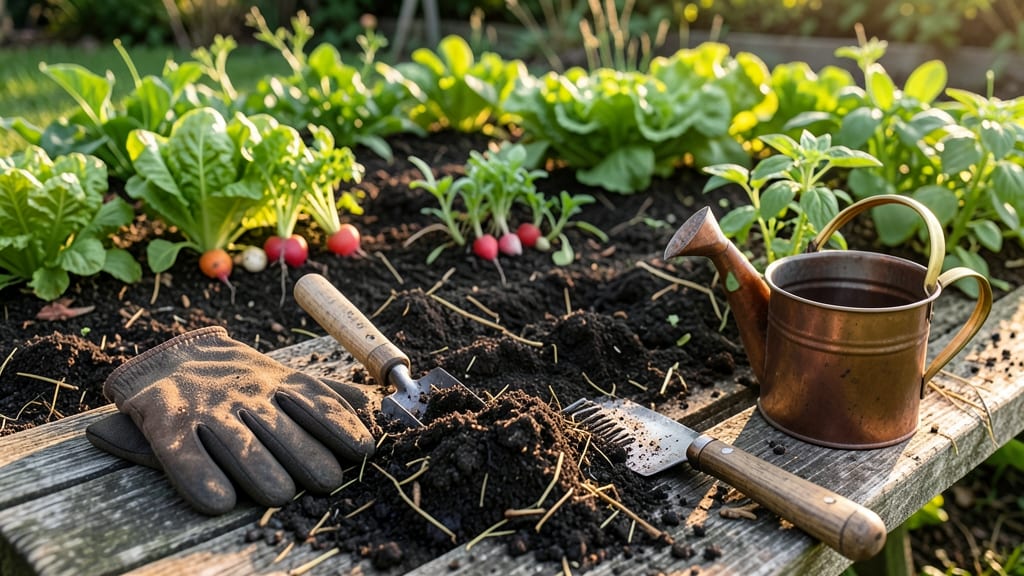
Garden soil is used as a nutrient-rich growing medium for plants, providing essential minerals, water retention, aeration, and microbial support that foster root development and healthy growth. Its structure and composition directly influence plant vitality and yield.
Garden soil serves as the foundation for healthy plant life by delivering a balanced mix of nutrients—like nitrogen for leaf growth, phosphorus for root development, and potassium for overall strength. 🌱 The right soil blend also prevents waterlogging while ensuring roots get enough oxygen, which is crucial for preventing rot and promoting vigorous growth.
I've seen firsthand how amending soil with compost can transform struggling plants into thriving ones within just a few weeks.
Beyond basic nutrition, soil acts as a living ecosystem where beneficial microbes break down organic matter into plant-accessible forms. This natural process not only feeds your plants but also helps regulate soil pH, creating the perfect conditions for different species.
For example, acid-loving blueberries need a pH around 4.5-5.0, while most vegetables thrive in slightly acidic to neutral soil (6.0-7.0). Understanding these nuances can make the difference between a mediocre harvest and a bountiful one.
💡 In This Article
- Key Functions of Garden Soil in Plant Nutrition
- Choosing the Right Soil Mix for Different Plants
Key functions of garden soil in plant nutrition
Garden soil acts like a natural nutrient delivery system for plants, supplying the three primary macronutrients through a complex mineral exchange process. Nitrogen (N) fuels leafy growth by promoting chlorophyll production, while phosphorus (P) strengthens roots and energy transfer systems.
Potassium (K) enhances disease resistance and water regulation—think of it as the plant's electrolyte balance. These elements exist in soil as compounds like nitrates, phosphates, and potassium ions, which roots absorb through osmosis when dissolved in soil moisture.
The soil's microbial ecosystem plays an equally vital role by breaking down organic matter into plant-accessible forms. Mycorrhizal fungi, for instance, form symbiotic relationships with roots, extending their reach up to 10 times their normal length to gather nutrients.
These microscopic partners also help prevent harmful pathogens from colonizing root zones. The texture matters too: loamy soil (40% sand, 40% silt, 20% clay) provides ideal porosity for both water retention and oxygen flow, preventing the anaerobic conditions that cause root rot.
Moisture regulation is another critical function where soil composition makes all the difference. Sandy soils drain too quickly, while clay holds water so tightly that roots suffocate. The ideal blend maintains 30-60% porosity, allowing water to percolate while retaining enough moisture for roots to access.
This balance is why gardeners often amend heavy clay with 2-3 inches of compost or peat moss—it creates those crucial air pockets while adding organic matter that slowly releases nutrients.
Soil pH acts as the master regulator for nutrient availability. Most plants prefer slightly acidic to neutral conditions (pH 6.0-7.0), where essential minerals like iron and manganese remain soluble. However, some plants like hydrangeas thrive in acidic soil (pH 5.0-5.5), while others like asparagus need alkaline conditions (pH 7.0-8.0).
The soil's cation exchange capacity (CEC)—its ability to hold and release nutrients—varies dramatically: clay soils can hold 10-30 meq/100g of exchangeable cations, while sandy soils manage only 2-5 meq/100g, explaining why clay soils often require less frequent fertilization.
Don't overlook the physical structure's role in root development. The ideal soil crumbles easily when dry but holds together when moist—a quality called "tilth." This structure creates channels for both water and oxygen to reach roots, while also providing physical support.
For example, tomato roots need well-aerated soil to develop strong vascular systems that can transport nutrients from leaves to fruits. Poor soil structure leads to stunted growth because roots can't efficiently explore the soil volume for resources.
One often overlooked function is soil's role in temperature regulation. Dark organic-rich soil absorbs and retains heat during the day, creating a 5-10°F warmer microclimate near the root zone than the surrounding air.
This extended growing season helps tender plants like basil and peppers establish stronger root systems before cooler nights arrive. The same principle explains why raised beds often produce earlier harvests—the soil warms up faster in spring.
Understanding these functions helps explain why simply adding fertilizer isn't always the solution. Plants need all these components working together: proper pH for nutrient uptake, adequate porosity for oxygen, and microbial activity to recycle organic matter.
When these elements align, you get the kind of explosive growth I've seen in my own garden—where a single compost application can transform struggling seedlings into thriving plants within weeks.