
Planting
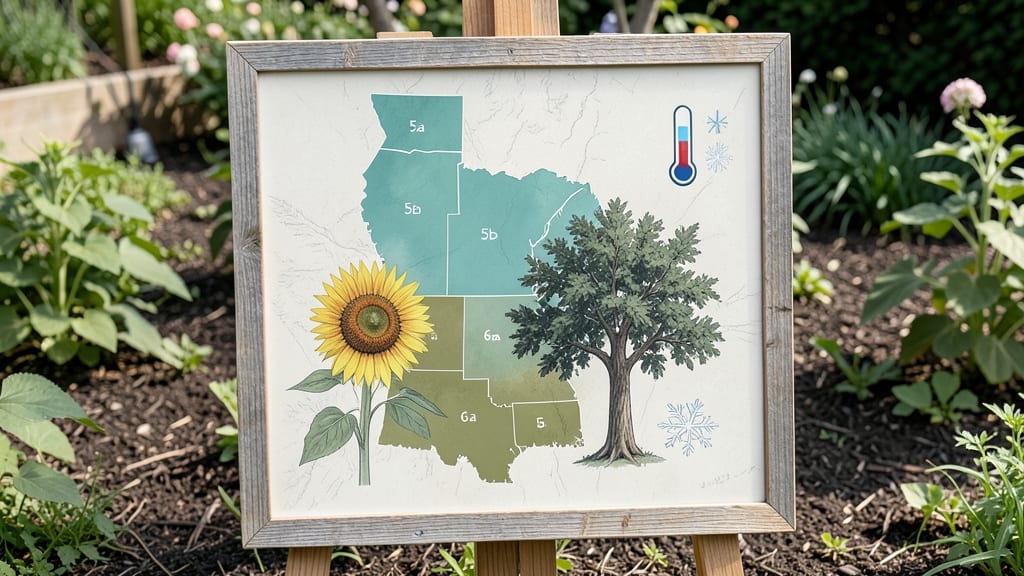
Illinois gardening zones range from USDA Zone 5 in northern areas like Chicago to Zone 6 in southern regions such as St. Louis, with Zone 5b being the most common. Local microclimates can shift planting deadlines by weeks.
Understanding Illinois's gardening zones helps you pick the right plants for your area.
The state's transition from Zone 5 to 6 reflects its geography—northern regions near Lake Michigan experience cooler temperatures, while southern areas benefit from milder winters. 🔥 For example, Chicago's Zone 5b means frost typically arrives by mid-October, while St. Louis's Zone 6a allows for later fall plantings.
Microclimates near urban areas or river valleys can also create localized differences, so checking your exact location is key.
To maximize your garden's success, align planting with your zone's frost dates.
Cool-season crops like spinach thrive when soil temperatures drop below 50°F, while warm-season plants like tomatoes need to wait until after the last frost—usually around May 15th in Zone 5b and April 15th in Zone 6a. Tools like the Old Farmer's Almanac or local Cooperative Extension offices provide precise frost data for your specific area.
💡 In This Article
- USDA Plant Hardiness Zones in Illinois: Key Regions and Microclimates
- Illinois Gardening Deadlines: When to Plant by Zone and Season
USDA plant hardiness zones in Illinois: key regions and microclimates
Illinois's gardening zones are shaped by geography, elevation, and lake effects. The state's northern tier, including Chicago, falls into Zone 5b due to Lake Michigan's moderating influence—water absorbs heat slowly, keeping coastal areas cooler in summer and warmer in winter than inland spots.
Meanwhile, southern Illinois, like St. Louis, sits in Zone 6a, where milder winters and flatter terrain allow for a longer growing season. The transition between zones happens gradually, with areas like Springfield in Zone 6a and Peoria in Zone 5b/6a.
The USDA's zone boundaries are based on average annual minimum temperatures, which in Illinois range from -15°F to 0°F in Zone 5b to 0°F to 10°F in Zone 6a. What's fascinating is how microclimates—like urban heat islands or river valleys—can shift these averages by 2-5°F.
For instance, downtown Chicago's concrete and buildings trap heat, creating a Zone 6a microclimate just blocks from Zone 5b neighborhoods. Similarly, the Mississippi River valley in southern Illinois can experience 3-5°F warmer winters than surrounding areas.
Understanding these variations helps gardeners choose the right plants.
A Zone 5b plant like Russian sage (Perovskia atriplicifolia) might struggle in Zone 6a St. Louis if exposed to a late frost, while a Zone 6a favorite like butterfly bush (Buddleia davidii) could survive Chicago winters if planted in a sheltered microclimate.
The key is knowing your specific location's frost history—tools like the USDA Plant Hardiness Zone Map and local weather stations provide the granular data you need.
Elevation also plays a subtle but important role. Northern Illinois's rolling hills can create localized temperature differences, with higher elevations (800+ feet) often 1-2°F cooler than valley floors. This matters for frost-sensitive plants like tomatoes or peppers, which may need extra protection in cooler microclimates.
Meanwhile, southern Illinois's flat terrain means fewer elevation-driven variations, but river valleys still create pockets of warmth ideal for extending the growing season.
For precise planting guidance, check your exact location using the USDA Interactive Zone Map or your local Cooperative Extension office. These resources account for microclimates and provide data on first/last frost dates, which can vary by 1-2 weeks even within the same zone.
For example, a Zone 5b garden in northern Illinois might see its last frost on May 10th, while a Zone 6a garden in southern Illinois could plant warm-season crops as early as April 15th.
Pro tip: Use a minimum thermometer in your garden for a full year to track your local lows—this gives you the most accurate data for your specific microclimate. Over time, you'll discover how your yard's unique conditions compare to the broader zone averages. 🌱