
Planting
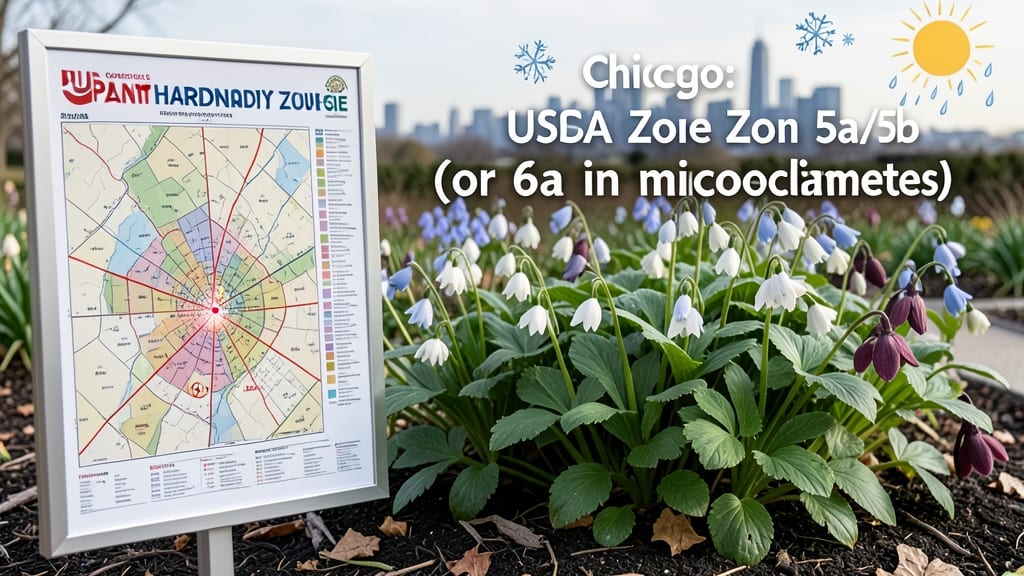
Chicago falls into USDA Hardiness Zones 5a and 5b, with some northern suburbs reaching Zone 6a, where winter lows typically range from -15°F to -10°F and summers often exceed 85°F.
Understanding Chicago's gardening zone helps you choose plants that thrive in its cool winters and hot summers.
The USDA map divides Chicago because Lake Michigan creates microclimates—areas near the lake stay slightly warmer than inland spots. 🌿 For example, plants rated for Zone 5b (hardy to -10°F) will struggle in Zone 5a's colder pockets, while Zone 6a's northern suburbs can handle marginally tender species.
This distinction matters when selecting perennials or fruit trees, as even a 5°F difference affects survival rates. The city's urban heat island effect also pushes summer temperatures higher, making heat-tolerant varieties essential for container gardens.
This zone classification directly impacts your planting calendar. In Zone 5a/5b, the last spring frost usually occurs around April 15–May 1, while Zone 6a areas can plant 1–2 weeks earlier.
For cool-season crops like broccoli, aim to sow seeds 4–6 weeks before the last frost, while tender annuals like tomatoes should wait until soil reaches 60°F—typically mid-May. Chicago's unpredictable spring weather means monitoring local forecasts and having a backup plan for late frosts.
💡 In This Article
- How USDA Zones 5 and 6 Affect Chicago Gardening
- Chicago Planting Deadlines by USDA Zone
How USDA zones 5 and 6 affect Chicago gardening
The USDA Hardiness Zone system categorizes regions based on average annual minimum temperatures over a 30-year period. Chicago's classification into Zones 5a, 5b, and 6a reflects its cold winters and moderate summers, with critical temperature thresholds determining plant survival.
Zone 5a (-20°F to -15°F) covers the coldest pockets, while Zone 5b (-15°F to -10°F) dominates most of the city. Zone 6a (-10°F to -5°F) appears only in northern suburbs like Wilmette or Winnetka, where lake-effect warming creates slightly milder conditions. 🌡️
Chicago's geography creates microclimates that defy simple zoning. Lake Michigan acts as a thermal regulator—areas within 10 miles of the lake experience 5-10°F warmer winters than inland spots like O'Hare. This "lake effect" explains why Lincoln Park might support Zone 5b plants while Englewood could require Zone 5a hardiness.
Urban heat islands further complicate matters, with downtown Chicago recording 5-7°F higher summer temperatures than suburbs, pushing heat-loving plants beyond their typical zone limits.
The zone classification directly impacts plant selection. For example, peach trees (Zone 5b hardy) thrive in Lincoln Park but may fail in Zone 5a's colder pockets like Pullman. Similarly, hydrangeas (Zone 3-9) grow well across all Chicago zones, while roses (Zone 4-9) need careful variety selection for Zone 5a areas.
The 10°F difference between Zone 5a and 6a means northern suburbs can attempt marginally tender perennials like butterfly bush (Zone 4), while city centers must stick to Russian sage (Zone 3) for winter survival.
Chicago's unpredictable frost patterns further complicate zone-based planning. While the USDA map provides a baseline, local weather anomalies—like the 2021 April frost that damaged early plantings—demand flexibility.
Gardeners in Zone 5b might still experience -12°F dips in extreme winters, requiring protective measures like row covers or mulch blankets for sensitive plants. The lake's influence also creates delayed spring warming near shore areas, pushing last frost dates 1-2 weeks later than inland zones.
For container gardening, zone differences become even more critical. A Zone 6a potted lemon tree (Citrus × limon) might survive a northern suburb winter with winterization, but the same plant in Zone 5a would require indoor overwintering or heated containers.
The urban heat island effect also benefits container gardens, allowing Zone 7 plants like bougainvillea to thrive in downtown planters when they'd fail in suburban yards. This spatial variability means Chicago gardeners must consider both zone and microclimate when selecting container-friendly species.
Understanding these zone dynamics helps explain why Chicago's gardening community emphasizes cold-hardy varieties and season extension techniques. The 5°F difference between Zone 5a and 5b might seem small, but it determines whether a blueberry bush (Zone 4) survives or requires winter protection.
Master gardeners often recommend planting perennials in Zone 5b beds and using cold frames for Zone 5a areas to bridge the gap between ideal conditions and Chicago's reality. 🌱