
Picking
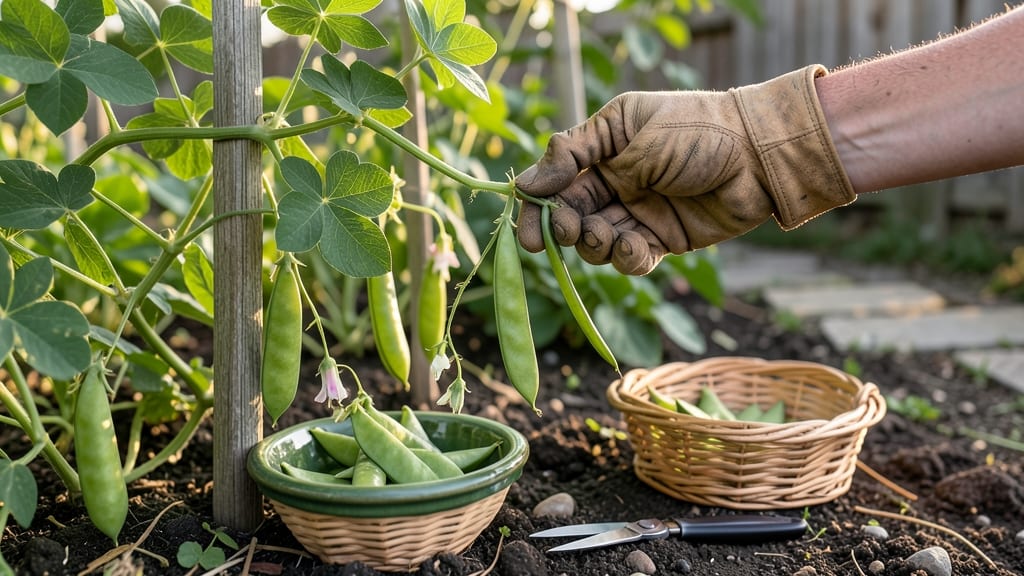
Harvest garden peas when pods reach 2 to 2.5 inches long and feel tender but firm — that’s the sweet spot for peak flavor and texture.
Picking too early means tiny, underdeveloped peas, while waiting too long turns them tough and mealy. I’ve learned the hard way that timing is everything for that perfect snap and sweetness.
Most varieties are ready 60 to 70 days after planting, but color and firmness are your best cues. Bright green, glossy pods with barely visible seeds inside signal the ideal moment.
Below, I’ll walk you through how to check for readiness, avoid common mistakes, and keep your harvest fresh for weeks.

How to check garden pea pod size for perfect harvest timing
Timing your garden pea harvest is all about balance—picking too early means underdeveloped pods, while waiting too long turns them tough and fibrous. The key lies in pod size, texture, and color, which vary slightly by pea variety.
For sugar snap peas, shelling peas, and snow peas, each has its own sweet spot for harvest. I’ll walk you through how to check pods like a pro to ensure you’re harvesting at peak tenderness and flavor.
Start by examining the length of the pod. Most garden peas reach harvest readiness when they’re between 2 to 2.5 inches long. This is your first visual cue that the pea is mature enough to pick.
For snow peas, you’ll want pods that are flat and slightly elongated, while sugar snap peas should be plump and crisp. Shelling peas, on the other hand, can be a bit larger but still need to be tender. Use a ruler or your fingers to measure—consistency is key!
Next, give the pod a gentle squeeze test. A perfectly ripe pea pod should feel firm but slightly yielding under light pressure. If it’s rock-hard, it’s not ready yet. If it feels mushy or the seeds inside are pressing against the pod walls, you’ve waited too long.
This texture check is especially important for sugar snap peas, where the pod itself is edible and should snap crisply when bent.
Color is another critical indicator. Look for pods that are bright green and glossy. Dull or yellowing pods are a sign of overmaturity, which means the peas inside have started to dry out and lose sweetness.
For snow peas, the pods should remain a vibrant green, while shelling peas can develop a slightly darker green hue as they mature. Always harvest on a cool morning after any morning dew has dried—this ensures the pods are at their freshest and most flavorful.
Don’t forget to check the seeds inside the pod. For the best flavor, the seeds should be small and barely visible through the pod’s skin. If you can see large, plump seeds, the pod has passed its prime.
This is especially true for shelling peas, where the peas inside should still be tiny and tender. Overripe pods will have developed fully formed peas, which can make the pod tough and less enjoyable to eat.
Harvesting frequency also plays a role in pod development. Pea plants produce continuously, so I recommend picking every 2-3 days during peak production. This encourages the plant to keep producing new pods instead of letting them overmature.
Use sharp scissors or pruners to snip the pods just above the first set of leaves—this prevents damage to the vine and promotes further growth. Always harvest in the morning when the pods are cool and crisp.
Regional differences can slightly alter harvest timing. In cooler climates, peas may mature faster due to shorter daylight hours, while warmer regions might see a slightly delayed harvest. Pay attention to your local last frost date and adjust your planting schedule accordingly.
If you’re growing peas in containers, keep an eye on root growth—crowded roots can stress the plant and affect pod development.
Finally, store your freshly harvested peas properly to maintain their freshness. Place them in a perforated bag in the refrigerator for up to 5 days, or blanch and freeze them for long-term storage.
For the best results, use your peas within a few days of harvesting—they’re at their sweetest and most tender right off the vine. With these tips, you’ll never miss the perfect moment to harvest your garden peas again!
🌱
Common mistakes that ruin pea harvest flavor (and how to avoid them)
Even experienced gardeners sometimes miss the subtle signs that peas are overripe or underripe, leading to bland or tough harvests. I’ve seen bright green pods turn dull and mealy overnight if left too long on the vine. The key is recognizing these hidden cues before they ruin your crop.
One of the biggest mistakes is ignoring pod color changes. While bright green signals readiness, a shift to yellowing or brown spots means the peas have passed their prime. Even worse, some gardeners wait until the seeds inside become obvious through the pod—that’s a clear sign of overmaturity.
Another common error is harvesting infrequently. Peas produce best when picked every 2-3 days during peak season. Waiting too long forces the plant to focus on seed development, reducing sweetness and tenderness in future pods.
I once skipped a week of picking, and the next harvest was half the size and tough.
Environmental factors also play a huge role. Hot temperatures above 80°F can make peas bitter, while drought stress leads to tough, stringy pods. Even excess moisture causes blossom end rot, ruining the pod’s flavor. Balancing these conditions is crucial for sweet peas.
⚠️ Warning: Overripe Peas Are a Flavor Disaster
Don’t wait until pods feel hard and woody—that’s a sure sign of overmaturity. Even worse, large seeds inside mean the peas will be starchy and bland. Check pods every 2 days during peak season to catch them at their sweetest stage.
🌱 Pro Tip: Run your thumb along the seam of the pod. If it squeaks slightly, it’s ready. If it’s silent, it’s past its prime.
Many gardeners also struggle with variety-specific timing. Sugar snap peas, for example, should be harvested when pods are flat and crisp, while shelling peas need slightly larger but still tender pods.
Snow peas, on the other hand, are best when thin and flat—waiting too long makes them tough.
Finally, harvesting at the wrong time of day can affect flavor. Early morning picks are the sweetest because sugars concentrate overnight. Harvesting in the heat of the day can make peas less sweet and more watery. I always grab my basket before 8 AM for the best results.
By watching for these subtle but critical signs, you’ll avoid the most common pitfalls and enjoy peas at their peak flavor. The difference between a perfectly sweet pod and a tough, mealy disappointment often comes down to these small details.