
Propagation
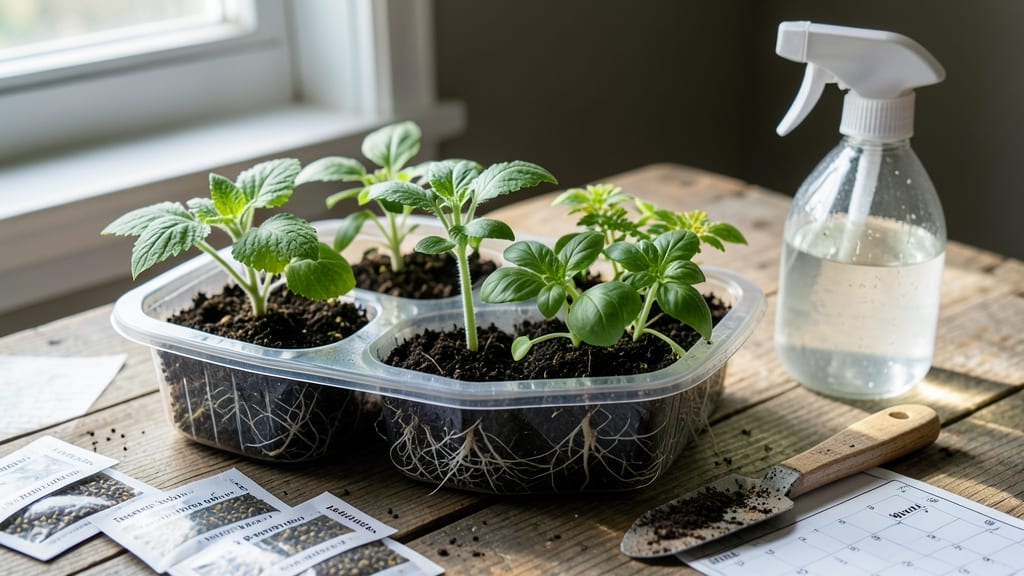
To start seeds for a spring garden, begin cool-season crops like lettuce and spinach 4–8 weeks before your last frost date, while warm-season varieties such as tomatoes and peppers need 6–10 weeks of indoor growth. Always verify your local frost timeline for accuracy.
Timing your seed starting is all about matching your plants' growth cycles to your climate. Cool-season crops like spinach and peas mature quickly, so you can sow them closer to the frost date, while warm-season plants like peppers and eggplants need more time to develop strong roots before transplanting.
I always check my local frost date first—this helps me avoid rushing seedlings or planting too early when they might bolt or struggle in cooler soil. For example, basil thrives with just 4–6 weeks indoors, while heirloom tomatoes often need the full 10 weeks to reach harvest size. 🌱
Pro tip: Use a seed-starting chart that accounts for your specific region's frost patterns. Northern gardeners typically start earlier than Southern ones, even for the same crops.
If you're unsure, err on the side of starting too soon—you can always move seedlings to a cooler spot or delay transplanting until conditions improve.
💡 In This Article
- How Seed Germination Rates Affect Spring Planting Timing
- Crop-Specific Seed Starting Calendar for Spring Gardens
How seed germination rates affect spring planting timing
Seed germination rates vary dramatically between plant families due to their biological needs. Cool-season crops like lettuce and spinach germinate quickly—often within 5-10 days—because they're adapted to thrive in cooler temperatures (60-70°F).
Their fast germination allows gardeners to start them just 4-6 weeks before the last frost, giving them enough time to mature before summer heat arrives.
In contrast, warm-season crops like tomatoes and peppers require 7-14 days just to crack through their seed coats, followed by weeks of slow, steady growth at 75-85°F to develop strong root systems.
The science behind these differences lies in each plant's evolutionary adaptations. Lettuce seeds contain high levels of abscisic acid, a natural growth inhibitor that prevents germination until conditions are ideal—typically cool and moist.
This same hormone is what makes lettuce bolt (go to seed) when exposed to prolonged warmth. 🌱 Meanwhile, pepper seeds have thick, waxy coatings that protect against fungal diseases in tropical climates but require consistent warmth to break down.
The enzyme pectinase, which softens these coatings, only becomes active at temperatures above 70°F, explaining why peppers struggle when started too early in cool basements.
Light exposure plays another critical role in germination timing. Photoblastic seeds like parsley and carrots require light to germinate, which is why they should be sown directly on the soil surface rather than buried.
In contrast, seeds like beans and peas are skotoblastic—they germinate better in darkness, which is why they're typically planted 1/2 inch deep. This light sensitivity affects when you can safely transplant seedlings, as moving them too soon can shock their delicate root systems still adapting to light conditions.
Your growing environment makes a huge difference in these timelines. A seedling heat mat set to 75°F can cut germination time for tomatoes by nearly half compared to room temperature (68°F).
I've found that using a simple germination chamber (a clear plastic dome over trays) maintains humidity at 80-90% and prevents mold while speeding up the process for finicky seeds like basil.
The key is replicating each plant's native growing conditions—tropical peppers need the heat, while alpine herbs like thyme prefer cooler starts.
What most gardeners overlook is how seed age impacts germination rates. Fresh seeds from the current year often germinate at 90%+ efficiency, while seeds over 2 years old can drop to 50% or lower.
I always check the seed packet for the germination rate and adjust my starting dates accordingly. For example, if your 1-year-old tomato seeds only have an 80% germination rate, you might want to start them 2 weeks earlier to ensure enough healthy seedlings for transplanting.
Here's a quick reference for common germination challenges:
- Slow starters: Tomatoes, peppers, eggplants (7-14 days to germinate)
- Fast growers: Lettuce, radishes, spinach (3-7 days)
- Light-dependent: Parsley, carrots (must stay moist and exposed)
- Dark-dependent: Beans, peas (should be covered with soil)
Understanding these germination patterns helps you create a personalized seed-starting schedule that accounts for your specific climate, seed quality, and growing conditions. The goal is to have robust seedlings ready to transplant when soil temperatures reach 60°F+—typically 2-3 weeks after your last frost date.
This timing ensures your plants transition smoothly from indoor life to outdoor growing conditions without shock. 🌿