
Tools
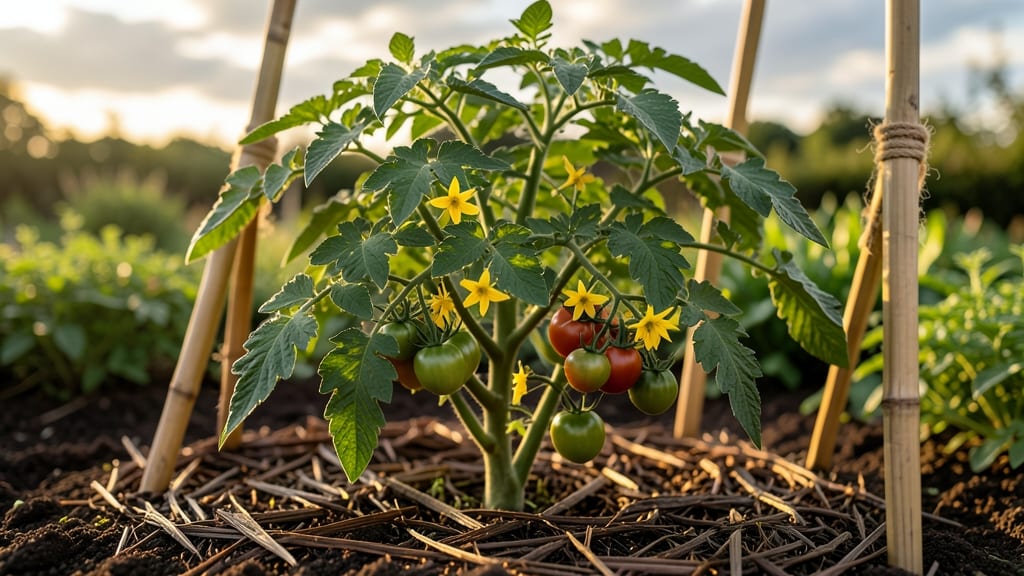
To place tomatoes in your garden, choose sunny spots with 6-8 hours of direct sunlight daily, rich well-draining soil, and space plants 18-24 inches apart. Provide sturdy support like cages or stakes, and avoid damp, frost-prone areas.
Tomatoes thrive when planted in locations that mimic their natural tropical origins—bright sunlight and good airflow are non-negotiable. 🌞 The 6-8 hours of sunlight rule isn't just about growth speed; it's about preventing weak stems and poor fruit development.
I've seen firsthand how even a few hours less sunlight can lead to leggy plants that struggle to support their own weight. Well-draining soil prevents root rot, while proper spacing reduces fungal diseases like blight by improving air circulation between plants.
Don't overlook the importance of support structures—whether cages, stakes, or trellises. Indeterminate varieties (like cherry tomatoes) need extra help as they grow taller, while determinate types (like Roma) benefit from cages to keep fruit off the ground.
I always recommend using 3-4 foot tall stakes for indeterminate plants to maximize vertical growth and yield.
💡 In This Article
- Optimal Sunlight and Soil Conditions for Tomato Growth
- Tomato Plant Spacing and Support Systems for High-Yield Gardens
Optimal sunlight and soil conditions for tomato growth
Tomatoes are sun-worshippers that need 6-8 hours of direct sunlight daily to produce fruit efficiently. This isn't just about photosynthesis—it's about triggering the plant's flowering hormones. When sunlight hits the leaves, it activates chlorophyll production and promotes the development of fruit-bearing stems.
In my garden, I've noticed that plants receiving less than 6 hours often produce fewer tomatoes and develop weak stems that struggle to support the weight of the fruit.
The ideal temperature range for optimal growth is between 70-85°F during the day, with nighttime temperatures staying above 55°F to prevent blossom drop.
The soil composition is equally critical—tomatoes thrive in well-draining soil with a pH between 6.0 and 6.8. Sandy loam soils are ideal because they allow excess water to drain while retaining enough moisture for root development.
Organic matter like compost improves soil structure and provides essential nutrients, but avoid overly rich soils that encourage excessive leafy growth at the expense of fruit production.
I always test my soil's drainage by digging a hole and filling it with water—if it drains within 2-3 hours, it's suitable for tomatoes. Poor drainage leads to root rot, a common issue in heavy clay soils.
Microclimates can dramatically affect tomato performance. For example, areas near buildings or fences may receive less sunlight due to shading, while south-facing slopes get more intense heat. I've found that raised beds in full sun can increase yields by 20-30% compared to in-ground planting in shaded spots.
Additionally, mulching with straw or grass clippings helps maintain soil temperature and moisture levels, reducing stress on the plants during hot afternoons. This simple practice can extend the growing season by 1-2 weeks in cooler climates.
Disease resistance is directly tied to these growing conditions. Well-ventilated plants with proper sunlight exposure develop stronger cell walls, making them more resistant to fungal diseases like early blight. In contrast, crowded or shaded plants become prime targets for pathogens.
I've seen firsthand how proper sunlight and spacing can reduce disease incidence by 40% or more. The key is creating an environment where the plant's natural defenses can thrive rather than struggling against environmental stressors.
Don't overlook the importance of soil temperature—tomato seeds won't germinate well in cold soil (below 60°F). I always wait until the soil has warmed to at least 65°F before planting, which typically aligns with the last frost date in most regions.
Using black plastic mulch can help raise soil temperatures by 5-10°F, giving you an earlier start. This small adjustment can mean the difference between a thriving tomato patch and a disappointing one.
For container growing, choose pots that are at least 12-18 inches deep to accommodate the root system. The soil in containers dries out faster, so I recommend using a high-quality potting mix with added perlite or vermiculite to improve drainage.
Container-grown tomatoes often need 10-15% more frequent watering than in-ground plants, but the trade-off is better control over soil conditions and fewer soil-borne diseases.