
Planting
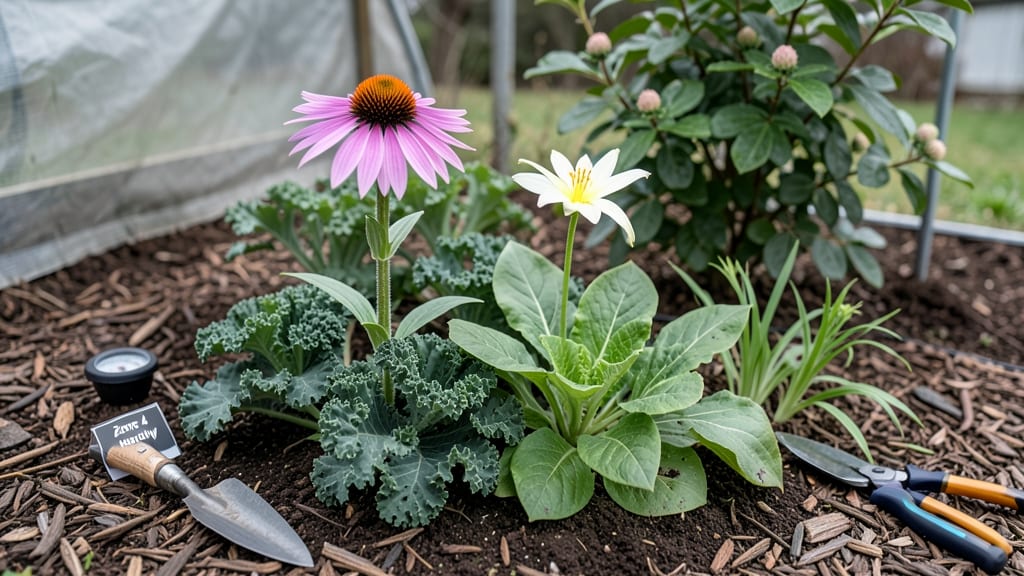
Zone 4 gardening succeeds with frost-tolerant plants like kale, spinach, and hardy perennials, and requires planting between mid-April and early June after the last frost date. Local frost patterns dictate exact timing, so always check your region's average frost dates.
Zone 4's -30°F to -20°F winters demand smart crop selection—think leafy greens, root vegetables, and perennials that survive dormancy. 🌱 The key is matching plant hardiness to your microclimate, since urban areas often warm up faster than rural spots.
I've found that starting seeds indoors 6-8 weeks before the last frost gives seedlings a head start, while direct-sowing cold-hardy crops like peas and lettuce can go in as soon as soil is workable (around 40°F).
For continuous harvests, succession planting works wonders—sow quick-maturing crops like radishes every 2 weeks after your initial planting. This keeps your garden productive even when summer heat arrives.
Remember, Zone 4's growing season is short but intense, so prioritize fast growers and extend it with row covers or cold frames when needed.
💡 In This Article
- Understanding Zone 4 Climate and Plant Hardiness
- Best Cold-Hardy Crops and Their Planting Schedules
Understanding Zone 4 climate and plant hardiness
Zone 4's extreme cold—ranging from -30°F to -20°F—forces plants to develop specialized survival strategies. Unlike tropical species, cold-hardy crops have evolved mechanisms like deep root systems that anchor them below the frost line, or chemical adaptations that prevent cell damage.
For example, kale's leaves contain high levels of antioxidants that act like natural antifreeze, while rhubarb's thick stalks store moisture to survive winter desiccation. These adaptations let them thrive where tender crops would perish.
The USDA hardiness zone system calculates these limits by averaging the coldest winter temperatures over 30 years, but microclimates create variations even within a single neighborhood. A south-facing wall can add 5-10°F of warmth compared to exposed areas, while urban heat islands may delay frost by 1-2 weeks.
This is why gardeners in Zone 4 should test their specific microclimate by planting a frost-sensitive crop like basil—if it survives overnight lows of -25°F, your zone might actually be slightly warmer than the official designation.
Dormancy is another key survival tactic. Perennials like asparagus and strawberries enter a metabolic slowdown when temperatures drop, conserving energy until spring. Their roots continue growing just below the frost line, while above-ground growth halts completely.
This process is triggered by photoperiod changes (shorter days) and temperature cues, making them reliable choices for Zone 4 gardens where winters are long and unpredictable.
Soil composition plays a crucial role too. Sandy soils drain quickly and warm faster in spring, while clay holds moisture longer but can become waterlogged. Amending with 2-3 inches of compost improves both drainage and insulation, creating a buffer zone that protects roots during temperature swings.
I've noticed that raised beds in Zone 4 warm 1-2 weeks earlier than in-ground plots, giving early spring plantings a critical head start.
One often-overlooked factor is wind chill. While the thermometer might read -20°F, wind speeds of 10+ mph can make it feel like -40°F—enough to damage even hardy plants.
Windbreaks made of evergreens or straw bales can reduce exposure by 50%, creating sheltered microclimates where delicate crops like broccoli can survive light frosts. This is particularly valuable in open fields where wind patterns dominate.
For gardeners new to Zone 4, the USDA Plant Hardiness Zone Map is your first reference, but local agricultural extensions often provide more precise data.
They track not just average frost dates but also probability thresholds—like a 90% chance of no frost after May 15th—which helps determine when it's truly safe to plant heat-sensitive crops.
Combining this data with personal observations (like tracking when daffodils bloom) creates a customized planting calendar that works for your specific location.