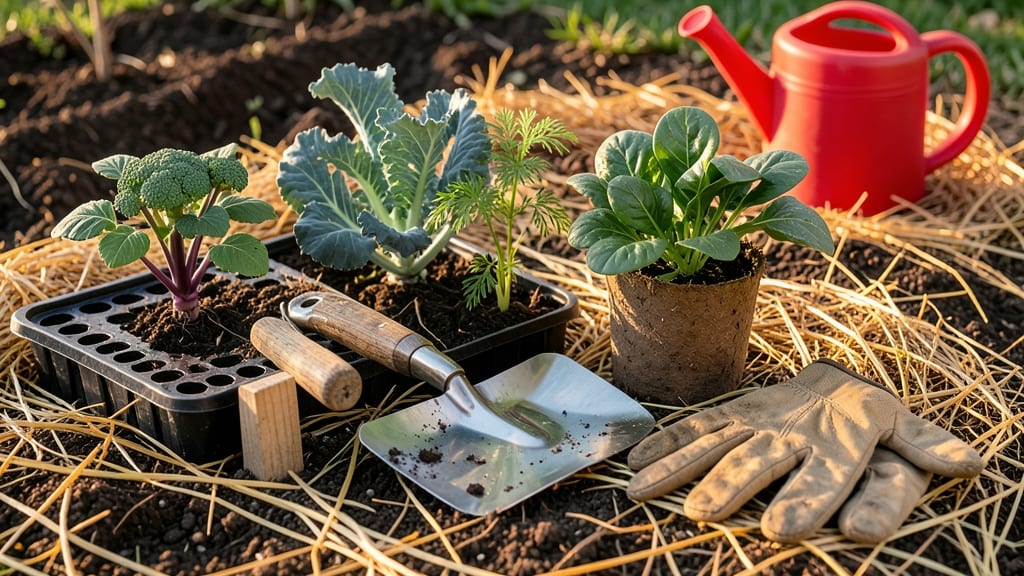
Planting a fall garden in Texas means timing your crops to beat the heat while setting them up for a frost-free harvest—typically between mid-August and early October, depending on your zone.
Texas gardeners know the summer heat can be brutal—but with the right timing, you can still grow a thriving fall garden full of heat-resistant crops like okra, sweet potatoes, and collard greens.
Miss that window, and you risk pests taking over, poor soil moisture, or crops bolting before harvest. The key is knowing your exact frost dates and the best transplant windows for your region.
In this guide, I’ll break down the optimal weeks to plant by Texas growing zone, plus the best crops to focus on and how to extend their season for maximum yield.
🌱
When to Plant You
Jan
❄️
Feb
❄️
Mar
🌱
Apr
🌱
May
🌱
Jun
🌱
Jul
☀️
Aug
☀️
Sep
🍂
Oct
🍂
Nov
🍂
Dec
❄️
Texas fall planting timeline by growing zone: exact weeks to plant for maximum yield
Texas gardeners face unique challenges with its extreme heat and variable frost dates, but with precise timing, you can still grow a productive fall garden. The key is understanding your USDA zone (7-11 across Texas) and adjusting planting dates to avoid summer's peak heat while maximizing harvest before frost.
In Zone 7, cooler temperatures arrive earlier than in Zone 11, where frost rarely occurs. Let’s break down the exact weeks to plant for both direct sowing and transplanting methods.
For heat-tolerant crops like tomatoes, peppers, and okra, the window opens earlier in the year—typically 6-8 weeks before your average first frost date. However, in southern Texas (Zones 9-11), gardeners can push harvests even later by using shade cloth or mulch.
Northern Texas (Zones 7-8) requires earlier starts to avoid early frost. Below, I’ve mapped out the ideal planting schedule for each zone, including adjustments for early vs. late fall harvests.
Pro Tip: Always check your local frost dates—they can vary by 1-2 weeks from the averages. Use the National Weather Service or your local Cooperative Extension for precise data. For example, Dallas (Zone 8) typically sees its first frost around November 15, while Houston (Zone 9) may not frost until December 15 or later.
| Zone |
Direct Sowing Window |
Transplant Window |
Target Crops |
Harvest Timing |
| 7 |
Late July - Early August |
Mid-August - Early September |
Kale, Spinach, Radishes, Lettuce |
October - November |
| 8 |
Early August - Mid-September |
Late August - Early October |
Tomatoes, Peppers, Collards, Carrots |
September - December |
| 9 |
Mid-August - Late September |
Late August - Mid-October |
Okra, Sweet Potatoes, Malabar Spinach, Green Beans |
October - January |
| 10 |
Late August - October |
September - November |
Winter Squash, Cucumbers, Eggplant, Swiss Chard |
November - February |
| 11 |
September - November |
October - December
Best heat-resistant fall crops for Texas gardens and how to extend their growing season
Texas fall gardens thrive with heat-resistant crops that can handle late-summer heat while maturing before frost. My top picks include okra, sweet potatoes, and Malabar spinach, which all tolerate temperatures up to 95°F without bolting.
These crops also extend your harvest window by 4-6 weeks when paired with the right care strategies.
For urban gardeners, container gardening with these heat lovers is a game-changer. Shallow-rooted varieties like peppers and collard greens do exceptionally well in 5-gallon pots, making them perfect for patios and balconies. The key is choosing fast-maturing varieties with short day-length requirements to avoid early flowering.
Here’s the pros and cons breakdown for extending your fall harvest with these top crops:
✅ Pros of Heat-Resistant Fall Crops
- Okra: Thrives in 90-95°F soil
- Sweet Potatoes: Stores well for 3+ months
- Malabar Spinach: Regrows after harvest
- Peppers: Sweetens in cooler nights
- Collards: Sweeter after frost
❌ Cons to Watch For
- Okra: Needs deep soil (6+ inches)
- Sweet Potatoes: Slow to mature (90-120 days)
- Malabar Spinach: Prone to powdery mildew in humidity
- Peppers: Requires consistent watering
- Collards: Bolts if days get too short
💡 Pro Tip: Use shade cloth (30-50%) to protect seedlings from intense afternoon sun while still allowing light penetration.
To extend your growing season, I recommend mulching with straw to retain soil moisture and drip irrigation on a timer to avoid overhead watering. For container gardens, use self-watering pots with coco coir for better moisture control.
These methods can push your harvest window back by 6-8 weeks in most Texas zones.
For urban gardeners, focus on fast-maturing varieties like 'Clemson Spineless' okra (50 days) or 'Black Beauty' sweet potatoes (90 days). These perform well in 5-gallon containers with proper drainage. Remember to harden off transplants gradually to prevent shock from temperature swings.
One of my favorite tricks is succession planting every 2 weeks starting in early September. This ensures a continuous harvest of greens like Malabar spinach or Swiss chard, which can handle light frosts. Pair this with row covers for extra protection if early frosts threaten.
Don’t forget that soil prep is critical—amend your beds with compost and aged manure to improve drainage and fertility. Heat-resistant crops need well-draining soil to prevent root rot, especially during Texas's humid fall nights.
Test your soil pH (aim for 6.0-6.8) and adjust with lime or sulfur as needed.
★★★★★4.9(7 reviews)
|