
Tools
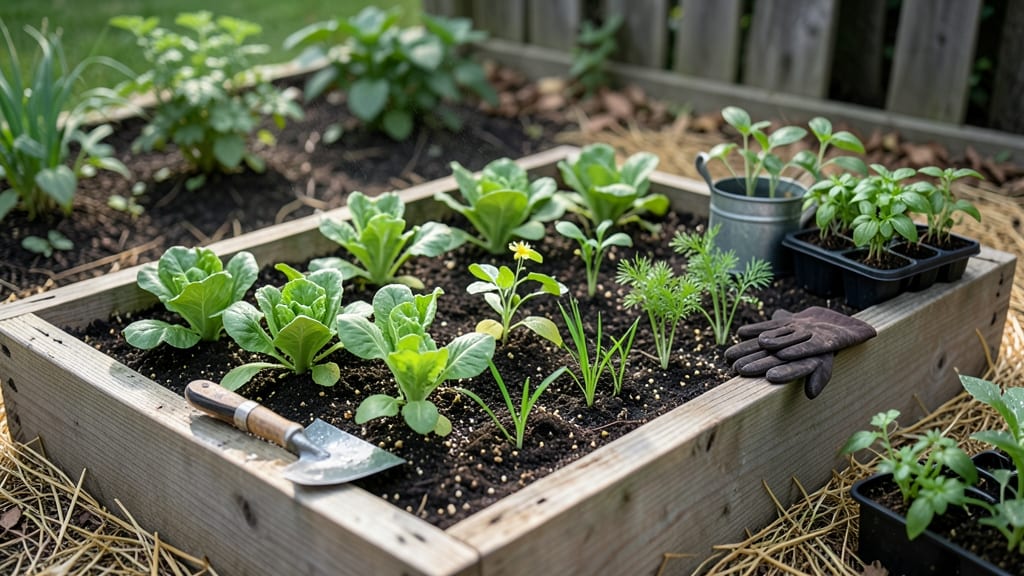
An 8x8 raised garden is the perfect way to grow a bountiful harvest in a small space—whether you’re working with a balcony, a backyard corner, or just want to maximize every inch of your yard.
Running out of space doesn’t mean you have to give up on growing your own fresh, organic vegetables—this compact design can transform even the tightest spots into a thriving food production powerhouse. Imagine double or triple the yield of a traditional in-ground plot, all packed into just 64 square feet!
From choosing the right materials to arranging crops for maximum efficiency, I’ll walk you through everything you need to know to turn your 8x8 raised garden into a high-yielding, low-maintenance oasis. Whether you’re a beginner or a seasoned gardener, these tips will help you make the most of your space.
Ready to grow more with less? Let’s dive into the best layouts, plant pairings, and maintenance tricks to keep your garden thriving all season long.
Optimal 8x8 raised garden layout for maximum yield in limited space
An 8x8 raised garden gives you a 64-square-foot growing area—plenty of space to grow a surprising amount of food if you use the right strategies. The key is high-density planting, vertical gardening, and companion planting to maximize every inch.
I’ve designed layouts that let you grow 3-4 times more than traditional in-ground gardens of the same size.
For beginners, a square-foot gardening grid is the easiest way to visualize spacing. Divide your 8x8 bed into 16 one-foot squares, then place plants based on their mature size.
For example, bush beans (4 plants per square) and radishes (16 plants per square) can coexist without competing for space. This method ensures no wasted room while keeping maintenance simple.
To double your yield, integrate vertical gardening with trellises, cages, or wall-mounted planters. Cucumbers, pole beans, and indeterminate tomatoes can climb upward, freeing up ground space for other crops.
A 4-foot trellis along one side of your bed can support 10+ plants that would otherwise sprawl across your entire garden.
Here’s how three popular layouts compare in terms of yield potential, ease of maintenance, and companion planting benefits:
For succession planting, divide your garden into 4 blocks and plant fast-growing crops like radishes or bush beans every 2-3 weeks. This ensures a continuous harvest instead of one big yield.
Pair this with companion planting: for example, basil near tomatoes repels pests, while carrots and onions deter each other’s pests when planted together.
Don’t overlook intercropping, where you mix fast growers (like lettuce) with slow growers (like broccoli). The lettuce provides shade for broccoli seedlings while adding greens to your table early in the season. This technique maximizes space and extends your harvest window by 30-50%.
Pro tip: Use dwarf varieties of fruits and vegetables to save space. Dwarf cherry tomatoes, bush cucumbers, and mini bell peppers all thrive in 1-square-foot areas while producing just as much as their full-sized counterparts. Pair these with ground-hugging herbs like thyme or oregano to fill gaps.
Watering and fertilizing become simpler with a structured layout. Drip irrigation lines along the edges of your squares ensure even moisture, while compost tea applied every 4-6 weeks feeds all plants uniformly. This reduces waste and saves you time—critical when space is limited.
If you’re short on sunlight, prioritize partial-shade crops like spinach, kale, and green onions in the north side of your
Best crops for an 8x8 raised garden: high-yield picks for small areas
When working with an 8x8 raised garden, selecting the right crops can make all the difference between a modest harvest and a bountiful one. The key is choosing fast-growing, compact, and high-yield varieties that maximize your limited space without sacrificing productivity.
I’ve curated a list of top performers that thrive in raised beds, including vertical climbers, leafy greens, and bushy fruiting plants to ensure every inch of your garden works hard for you.
One of my favorite strategies for small spaces is vertical gardening. Crops like pole beans, cucumbers, and zucchini can climb trellises or stakes, freeing up valuable ground space for other plants.
Pair these with shallow-rooted greens like lettuce and spinach, which mature quickly and can be harvested multiple times, ensuring a steady supply of fresh produce. Don’t forget about compact fruiting plants such as cherry tomatoes and bush peppers, which deliver big rewards in minimal space.
Here’s a quick reference table of the best crops for your 8x8 raised garden, including their space needs, sunlight requirements, and ideal harvest times to help you plan your layout efficiently:
| Crop | Type | Sunlight | Mature Size | Days to Harvest | Notes |
|---|---|---|---|---|---|
| Cherry Tomatoes | Fruiting | Full Sun | 2-3 ft | 50-60 days | Bush varieties save space |
| Pole Beans | Vertical | Full Sun | 6-8 ft (with trellis) | 50-60 days | Fast-growing, high yield |
| Lettuce | Leafy Green | Partial Sun | 6-12 inches | 30-45 days | Cut-and-come-again |
| Spinach | Leafy Green | Partial Sun | 6-12 inches | 40-50 days | Cold-hardy, great for succession |
| Bush Peppers | ★★★★★5.0(9 reviews) |