
Pests
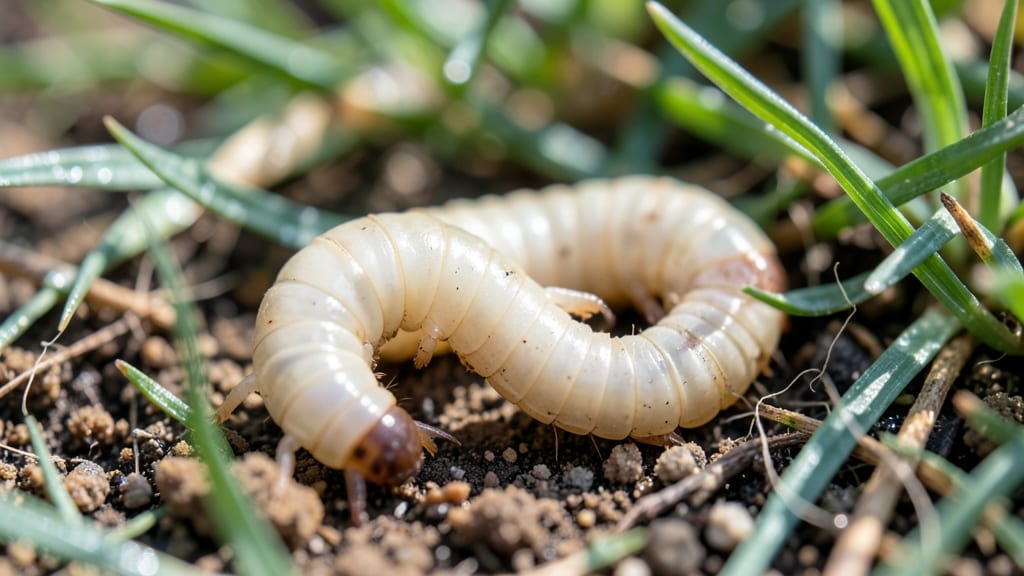
Grubs are bad for your garden because they feed on plant roots, causing wilting, yellowing leaves, and even plant death, especially in lawns and young seedlings. Their larvae stage is most destructive, requiring prompt removal to prevent irreversible damage.
Grubs—those C-shaped larvae of beetles—target plant roots with a voracious appetite, leaving behind a trail of destruction. 🌱 They thrive in moist soil, feasting on grass roots and young seedlings, which weakens plants and makes them vulnerable to drought or disease.
The damage often appears as brown patches in lawns or stunted growth in garden beds, signaling it's time to act before your plants suffer permanent harm.
What makes this problem urgent is their life cycle: grubs spend most of their time underground, feeding for months before pupating into adult beetles. By the time you notice the damage, it's often too late for quick fixes.
The key to protecting your garden lies in early detection—look for spongy turf that lifts easily or tunnels in the soil—and choosing the right treatment method based on your plants' needs.
💡 In This Article
- How Grubs Damage Garden Plants and Lawns
- Natural and Chemical Grub Control Methods Compared
How grubs damage garden plants and lawns
Grubs, the larvae of beetles like Japanese beetles or May/June beetles, become garden destroyers during their 3-4 month underground feeding stage. These 1-inch-long white or tan creatures chew through plant roots with tiny, serrated mouthparts, severing vital nutrient pathways.
In lawns, they target grass roots, creating brown patches that feel spongy when lifted—like stepping on a waterlogged mattress. 🌱 The damage escalates when roots can't absorb water or nutrients, leading to wilting even when soil appears moist.
The most critical damage occurs when grubs feed on young seedlings or shallow-rooted plants like lettuce or strawberries. Their feeding creates tunnels that destabilize soil structure, making plants topple over in wind or rain.
What's shocking is how quickly this happens: a single grub can consume 50+ root hairs per day, and 10-20 grubs per square foot can kill grass entirely. The worst infestations occur in summer months when soil moisture is high—grubs thrive in damp conditions but suffocate in dry soil.
Timing is everything with grub control because their life cycle is predictable. Japanese beetle grubs hatch in late June-July and feed until fall, while May/June beetle grubs emerge in late summer. By late summer, you'll see adult beetles flying at dusk, laying eggs that hatch into next year's grubs.
This means late summer treatment targets current grubs, while spring applications prevent next year's infestation. The key is acting before grubs reach their peak feeding stage—usually when they're 1/2-inch long.
Visual signs give away grub activity before plants show severe stress. Look for these red flags: sod lifting (grass peeling back like a carpet), patchy lawns that recover slowly after mowing, or birds digging in your yard (they're natural grub predators!).
Dig up a 1-foot square of lawn—if you find 5+ grubs, it's time to treat. The damage escalates fastest in hot, dry weather when stressed plants can't recover from root loss.
What most gardeners don't realize is how grubs create secondary problems. Their feeding weakens plants, making them more susceptible to fungal diseases like brown patch or dollar spot. The tunnels they create also allow water runoff to pool, creating soggy spots that develop into thatch layers.
In vegetable gardens, grub damage often appears as stunted growth or yellowing leaves that mimic nutrient deficiencies—but the roots tell the real story when you dig.
Consider this comparison: a healthy lawn has 1-2 grubs per square foot naturally, but 10+ grubs means your plants are fighting for survival. The damage threshold varies by plant type—grasses show symptoms first, while deep-rooted perennials may survive longer.
This is why early detection through soil checks or grub traps (burying a board overnight) can save your garden before visible damage appears. 🌿