
Tools
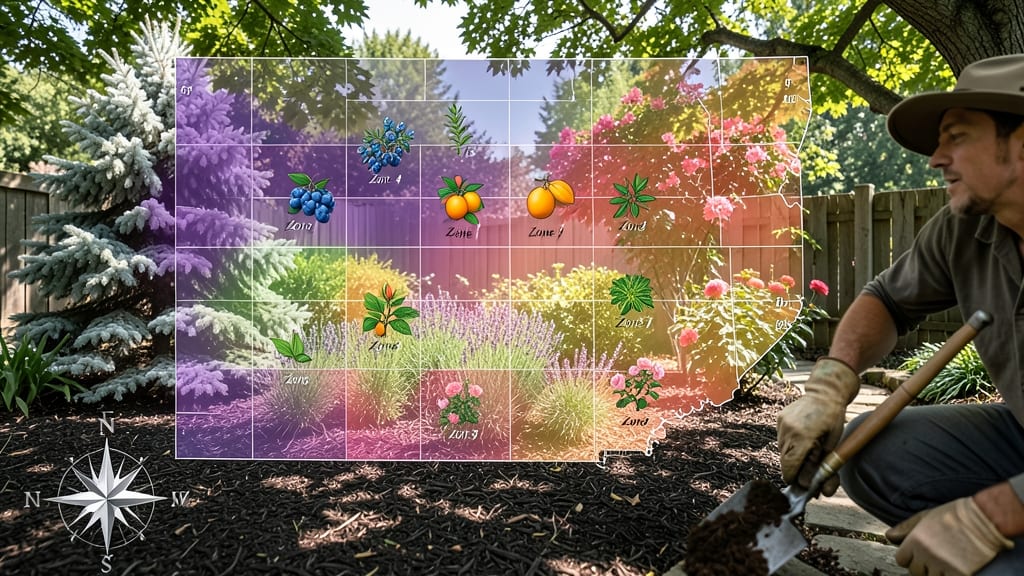
North American gardening zones classify regions by their average minimum winter temperatures, helping you choose plants that will thrive in your specific climate. The USDA Plant Hardiness Zone Map divides the continent into 13 zones, numbered from 1 (coldest) to 13 (warmest).
Understanding your gardening zone is the first step to creating a successful garden. 🌱 The USDA map uses historical temperature data to create these zones, which can shift slightly each year due to climate change.
For example, Zone 5a (average minimum of -20°F to -15°F) includes parts of Minnesota and New York, while Zone 10a (30°F to 35°F) covers Southern California and Florida.
Knowing your zone helps you avoid costly mistakes like planting tender annuals in freezing climates or struggling with cold-sensitive perennials in warm regions.
To find your exact zone, visit the USDA Interactive Plant Hardiness Zone Map and enter your ZIP code. The map shows both the primary zone and any subdivisions (like 6a or 6b), which can make a big difference in plant selection.
For instance, a plant rated for Zone 6a (-10°F to -5°F) might survive in Zone 6b (-5°F to 0°F), but not vice versa. This precision ensures your garden thrives year after year.
💡 In This Article
- How USDA Plant Hardiness Zones Determine Plant Survival
- Finding Your North American Gardening Zone and Best Plants for It
How USDA plant hardiness zones determine plant survival
The USDA Plant Hardiness Zone Map relies on 30-year averages of the lowest winter temperatures recorded in specific regions. These temperatures are critical because most plants cannot survive if exposed to colder conditions than their hardiness rating.
For example, a plant labeled "Zone 7" will typically survive down to 0°F to 10°F, but if your area dips below that—like in Zone 5—it will likely perish.
This is why gardeners in colder zones must choose plants with lower hardiness ratings, such as crabapples (Zone 3-8) or shrubs like lilacs (Zone 3-7), while those in warmer zones can grow citrus trees (Zone 9-11) or bougainvillea (Zone 9-11) without risk.
Microclimates add another layer of complexity to zone classification. A single neighborhood can have variations due to factors like elevation, proximity to water, or urban heat islands.
For instance, a backyard in Zone 6a (-10°F to -5°F) might experience milder winters near a large lake, creating a microclimate more akin to Zone 7a (0°F to 5°F). Conversely, a hilltop in the same area could face harsher conditions, resembling Zone 5b (-15°F to -10°F).
These nuances explain why some plants thrive in one spot but struggle just a few feet away. 🌡️ Understanding these microclimates helps gardeners fine-tune their plant selections for optimal success.
The USDA zones also account for last frost dates, which vary significantly across North America. For example, Zone 1 (Alaska’s interior) may have a 150-day growing season, while Zone 10 (Southern California) enjoys a 300+ day growing season.
These seasonal differences influence not just plant survival but also growth cycles. A gardener in Zone 4 (average minimum -30°F to -20°F) might struggle with tropical plants like hibiscus (Zone 10-11), while a gardener in Zone 8 (average minimum 10°F to 20°F) can grow them with minimal protection.
This is why zone maps are essential for planning planting and harvesting times.
Climate change has caused noticeable shifts in these zones over the past few decades. Since the 1990s, many areas have warmed by 1-3°F, pushing zone boundaries northward or upward in elevation.
For example, parts of New England that were once solidly in Zone 5 are now transitioning to Zone 6. This shift means some plants previously considered too tender for a region may now thrive there.
However, it also introduces challenges like increased pest pressures (e.g., invasive species expanding their range) and drought stress in areas where rainfall patterns change. The USDA updates its map every 10 years to reflect these changes, ensuring gardeners have the most current data.
One often-overlooked aspect of zone classification is how it interacts with soil and sunlight exposure. While zones focus on temperature, plants also need well-draining soil and adequate sunlight. For example, a Zone 7 perennial like peonies might struggle in heavy, waterlogged soil even if the temperature is ideal.
Similarly, a Zone 5 vegetable like kale can bolt (go to seed prematurely) if planted in an area with too much heat or insufficient daylight. Balancing zone-appropriate plants with local growing conditions maximizes success. 🌿
To apply this knowledge practically, start by identifying your primary zone and any microclimates in your garden. Use the USDA Interactive Map to find your exact zone, then adjust for local variations.
For instance, if you’re in Zone 6b (-5°F to 0°F) but have a sunny, south-facing wall, you might successfully grow Zone 7 plants like lavender in that microclimate.
Always check plant tags for hardiness ratings and consider factors like wind exposure, soil type, and moisture levels—these can make the difference between a thriving garden and a struggling one.