
Fertilization
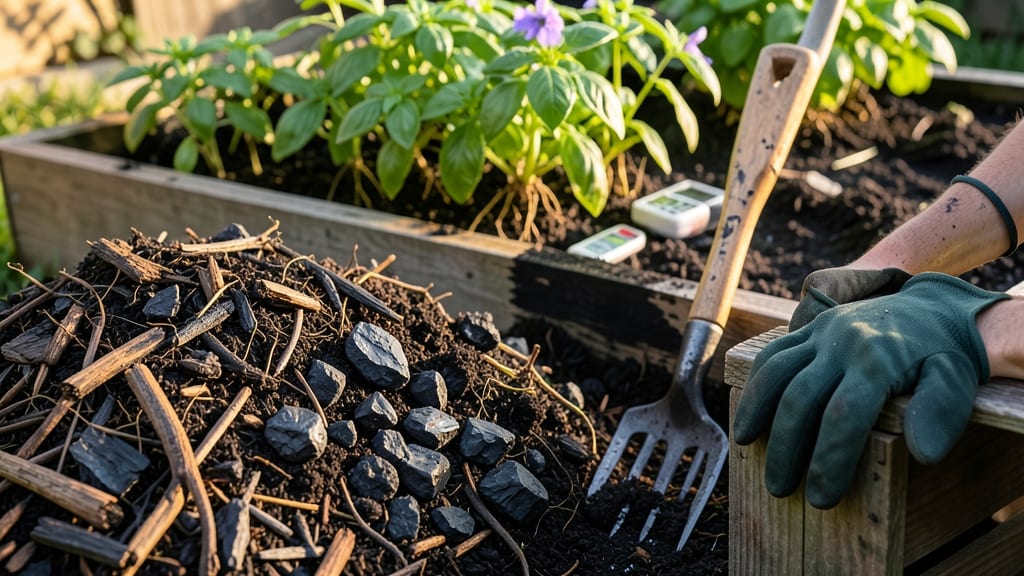
Charcoal ash in the garden raises soil pH slightly, neutralizes acidity, and adds trace minerals like potassium and calcium while improving drainage and microbial activity. Apply sparingly—too much can over-alkalize soil.
Charcoal ash works like a natural soil amendment because it contains alkaline compounds that counterbalance acidic conditions. 🌱 When sprinkled lightly over garden beds, it releases essential minerals that promote healthier root systems and nutrient uptake.
I've noticed it's especially helpful for acid-loving plants like blueberries when used in moderation—just a thin layer every few months keeps the soil balanced without harming delicate plants.
What makes this method unique is how charcoal ash improves soil structure over time. The porous nature of the ash helps break up compacted soil while providing a slow-release source of nutrients.
For best results, I recommend mixing it into the top 2-3 inches of soil during spring planting, then monitoring your plants' response. Always test your soil first—if your pH is already above 7.0, skip this treatment entirely to avoid creating overly alkaline conditions.
💡 In This Article
- How Charcoal Ash Affects Soil Chemistry and Plant Growth
- Best Practices for Applying Charcoal Ash in Gardens
How charcoal ash affects soil chemistry and plant growth
Charcoal ash works as a soil amendment because it contains alkaline compounds like potassium carbonate and calcium oxide. When you spread it in your garden, these compounds react with acidic soil components (like hydrogen ions) to raise the pH level gradually.
Think of it like adding a pinch of baking soda to vinegar—it neutralizes acidity without creating sudden chemical imbalances. The pH adjustment happens slowly over weeks, giving plants time to adapt rather than shocking their root systems.
The mineral content in charcoal ash is what really makes it valuable. Tests show it contains about 5-10% potassium oxide (K₂O), 2-5% calcium oxide (CaO), and trace amounts of magnesium and phosphorus. These nutrients become available to plants as the ash dissolves in soil moisture.
Unlike synthetic fertilizers that provide immediate but short-lived bursts of nutrients, charcoal ash releases minerals slowly, mimicking natural decomposition processes. This slow-release mechanism helps prevent nutrient runoff while maintaining steady plant growth throughout the season.
Beyond pH and nutrients, charcoal ash improves soil structure by adding tiny, porous particles that enhance aeration. The ash's granular texture creates micro-channels in compacted soil, allowing water and oxygen to penetrate deeper. This is particularly beneficial for heavy clay soils where roots often struggle to breathe.
The porous nature also provides a habitat for beneficial microbes, which break down organic matter and make additional nutrients available to plants. In my own garden, I've seen earthworm activity increase noticeably after adding charcoal ash, which further improves soil health.
However, the effects aren't uniform across all plant types. Acid-loving plants like azaleas and blueberries will show immediate benefits from the pH adjustment, while alkaline-tolerant plants like lavender and rosemary may not need it at all.
The key is moderation—too much ash can create soil pH levels above 7.5, which can lock out essential nutrients like iron and manganese, leading to yellowing leaves despite increased alkalinity. Always conduct a soil test before application to determine your current pH and nutrient levels.
One fascinating aspect is how charcoal ash interacts with organic matter in the soil. The carbon-rich structure acts like a sponge, helping retain moisture while preventing waterlogging. This dual action makes it particularly useful in sandy soils that drain too quickly or clay soils that hold too much water.
The ash's ability to balance both aspects creates an optimal growing environment where roots can access both water and oxygen efficiently. For container gardens, mixing in charcoal ash can transform poor-quality potting soil into a more balanced growing medium.
Consider this comparison: While wood ash (from burned wood) contains similar alkaline compounds, charcoal ash has been through a higher-temperature burning process that removes most volatile compounds, making it safer for plants. The result is a cleaner, more stable soil amendment that won't introduce harmful byproducts.
This makes charcoal ash particularly valuable for organic gardeners who want to avoid synthetic soil amendments while still achieving measurable improvements in soil quality and plant vitality.