
Vegetables
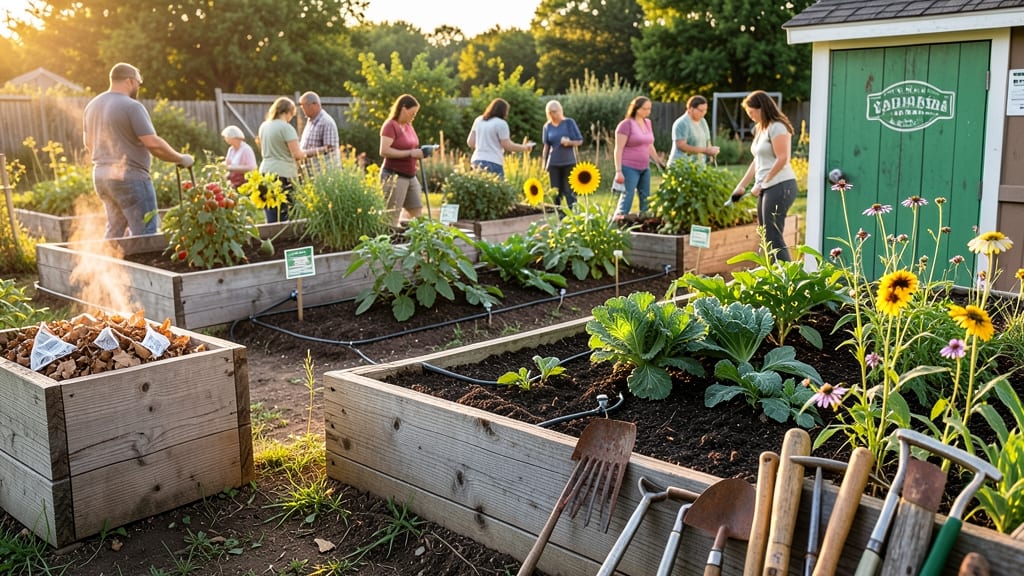
To start a community garden in Salt Lake City, you'll need permits from the Salt Lake City Corporation, suitable public or private land, and partnerships with local groups like the Salt Lake City Community Gardens Association. Always check zoning laws and water rights first to avoid legal issues.
Salt Lake City offers plenty of opportunities to launch a community garden, especially in areas like Liberty Park or Sugar House Park, which already have established plots. 🌱 The city makes it easier by providing resources through organizations like Utah State University Extension, which can connect you with experienced gardeners and funding options.
I recommend starting with a small plot to test soil quality and volunteer interest before expanding—this helps build momentum and avoids common pitfalls like water shortages or zoning conflicts.
One key advantage of Salt Lake City's community gardens is their focus on sustainability. Many plots prioritize drought-resistant plants and rainwater collection systems, which are particularly useful in Utah's dry climate.
The Salt Lake City Community Gardens Association also offers workshops on composting and organic gardening, making it simpler for beginners to get started. If you're working with private land, always confirm easement agreements to protect your garden's future.
💡 In This Article
- Salt Lake City Permits and Zoning Laws for Community Gardens
- Best Locations and Volunteer Resources in Salt Lake City
Salt Lake City permits and zoning laws for community gardens
Salt Lake City's community garden permits are managed through the Salt Lake City Corporation's Planning and Development Services department, where you'll need to file an application under the Urban Agriculture Program.
The process begins with a site assessment to determine if your proposed location meets zoning requirements—most community gardens fall under R-1 (Residential) or R-2 (Neighborhood) zones, but commercial or large-scale plots may require additional approvals.
For public land, you'll work directly with the Salt Lake City Parks and Recreation Department, which often has pre-approved garden plots like those in Liberty Park.
Water rights are the biggest legal hurdle in Utah's arid climate. Salt Lake City gardens typically rely on either existing city water infrastructure (for parks) or private well systems (for private land).
If using city water, you'll need to submit a Water Service Agreement through Salt Lake City Public Utilities, which may include fees ranging from $500-$2,000 annually depending on plot size.
For private wells, you must comply with Utah's Division of Water Rights regulations, which often require proof of 100+ years of historical water usage—a challenge for new gardens. 💧
Documentation is straightforward but time-sensitive. Your permit application must include a site plan with dimensions, proof of liability insurance ($1 million minimum coverage), and a volunteer coordinator contact. Processing typically takes 4-8 weeks, with public land approvals moving faster due to pre-existing agreements.
Private land requires additional zoning verification from the city's Community Development Department, which may add 2-4 extra weeks to the timeline.
Zoning restrictions vary by neighborhood. For example, Sugar House has stricter rules on garden height (4 feet maximum above ground) and fencing (no chain-link), while Liberty Park allows taller structures for seasonal storage.
Always check the Salt Lake City Zoning Map for your specific address—some areas near schools or historic districts have additional cultural preservation requirements that could impact your garden's design or plant selection.
Fees differ significantly between public and private plots. Public gardens in city parks often pay $100-$300 annually for water access and maintenance, while private land gardens may face $500-$1,500 in permit fees plus utility costs.
The Salt Lake City Community Gardens Association offers fee waivers for non-profits, but you'll need to provide 501(c)(3) documentation and demonstrate community benefit—such as serving low-income families or teaching sustainable practices.
One common misstep is assuming all vacant lots are available. The city maintains a Vacant Land Inventory, but many "available" parcels are held by private developers or have pending environmental reviews.
Always verify land status through the Salt Lake City Assessor's Office before investing in materials or recruiting volunteers. Pro tip: Attend the city's quarterly Urban Agriculture Committee meetings—they often announce upcoming lot releases and funding opportunities.