
Flowers
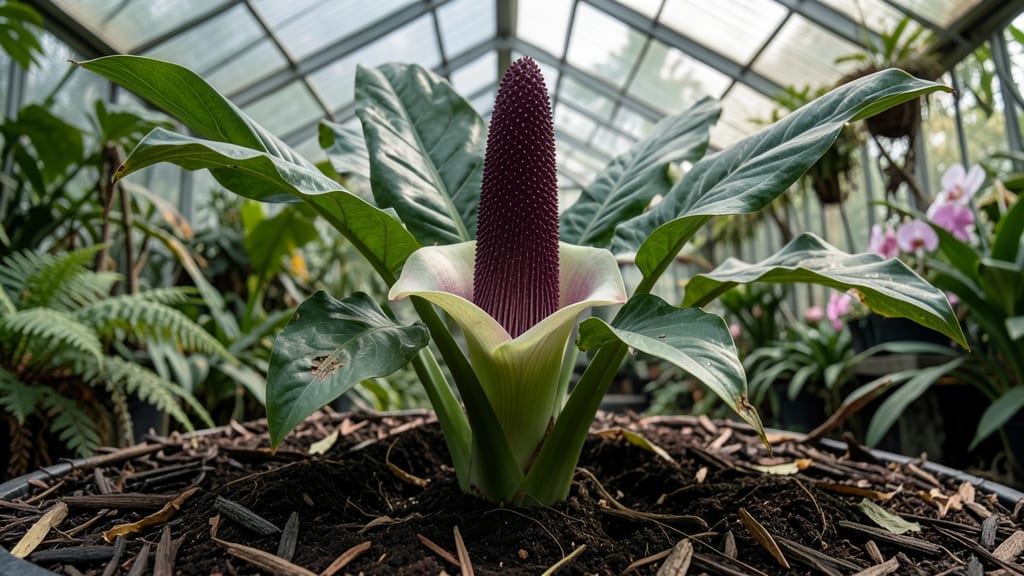
Visiting a botanic garden to see the corpse flower requires patience—the plant blooms unpredictably every 7 to 10 years, with top displays at New York Botanical Garden, Singapore Botanic Gardens, and Denver Botanic Gardens. Each bloom lasts just 24-48 hours, accompanied by an intense rotting odor that draws night-flying pollinators.
This rare spectacle happens because the corpse flower (Amorphophallus titanum) conserves energy by blooming only when conditions are perfect—typically in late spring or summer. 🌱 The plant's massive, single-stem flower can reach 3 feet tall and emits a scent mimicking decaying meat to attract carrion flies.
While the timing is unpredictable, botanic gardens often monitor their specimens' growth cycles to estimate bloom windows, making advance planning essential for visitors.
What makes these gardens special is their ability to cultivate the plant to maturity—a process that can take 5-10 years before the first bloom. The New York Botanical Garden, for example, has hosted multiple blooms since 2009, while Singapore's specimen famously bloomed in 2017 after a 14-year wait.
Each event draws global attention, proving these gardens' expertise in rare plant cultivation.
💡 In This Article
- Why the Corpse Flower Blooms So Infrequently
- Top Botanic Gardens Hosting Corpse Flower Exhibits
Why the corpse flower blooms so infrequently
The corpse flower (Amorphophallus titanum) follows an energy-conserving strategy called "determinate growth," where it prioritizes root and leaf development for years before blooming. This process mirrors how some cacti store water for decades before flowering.
The plant's massive underground corm—weighing up to 100 pounds—acts like a biological battery, storing starches and nutrients to fuel its explosive bloom. 🌱 Unlike annual flowers that bloom yearly, the corpse flower allocates nearly all its energy to growth until environmental triggers align.
Temperature and humidity are the critical switches. The plant typically blooms when daytime temperatures reach 75-85°F and humidity stays above 70%, mimicking its native Indonesian rainforest conditions. At the New York Botanical Garden, their specimen blooms most reliably in June, when these factors peak.
The scent production—recreating the smell of rotting meat—also requires precise conditions, as the volatile organic compounds need warm nights to activate fully.
This infrequent blooming isn't just about energy—it's an evolutionary survival tactic. By blooming rarely, the plant ensures its single, dramatic flower stands out to pollinators in a crowded tropical ecosystem.
The 3-foot-tall spathe (the leaf-like structure) and 1-foot-wide spadix (the actual flower) create a visual and olfactory beacon that attracts carrion flies from miles away. This strategy maximizes pollination efficiency while minimizing wasted resources on frequent, less effective blooms.
What makes the corpse flower's cycle so unpredictable is its sensitivity to subtle environmental shifts. A 5°F temperature drop or 20% humidity change can delay blooming by months.
At Singapore Botanic Gardens, their 2017 bloom occurred after a 14-year wait, partly due to perfect storm of ideal conditions during that year. The plant's native habitat in Sumatra's lowland forests provides these exact conditions naturally, but botanic gardens must recreate them artificially.
Here's what's actually happening chemically: The corpse flower produces dimethyl disulfide and dimethyl trisulfide—compounds found in rotting flesh. These gases trigger the brain's olfactory system in a way similar to fear responses, creating an irresistible attraction for flies.
The plant's heat production during bloom (up to 89°F in the spadix) further mimics a decaying carcass, making it a master of deceptive pollination strategies. 🔥
For gardeners, this means cultivating the corpse flower requires patience and precision. Most specimens in botanic gardens take 5-10 years to reach blooming age, with only about 30% of cultivated plants ever flowering successfully.
The energy investment is so massive that some plants die immediately after their first bloom, having expended their entire life force in one spectacular event.