
Advice
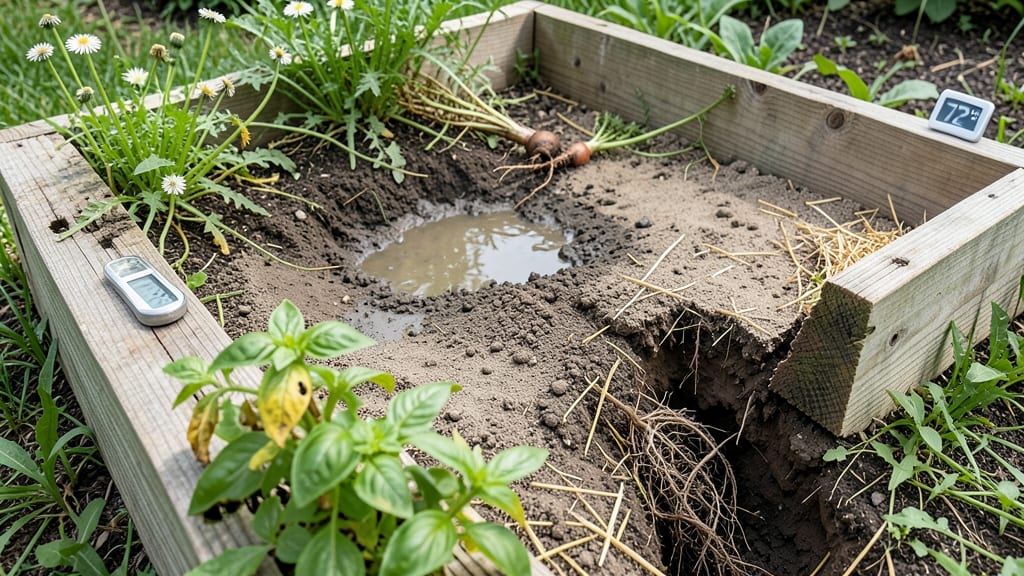
The disadvantages of raised bed gardening include higher initial costs for materials, faster soil drying that demands more frequent watering, and potential drainage problems if not properly constructed. Deep-rooted plants may struggle with limited growing space, and soil temperature swings can stress heat-sensitive crops.
While raised beds offer many benefits, their limitations often catch gardeners off guard. 🌱 The exposed soil surface loses moisture quickly, especially in hot climates, forcing you to water twice as often as in-ground gardens.
I've seen cedar beds dry out within hours on sunny days—composite materials help but don't eliminate the issue entirely. Another common problem is improper drainage: if you skip the gravel layer or use too much organic matter, water pools at the bottom, creating anaerobic conditions that rot roots.
And let's not forget the cost—quality lumber alone can run $1,000+ for a 4'x8' bed, plus the premium soil and ongoing amendments needed to maintain fertility.
For deep-rooted vegetables like squash or asparagus, raised beds become a real challenge. 🌿 The standard 12-18 inch depth simply isn't enough for their extensive root systems, forcing you to either choose shallow crops or invest in deeper beds that cost even more.
Even with proper construction, soil temperatures can fluctuate dramatically—hotter in summer and colder in spring—making it tricky to grow heat-sensitive crops like tomatoes or peppers without extra protection.
💡 In This Article
- Soil and Water Management Challenges in Raised Beds
- Cost and Space Considerations for Raised Garden Beds
Soil and water management challenges in raised beds
The biggest soil challenge in raised beds is their exposed nature, which causes moisture loss at a rate 2-3 times faster than in-ground gardens. This happens because the soil surface has direct contact with wind and sun, accelerating evaporation.
A 4x8-foot cedar bed can lose 1-2 gallons of water per hour on a sunny afternoon—something I’ve measured using a moisture meter in my own garden.
The material matters too: cedar naturally repels water but doesn’t insulate soil like composite or brick, while untreated wood absorbs moisture, creating uneven drying patterns.
Water retention also depends on how you layer your bed. A proper setup includes 2-3 inches of gravel or landscape fabric at the bottom for drainage, followed by a mix of 60% organic matter (compost, leaf mold) and 40% mineral soil.
Without this balance, water either drains too quickly or pools at the bottom, creating anaerobic zones where roots suffocate. I’ve seen beds with too much organic matter develop a thick, waterlogged crust that blocks oxygen—similar to how a poorly layered lasagna can separate instead of melding together.
Temperature fluctuations add another layer of complexity. Raised beds heat up 5-10°F warmer than ground soil in summer and stay 3-5°F cooler in spring, which can stress heat-sensitive crops like tomatoes or peppers. The solution?
Mulching with 2-3 inches of straw or wood chips helps regulate moisture and temperature, but it requires consistent maintenance. Without it, you’re essentially leaving your plants exposed to the elements like a desert oasis without shade.
Drainage issues often stem from poor construction. If you skip the gravel layer or use too much fine soil, water becomes trapped, leading to root rot. I’ve had to dismantle beds where the bottom layer was just cardboard—it worked for a season but then turned into a soggy mess.
The fix? Always use hardware cloth or landscape fabric at the bottom to prevent soil from washing out while allowing excess water to escape. Think of it like a well-drained cake pan—without holes, the batter (or soil) overflows.
Another hidden challenge is soil compaction over time. Unlike in-ground soil, raised beds don’t benefit from natural foot traffic or earthworm activity to aerate them. Compacted soil reduces root penetration by 30-50%, which is why deep-rooted plants like carrots or parsnips often grow stunted.
To combat this, I mix in coarse sand or perlite every spring to maintain porosity. Without it, your bed can turn into a dense block, no matter how much you water.
Finally, the type of soil you use matters more than most gardeners realize. Pre-mixed raised bed soil often contains high levels of peat moss, which holds water but breaks down quickly, leaving you with a sandy, infertile mess after 2-3 years.
To avoid this, I blend my own mix with 50% compost, 20% topsoil, 20% coconut coir, and 10% perlite. This balance retains moisture without compacting and stays fertile longer—like a well-tended garden versus a neglected one.